

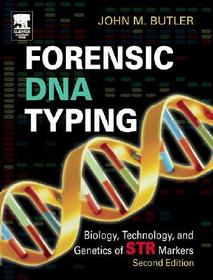
Forensic DNA Typing
Biology, Technology, and Genetics of STR Markers
-
10% KEDVEZMÉNY?
- A kedvezmény csak az 'Értesítés a kedvenc témákról' hírlevelünk címzettjeinek rendeléseire érvényes.
- Kiadói listaár EUR 73.95
-
28 884 Ft (27 509 Ft + 5% áfa)
Az ár azért becsült, mert a rendelés pillanatában nem lehet pontosan tudni, hogy a beérkezéskor milyen lesz a forint árfolyama az adott termék eredeti devizájához képest. Ha a forint romlana, kissé többet, ha javulna, kissé kevesebbet kell majd fizetnie.
- Kedvezmény(ek) 10% (cc. 2 888 Ft off)
- Kedvezményes ár 25 996 Ft (24 758 Ft + 5% áfa)
Iratkozzon fel most és részesüljön kedvezőbb árainkból!
Feliratkozom
28 884 Ft

Beszerezhetőség
A kiadónál véglegesen elfogyott, nem rendelhető. Érdemes újra keresni a címmel, hátha van újabb kiadás.
Why don't you give exact delivery time?
A beszerzés időigényét az eddigi tapasztalatokra alapozva adjuk meg. Azért becsült, mert a terméket külföldről hozzuk be, így a kiadó kiszolgálásának pillanatnyi gyorsaságától is függ. A megadottnál gyorsabb és lassabb szállítás is elképzelhető, de mindent megteszünk, hogy Ön a lehető leghamarabb jusson hozzá a termékhez.
A termék adatai:
- Kiadás sorszáma 2
- Kiadó Elsevier Science
- Megjelenés dátuma 2005. február 8.
- ISBN 9780121479527
- Kötéstípus Keménykötés
- Terjedelem680 oldal
- Méret 246x188 mm
- Súly 1960 g
- Nyelv angol 0
Kategóriák
Hosszú leírás:
Forensic DNA Typing, Second Edition, is the only book available that specifically covers detailed information on mitochondrial DNA and the Y chromosome. It examines the science of current forensic DNA typing methods by focusing on the biology, technology, and genetic interpretation of short tandem repeat (STR) markers, which encompass the most common forensic DNA analysis methods used today.
The book covers topics from introductory level right up to cutting edge research. High-profile cases are addressed throughout the text, near the sections dealing with the science or issues behind these cases. Ten new chapters have been added to accommodate the explosion of new information since the turn of the century. These additional chapters cover statistical genetic analysis of DNA data, an emerging field of interest to DNA research. Several chapters on statistical analysis of short tandem repeat (STR) typing data have been contributed by Dr. George Carmody, a well-respected professor in forensic genetics. Specific examples make the concepts of population genetics more understandable.
This book will be of interest to researchers and practitioners in forensic DNA analysis, forensic scientists, population geneticists, military and private and public forensic laboratories (for identifying individuals through remains), and students of forensic science.
TöbbTartalomjegyzék:
Ch. 1: Overview & History of DNA Typing
Ch. 2: DNA Biology Review
Ch. 3: Sample Collection, DNA Extraction, and DNA Quantitation
Ch. 4: The Polymerase Chain Reaction (DNA Amplification)
Ch. 5: Commonly Used Short Tandem Repeat Markers and Commercial Kits
Ch. 6: Biology of STRs
Ch. 7: Forensic Issues
Ch. 8: Single Nucleotide Polymorphisms & Other Bi-allelic Markers
Ch. 9: Y-Chromosome DNA Testing
Ch. 10: Mitochondrial DNA Analysis
Ch. 11: Non-Human DNA and Microbial Forensics
Ch. 12: DNA Separation Methods
Ch. 13: DNA Detection Methods
Ch. 14: Instrumentation for STR Typing
Ch. 15: STR Genotyping Issues
Ch. 16: Laboratory Validation
Ch. 17: New Technologies, Automation, and Expert Systems
Ch. 18: CODIS and DNA Databases
Ch. 19: Basic Genetic Principles, Statistics, & Probability
Ch. 20: STR Population Database Analyses
Ch. 21: Profile Frequency Estimates, Likelihood Ratios & Source Attribution
Ch. 22: Approaches to Statistical Analysis of Mixtures and Degraded DNA
Ch. 23: Kinship and Parentage Testing
Ch. 24: Mass Disaster DNA Victim Identification
App I: Reported STR Alleles
App II: Population Data-STR Allele Frequencies
App. III: Suppliers of DNA Analysis Supplies
App. IV: DAB QA Standards
App. V: DAB Recommendations on Statistics
App. VI: NRC II Recommendations
App. VII: Example DNA Cases

