

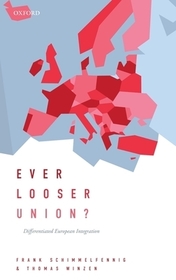
Ever Looser Union?
Differentiated European Integration
-
10% KEDVEZMÉNY?
- A kedvezmény csak az 'Értesítés a kedvenc témákról' hírlevelünk címzettjeinek rendeléseire érvényes.
- Kiadói listaár GBP 90.00
-
40 635 Ft (38 700 Ft + 5% áfa)
Az ár azért becsült, mert a rendelés pillanatában nem lehet pontosan tudni, hogy a beérkezéskor milyen lesz a forint árfolyama az adott termék eredeti devizájához képest. Ha a forint romlana, kissé többet, ha javulna, kissé kevesebbet kell majd fizetnie.
- Kedvezmény(ek) 10% (cc. 4 064 Ft off)
- Kedvezményes ár 36 572 Ft (34 830 Ft + 5% áfa)
Iratkozzon fel most és részesüljön kedvezőbb árainkból!
Feliratkozom
40 635 Ft

Beszerezhetőség
Megrendelésre a kiadó utánnyomja a könyvet. Rendelhető, de a szokásosnál kicsit lassabban érkezik meg.
Why don't you give exact delivery time?
A beszerzés időigényét az eddigi tapasztalatokra alapozva adjuk meg. Azért becsült, mert a terméket külföldről hozzuk be, így a kiadó kiszolgálásának pillanatnyi gyorsaságától is függ. A megadottnál gyorsabb és lassabb szállítás is elképzelhető, de mindent megteszünk, hogy Ön a lehető leghamarabb jusson hozzá a termékhez.
A termék adatai:
- Kiadó OUP Oxford
- Megjelenés dátuma 2020. február 21.
- ISBN 9780198854333
- Kötéstípus Keménykötés
- Terjedelem248 oldal
- Méret 240x160x20 mm
- Súly 514 g
- Nyelv angol 160
Kategóriák
Rövid leírás:
This book offers a comprehensive account and assessment of differentiation in European integration, including an analysis of differentiation in EU enlargement, the Eurozone crisis, Brexit, and the selective integration of non-member states.
TöbbHosszú leírás:
Differentiated integration has become a durable feature of the European Union and is a major alternative for its future development and reform. This book provides a comprehensive conceptual, theoretical, and empirical analysis of differentiation in European integration. It explains differentiation in EU treaties and legislation in general and offers specific accounts of differentiation in the recent enlargements of the EU, the Eurozone crisis, the Brexit negotiations, and the integration of non-member states. Ever Looser Union? introduces differentiated integration as a legal instrument that European governments use regularly to overcome integration deadlock in EU treaty negotiations and legislation. Differentiated integration follows two main logics. Instrumental differentiation adjusts integration to the heterogeneity of economic preferences and capacities, particularly in the context of enlargement. By contrast, constitutional differentiation accommodates concerns about national self-determination. Whereas instrumental differentiation mainly affects poorer (new) member states, constitutional differentiation offers wealthier and nationally oriented member states opt-outs from the integration of core state powers. The book shows that differentiated integration has facilitated the integration of new policies, new members, and even non-members. It has been mainly 'multi-speed' and inclusive. Most differentiations end after a few years and do not discriminate against member states permanently. Yet differentiation is less suitable for reforming established policies, managing disintegration and fostering solidarity, and the path-dependency of core state power integration may lead to permanent divides in the Union.
TöbbTartalomjegyzék:
Introduction
Part 1. Mapping and Explaining Differentiated Integration
Concepts: Differentiated Integration and its Modes
Theory: The Choice for Differentiated Integration
Mapping Differentiated Integration
Explaining Differentiation in EU Treaties
Explaining Differentiation in EU Legislation
Part 2. Extensions
Normalization: New Member States and Differentiated Integration
Path Dependence: Differentiated Integration in the Euro Crisis
Differentiated Disintegration: Brexit
Regional Differentiation: Beyond the EU Member States
Conclusions; Is Differentiation Good for Europe?

