

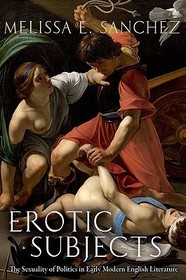
Erotic Subjects
The Sexuality of Politics in Early Modern English Literature
-
10% KEDVEZMÉNY?
- A kedvezmény csak az 'Értesítés a kedvenc témákról' hírlevelünk címzettjeinek rendeléseire érvényes.
- Kiadói listaár GBP 115.00
-
51 922 Ft (49 450 Ft + 5% áfa)
Az ár azért becsült, mert a rendelés pillanatában nem lehet pontosan tudni, hogy a beérkezéskor milyen lesz a forint árfolyama az adott termék eredeti devizájához képest. Ha a forint romlana, kissé többet, ha javulna, kissé kevesebbet kell majd fizetnie.
- Kedvezmény(ek) 10% (cc. 5 192 Ft off)
- Kedvezményes ár 46 730 Ft (44 505 Ft + 5% áfa)
Iratkozzon fel most és részesüljön kedvezőbb árainkból!
Feliratkozom
51 922 Ft

Beszerezhetőség
Megrendelésre a kiadó utánnyomja a könyvet. Rendelhető, de a szokásosnál kicsit lassabban érkezik meg.
Why don't you give exact delivery time?
A beszerzés időigényét az eddigi tapasztalatokra alapozva adjuk meg. Azért becsült, mert a terméket külföldről hozzuk be, így a kiadó kiszolgálásának pillanatnyi gyorsaságától is függ. A megadottnál gyorsabb és lassabb szállítás is elképzelhető, de mindent megteszünk, hogy Ön a lehető leghamarabb jusson hozzá a termékhez.
A termék adatai:
- Kiadó OUP USA
- Megjelenés dátuma 2011. május 26.
- ISBN 9780199754755
- Kötéstípus Keménykötés
- Terjedelem304 oldal
- Méret 163x236x30 mm
- Súly 573 g
- Nyelv angol 0
Kategóriák
Rövid leírás:
A distinctive study of how sixteenth- and seventeenth-century writers--mainly Sidney, Spenser, Shakespeare, Wroth, and Cavendish--used erotic desire, masochism, and cross-gender identification to explore the origins and limits of political allegiance; thereby offering new perspectives on histories of gender, sexuality, politics, and literature during the period.
TöbbHosszú leírás:
Erotic Subjects demonstrates that if we treat sixteenth- and seventeenth-century erotic literature as part of English political history, both fields of study will look rather different. In this important new book, Sanchez traces some surprising implications of two early modern commonplaces: first, that love is the basis of political consent and obedience, and second, that suffering is an intrinsic part of love. Rather than dismiss such commonplaces as mere convention, Sanchez uncovers the political import of early modern literature's fascination with erotic violence.
Focusing on representations of masochism, sexual assault, and cross-gendered identification, Sanchez re-examines the work of politically active writers from Philip Sidney to John Milton. She argues that political allegiance and consent appear far less conscious and deliberate than traditional historical narratives allow when Sidney depicts abjection as a source of both moral authority and sexual arousal; when Edmund Spenser and William Shakespeare make it hard to distinguish between rape and seduction; when Mary Wroth and Margaret Cavendish depict women who adore treacherous or abusive lovers; when court masques stress the pleasures of enslavement; or when Milton insists that even Edenic marriage is hopelessly pervaded by aggression and self-loathing. Sanchez shows that this literature constitutes an alternate tradition of political theory that acknowledges the irrational and perverse components of power and thereby disrupts more conventional accounts of politics as driven by self-interest, false consciousness, or brute force.
Erotic Subjects will be of interest to students and scholars of early modern literary and political history, as well as those interested in the histories of gender, sexuality, and affect more generally.
Consistently rigorous in its historical method, exemplary in its close readings of literary texts, and trenchant in its deployment of psychoanalytic theory, Erotic Subjects stands as a major contribution to Renaissance and sexuality studies.
Tartalomjegyzék:
Introduction
Hagiographic Politics in The Countess of Pembroke's Arcadia
Tyrannous Seduction in The Faerie Queene
Consent Without Agency in The Rape of Lucrece and Pericles
Political Masochism in Mary Wroth's Urania
Love and Liberty in the Caroline Masque
Law and Desire in Margaret Cavendish's Romances
The Erotics of Republicanism in Paradise Lost
Index

