

-
10% KEDVEZMÉNY?
- A kedvezmény csak az 'Értesítés a kedvenc témákról' hírlevelünk címzettjeinek rendeléseire érvényes.
- Kiadói listaár GBP 47.99
-
21 667 Ft (20 635 Ft + 5% áfa)
Az ár azért becsült, mert a rendelés pillanatában nem lehet pontosan tudni, hogy a beérkezéskor milyen lesz a forint árfolyama az adott termék eredeti devizájához képest. Ha a forint romlana, kissé többet, ha javulna, kissé kevesebbet kell majd fizetnie.
- Kedvezmény(ek) 10% (kb. 2 167 Ft)
- Kedvezményes ár 19 500 Ft (18 572 Ft + 5% áfa)
Iratkozzon fel most és részesüljön kedvezőbb árainkból!
Feliratkozom
21 667 Ft

Beszerezhetőség
Megrendelésre a kiadó utánnyomja a könyvet. Rendelhető, de a szokásosnál kicsit lassabban érkezik meg.
Why don't you give exact delivery time?
A beszerzés időigényét az eddigi tapasztalatokra alapozva adjuk meg. Azért becsült, mert a terméket külföldről hozzuk be, így a kiadó kiszolgálásának pillanatnyi gyorsaságától is függ. A megadottnál gyorsabb és lassabb szállítás is elképzelhető, de mindent megteszünk, hogy Ön a lehető leghamarabb jusson hozzá a termékhez.
A termék adatai:
- Kiadó Clarendon Press
- Megjelenés dátuma 1996. április 25.
- ISBN 9780198267669
- Kötéstípus Puhakötés
- Terjedelem260 oldal
- Méret 138x216x18 mm
- Súly 395 g
- Nyelv angol 0
Kategóriák
Rövid leírás:
This book challenges the traditional distinction between eros, the love found in Greek thought, and agape, the love characteristic of Christianity. By showing that Plato's account of eros is not founded on self-interest, the author restores the place of erotic love as a Christian motif, and unravels some long standing confusions in philosophical discussions about love.
TöbbHosszú leírás:
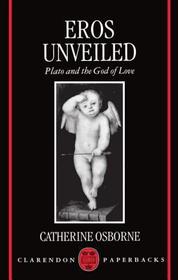
Few books on love can claim to make significant contributions to our understanding both of ancient views on eros and its place in the Christian tradition. On the basis of a new and sympathetic reading of Plato, Catherine Osborne shows that the long-standing distrust of eros, rather than agape, as a model for the believer's relation to God in Christian thought derives from a misunderstanding of ancient thought on love. Focusing on a number of classic texts, including Plato's Symposium and Lysis, Aristotle's Ethics and Metaphysics, and famous passages in Gregory of Nyssa, Origen, Dionysius the Areopagite, Plotinus, Augustine, and Thomas Aquinas, she shows that love is not motivated by a need that seeks fulfilment. On the contrary, Dr Osborne argues, to seek a motive for love, whether in Plato's account or our own, is to pursue a philosophical confusion. To mention love is to mention the motive that explains our response of affection or devotion or desire; the response cannot be the motive for our love, but is an attitude that belongs in a vision of the beloved transfigured by love. It is for this reason that we have to restore the image of Cupid, whose mischievous darts picture the impossiblity of seeking some further grounds or explanation for love.
Osborne's approach- the question, 'who loves whom, and for what'- represents an entirely fresh approach to ancient views on eros and its place in the Christian tradition...This is an unusual book in almost every respect...Osborne's style is engaging, what she has to say original, and her reading of anicent texts topples old hypotheses and provides new ones for consideration. They deserve to be considered.

