

- Publisher's listprice GBP 47.99
-
21 667 Ft (20 635 Ft + 5% VAT)
The price is estimated because at the time of ordering we do not know what conversion rates will apply to HUF / product currency when the book arrives. In case HUF is weaker, the price increases slightly, in case HUF is stronger, the price goes lower slightly.
- Discount 10% (cc. 2 167 Ft off)
- Discounted price 19 500 Ft (18 572 Ft + 5% VAT)
Subcribe now and take benefit of a favourable price.
Subscribe
21 667 Ft

Availability
printed on demand
Why don't you give exact delivery time?
Delivery time is estimated on our previous experiences. We give estimations only, because we order from outside Hungary, and the delivery time mainly depends on how quickly the publisher supplies the book. Faster or slower deliveries both happen, but we do our best to supply as quickly as possible.
Product details:
- Publisher Clarendon Press
- Date of Publication 25 April 1996
- ISBN 9780198267669
- Binding Paperback
- No. of pages260 pages
- Size 138x216x18 mm
- Weight 395 g
- Language English 0
Categories
Short description:
This book challenges the traditional distinction between eros, the love found in Greek thought, and agape, the love characteristic of Christianity. By showing that Plato's account of eros is not founded on self-interest, the author restores the place of erotic love as a Christian motif, and unravels some long standing confusions in philosophical discussions about love.
MoreLong description:
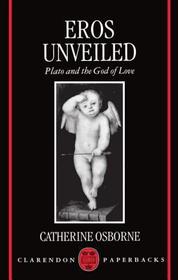
Few books on love can claim to make significant contributions to our understanding both of ancient views on eros and its place in the Christian tradition. On the basis of a new and sympathetic reading of Plato, Catherine Osborne shows that the long-standing distrust of eros, rather than agape, as a model for the believer's relation to God in Christian thought derives from a misunderstanding of ancient thought on love. Focusing on a number of classic texts, including Plato's Symposium and Lysis, Aristotle's Ethics and Metaphysics, and famous passages in Gregory of Nyssa, Origen, Dionysius the Areopagite, Plotinus, Augustine, and Thomas Aquinas, she shows that love is not motivated by a need that seeks fulfilment. On the contrary, Dr Osborne argues, to seek a motive for love, whether in Plato's account or our own, is to pursue a philosophical confusion. To mention love is to mention the motive that explains our response of affection or devotion or desire; the response cannot be the motive for our love, but is an attitude that belongs in a vision of the beloved transfigured by love. It is for this reason that we have to restore the image of Cupid, whose mischievous darts picture the impossiblity of seeking some further grounds or explanation for love.
Osborne's approach- the question, 'who loves whom, and for what'- represents an entirely fresh approach to ancient views on eros and its place in the Christian tradition...This is an unusual book in almost every respect...Osborne's style is engaging, what she has to say original, and her reading of anicent texts topples old hypotheses and provides new ones for consideration. They deserve to be considered.

