

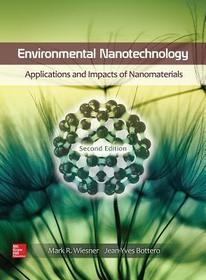
Environmental Nanotechnology: Applications and Impacts of Nanomaterials, Second Edition
Sorozatcím: P/L CUSTOM SCORING SURVEY;
-
10% KEDVEZMÉNY?
- A kedvezmény csak az 'Értesítés a kedvenc témákról' hírlevelünk címzettjeinek rendeléseire érvényes.
- Kiadói listaár GBP 148.99
-
67 268 Ft (64 065 Ft + 5% áfa)
Az ár azért becsült, mert a rendelés pillanatában nem lehet pontosan tudni, hogy a beérkezéskor milyen lesz a forint árfolyama az adott termék eredeti devizájához képest. Ha a forint romlana, kissé többet, ha javulna, kissé kevesebbet kell majd fizetnie.
- Kedvezmény(ek) 10% (cc. 6 727 Ft off)
- Kedvezményes ár 60 541 Ft (57 659 Ft + 5% áfa)
Iratkozzon fel most és részesüljön kedvezőbb árainkból!
Feliratkozom
67 268 Ft

Beszerezhetőség
Megrendelésre a kiadó utánnyomja a könyvet. Rendelhető, de a szokásosnál kicsit lassabban érkezik meg.
Why don't you give exact delivery time?
A beszerzés időigényét az eddigi tapasztalatokra alapozva adjuk meg. Azért becsült, mert a terméket külföldről hozzuk be, így a kiadó kiszolgálásának pillanatnyi gyorsaságától is függ. A megadottnál gyorsabb és lassabb szállítás is elképzelhető, de mindent megteszünk, hogy Ön a lehető leghamarabb jusson hozzá a termékhez.
A termék adatai:
- Kiadás sorszáma 2
- Kiadó McGraw Hill
- Megjelenés dátuma 2016. november 16.
- ISBN 9780071828444
- Kötéstípus Keménykötés
- Terjedelem416 oldal
- Méret 284x221x27 mm
- Súly 1216 g
- Nyelv angol 0
Kategóriák
Hosszú leírás:
Publisher's Note: Products purchased from Third Party sellers are not guaranteed by the publisher for quality, authenticity, or access to any online entitlements included with the product.
The groundbreaking text on the impact of nanomaterials on the environment – completely updated to reflect the latest breakthroughs and developments
Co-written by a team of leading experts from around the world, Environmental Nanotechnology provides a thorough look at nanomaterial technologies, their use in engineering applications, and their effect on the environment. The Second Edition expertly addresses the rapid and extensive developments that have taken place in this area over the past decade. Since the release of the first edition, much more has been learned about the impact of nanomaterials on organisms and ecosystems. Methods have been developed where there were few accepted procedures in the past. Thinking has evolved to consider the life cycle effects of nanomaterial production, and tools for risk forecasting are now under development.
The Second Edition of Environmental Nanotechnology has been extensively updated and revised to capture these cutting-edge advances in all-new chapters that include Ecotoxicology Principles for Manufactured Nanomaterials, Nanomaterials in Ecosystems, Risk Forecasting and Life-Cycle Considerations, and Nanotechnology Governance for Sustainable Science and Policy.
Sections Include:
• Overview (Nanotechnology and the Environment)
• Principles and Methods
• Environmental Applications of Nanomaterials
• Environmental Implications
Environmental Nanotechnology will prove invaluable in helping to address the challenges associated with meeting society’s needs for energy and materials in an environmentally responsible fashion.
Publisher's Note: Products purchased from Third Party sellers are not guaranteed by the publisher for quality, authenticity, or access to any online entitlements included with the product.
The groundbreaking text on the impact of nanomaterials on the environment – completely updated to reflect the latest breakthroughs and developments
Co-written by a team of leading experts from around the world, Environmental Nanotechnology provides a thorough look at nanomaterial technologies, their use in engineering applications, and their effect on the environment. The Second Edition expertly addresses the rapid and extensive developments that have taken place in this area over the past decade. Since the release of the first edition, much more has been learned about the impact of nanomaterials on organisms and ecosystems. Methods have been developed where there were few accepted procedures in the past. Thinking has evolved to consider the life cycle effects of nanomaterial production, and tools for risk forecasting are now under development.
The Second Edition of Environmental Nanotechnology has been extensively updated and revised to capture these cutting-edge advances in all-new chapters that include Ecotoxicology Principles for Manufactured Nanomaterials, Nanomaterials in Ecosystems, Risk Forecasting and Life-Cycle Considerations, and Nanotechnology Governance for Sustainable Science and Policy.
Sections Include:
• Overview (Nanotechnology and the Environment)
• Principles and Methods
• Environmental Applications of Nanomaterials
• Environmental Implications
Environmental Nanotechnology will prove invaluable in helping to address the challenges associated with meeting society’s needs for energy and materials in an environmentally responsible fashion.
Tartalomjegyzék:
INTRODUCTION
Ch 1. Nanotechnology and the Environment
Ch 2. Natural, Incidental, and Engineered Nanoparticles
PRINCIPLES
Ch 3. Nanomaterial fabrication
Ch 4.Characterization & metrology / Characterization in complex media
Ch 5. Interfacial processes and transport / Principles of nanoparticle transport
Ch 6. Transformations / Nanoparticle transformations, aging, degradation, adsorption, redox, dissolution
Ch 7. Adsorption and catalysis
Ch 8. Photocatalytic nanoparticles
Ch 9. Ecotoxicology + toxicology assessment / Principles for assessing biocompatibility and toxicity
ENVIRONMENTAL APPLICATIONS
Ch 10. Nano & groundwater
Ch 11. Nano & membranes
Ch 12. Sensors
Ch 13. Energy
ENVIRONMENTAL IMPLICATIONS – Exposure & Hazard
Ch 14. Risk-Overview-Update – value chain, risk characterization, forecasting
Ch 15. Exposure: (a) sources (b) environmental fate – air, water, soil, sediment
Ch 16. Intermedia transfers
Ch 17. Biouptake, biodistributions, biotransformations
Ch 18. Hazards: (a) human toxicology (b) ecotoxicology (c) systemic hazards & ecosystems
SCIENCE, ENGINEERING, & SOCIETY
Ch 19. LCA-Nanomaterial production and use from a life-cycle perspective / Nanomaterials in products
Ch 20. Risk forecasting
Ch 21. Case studies

