

-
10% KEDVEZMÉNY?
- A kedvezmény csak az 'Értesítés a kedvenc témákról' hírlevelünk címzettjeinek rendeléseire érvényes.
- Kiadói listaár GBP 145.00
-
65 467 Ft (62 350 Ft + 5% áfa)
Az ár azért becsült, mert a rendelés pillanatában nem lehet pontosan tudni, hogy a beérkezéskor milyen lesz a forint árfolyama az adott termék eredeti devizájához képest. Ha a forint romlana, kissé többet, ha javulna, kissé kevesebbet kell majd fizetnie.
- Kedvezmény(ek) 10% (cc. 6 547 Ft off)
- Kedvezményes ár 58 921 Ft (56 115 Ft + 5% áfa)
Iratkozzon fel most és részesüljön kedvezőbb árainkból!
Feliratkozom
65 467 Ft

Beszerezhetőség
Megrendelésre a kiadó utánnyomja a könyvet. Rendelhető, de a szokásosnál kicsit lassabban érkezik meg.
Why don't you give exact delivery time?
A beszerzés időigényét az eddigi tapasztalatokra alapozva adjuk meg. Azért becsült, mert a terméket külföldről hozzuk be, így a kiadó kiszolgálásának pillanatnyi gyorsaságától is függ. A megadottnál gyorsabb és lassabb szállítás is elképzelhető, de mindent megteszünk, hogy Ön a lehető leghamarabb jusson hozzá a termékhez.
A termék adatai:
- Kiadó OUP USA
- Megjelenés dátuma 2014. november 13.
- ISBN 9780199782185
- Kötéstípus Keménykötés
- Terjedelem392 oldal
- Méret 145x218x27 mm
- Súly 649 g
- Nyelv angol 0
Kategóriák
Rövid leírás:
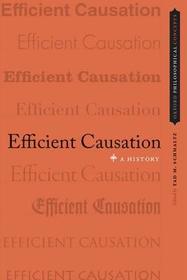
This volume is a collection of new essays by specialists that trace the concept of efficient causation from its discovery (or invention) in Ancient Greece, through its development in late antiquity, the medieval period, and modern philosophy, to its use in contemporary metaphysics and philosophy of science.
TöbbHosszú leírás:
Causation is now commonly supposed to involve a succession that instantiates some law-like regularity. Efficient Causation: A History examines how our modern notion developed from a very different understanding of efficient causation. This volume begins with Aristotle's initial conception of efficient causation, and then considers the transformations and reconsiderations of this conception in late antiquity, medieval and modern philosophy, ending with contemporary accounts of causation. It includes four short "Reflections" that explore the significance of the concept for literature, the history of music, the history of science, and contemporary art theory.
The volume showcases crucial elements that at one point or another entered into philosophical views of efficient causation. It provides a useful framework for taking a fresh look at existing work on causation... This Oxford Philosophical Concepts anthology represents a great first step toward a better, historically situated, understanding of efficient causation. As such it is a welcome addition to the philosophical literature.
Tartalomjegyzék:
Introduction
Tad M. Schmaltz
Part I Ancient and Medieval
1. Aristotle and the Discovery of Efficient Causation, Thomas M. Tuozzo
Reflection: Representations of Efficient Causation in the Iliad, Tobias Myers
2. Efficient Causation in the Stoic Tradition, R. J. Hankinson
3. Efficient Causation in Late Antiquity and the Earlier Medieval Era, Ian Wilks
4. Efficient Causation: From Ibn Sina to Ockham, Kara Richardson
Reflection: Efficient Causation and Musical Inspiration, Anna Harwell Celenza
Part II Modern
5. Efficient Causation: From Suárez to Descartes, Tad M. Schmaltz
6. Efficient Causation in Spinoza and Leibniz, Martin Lin
Reflection: Reason, Calculating Machines and Efficient Causation, Matthew L. Jones
7. Efficient Causation in Malebranche and Berkeley, Lisa Downing
8. Efficient Causation in Hume, P. J. E. Kail
9. Efficient Causation in Kant, Eric Watkins
Part III Contemporary
10. Contemporary Efficient Causation: Humean Themes, Douglas Ehring
Reflection:Efficient Causation in Art, Tina Rivers
11. Contemporary Efficient Causation: Aristotelian Themes, Stephen Mumford
Bibliography
Pre-20th-Century Sources
20th- and 21st-Century Literature
Index

