

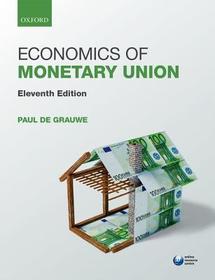
Economics of Monetary Union
-
10% KEDVEZMÉNY?
- A kedvezmény csak az 'Értesítés a kedvenc témákról' hírlevelünk címzettjeinek rendeléseire érvényes.
- Kiadói listaár GBP 48.99
-
23 404 Ft (22 290 Ft + 5% áfa)
Az ár azért becsült, mert a rendelés pillanatában nem lehet pontosan tudni, hogy a beérkezéskor milyen lesz a forint árfolyama az adott termék eredeti devizájához képest. Ha a forint romlana, kissé többet, ha javulna, kissé kevesebbet kell majd fizetnie.
- Kedvezmény(ek) 10% (cc. 2 340 Ft off)
- Kedvezményes ár 21 064 Ft (20 061 Ft + 5% áfa)
Iratkozzon fel most és részesüljön kedvezőbb árainkból!
Feliratkozom
23 404 Ft

Beszerezhetőség
A kiadónál véglegesen elfogyott, nem rendelhető. Érdemes újra keresni a címmel, hátha van újabb kiadás.
Why don't you give exact delivery time?
A beszerzés időigényét az eddigi tapasztalatokra alapozva adjuk meg. Azért becsült, mert a terméket külföldről hozzuk be, így a kiadó kiszolgálásának pillanatnyi gyorsaságától is függ. A megadottnál gyorsabb és lassabb szállítás is elképzelhető, de mindent megteszünk, hogy Ön a lehető leghamarabb jusson hozzá a termékhez.
A termék adatai:
- Kiadás sorszáma 11
- Kiadó OUP Oxford
- Megjelenés dátuma 2016. február 4.
- ISBN 9780198739876
- Kötéstípus Puhakötés
- Terjedelem288 oldal
- Méret 247x195x13 mm
- Súly 492 g
- Nyelv angol 0
Kategóriák
Rövid leírás:
Economics of Monetary Union provides concise analysis of theories and policies relating to monetary union. It addresses current issues surrounding the Eurozone, including; costs and benefits of possible exits by member countries, an analysis of the role of the ECB as new single supervisor and detail on the sovereign debt crisis.
TöbbHosszú leírás:
The eleventh edition of Economics of Monetary Union provides a concise analysis of the theories and policies relating to monetary union. The author addresses current issues surrounding the Eurozone, including; a critical discussion of the costs and benefits of possible exits by its member countries, an analysis of the role of the ECB as new single supervisor and detail on the sovereign debt crisis.
In Part One the author examines the implications of adopting a common currency, assessing the benefit to each country from being a member of the Eurozone, whilst also questioning whether other parts of the world would gain from monetary unification. Part Two of the book looks at the problems of running a monetary union by analysing Europe's experience and the issues faced by the European Central Bank.
This continues to be the best book on the market on the Economics of EMU, regularly updated, well-grounded in theory, and with even complex ideas extremely clearly explained...
Tartalomjegyzék:
Part One: Costs and Benefits of Monetary Union
The Costs of Common Currency
The Theory of Optimum Currency Areas: A Critique
The Benefits of a Common Currency
Costs and Benefits Compared
Part Two: Monetary Union
The Fragility of Incomplete Monetary Union
How to Complete a Monetary Union?
The Transition to a Monetary Union
The European Central Bank
Monetary Policy in the Eurozone
Fiscal Policies in Monetary Unions
The Euro and Financial Markets

