

-
20% KEDVEZMÉNY?
- A kedvezmény csak az 'Értesítés a kedvenc témákról' hírlevelünk címzettjeinek rendeléseire érvényes.
- Kiadói listaár EUR 106.99
-
41 790 Ft (39 800 Ft + 5% áfa)
Az ár azért becsült, mert a rendelés pillanatában nem lehet pontosan tudni, hogy a beérkezéskor milyen lesz a forint árfolyama az adott termék eredeti devizájához képest. Ha a forint romlana, kissé többet, ha javulna, kissé kevesebbet kell majd fizetnie.
- Kedvezmény(ek) 20% (cc. 8 358 Ft off)
- Kedvezményes ár 33 432 Ft (31 840 Ft + 5% áfa)
- A kedvezmény érvényes eddig: 2026. június 30.
Iratkozzon fel most és részesüljön kedvezőbb árainkból!
Feliratkozom
36 775 Ft

Beszerezhetőség
Még nem jelent meg, de rendelhető. A megjelenéstől számított néhány héten belül megérkezik.
Why don't you give exact delivery time?
A beszerzés időigényét az eddigi tapasztalatokra alapozva adjuk meg. Azért becsült, mert a terméket külföldről hozzuk be, így a kiadó kiszolgálásának pillanatnyi gyorsaságától is függ. A megadottnál gyorsabb és lassabb szállítás is elképzelhető, de mindent megteszünk, hogy Ön a lehető leghamarabb jusson hozzá a termékhez.
A termék adatai:
- Kiadó Springer Berlin Heidelberg
- Megjelenés dátuma 2026. augusztus 1.
- ISBN 9783662733189
- Kötéstípus Puhakötés
- Terjedelem270 oldal
- Méret 235x155 mm
- Nyelv angol
- Illusztrációk X, 270 p. 41 illus. 700
Kategóriák
Hosszú leírás:
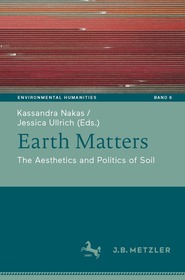
This book addresses the increasing social, scientific and, above all, artistic discussion of soil(s) in current cultural-societal contexts. The end of the „International Decade of Soils“ (2015-2024) marked a development that has focussed on the central importance of the earth for life, biodiversity and climate on our planet since the turn of the millennium. In addition to the political and scientific recognition of this, Earth as a material has increasingly become the centre of cultural and artistic debates. In these debates, the awareness of the earth as a living organism initiated in the social and natural science discourse was taken up and further deepened. Earth is thus understood as a carrier of history, culture and identity, as a distinct and genuinely self-sufficient ecosystem that is, however, existentially threatened by climate change, industrialised and unsustainable forms of agriculture, as well as extractivism. In art, soil has evolved from an aesthetic medium to a carrier of political, ecological and historical statements. Artists today thematise ecological crises, colonial violence, land grabbing, plant blindness and the close relationship between humans and the earth. New narrative, archival and installative forms are emerging in which the earth is not just a material but an actor - often in the sense of a †̃new materialismâ€TM or †̃posthumanismâ€TM. Numerous exhibitions worldwide testify to the growing interest in the topic of soil in art. Historical pioneers such as Ana Mendieta, Agnes Denes and herman de vries have laid the foundations for today's positions. Current works often take up Indigenous perspectives, feminist approaches and ecological issues and call for a new relationship with the earth - as a living counterpart, not as an object to be exploited. With a number of essays ranging from Western philosophy to Indigenous epistemology, from historical examples to highly topical activist positions, this book aims to give a comprehensive insight into current theoretical and artistic discourses in ecological art studies. It brings together contributions from different continents that shed light on the topic of soil(s) in distinctive cultural contexts: as a †̃natural givenâ€TM, political token, artistic matter, mythological bearer, and others. In this light, the eponymous term “soilâ€- is being conceptualized in its pluralistic sense: There is no such thing as definitive and solitary soil, but it has different meanings in different geographical, political, historical and cultural contexts. Contributions by established scholars as well as junior researchers offer a range of methodological approaches: art historical essays weighing in on the aesthetic implications of earthen matter, eco-political and eco-feminist theories, material studies, and others. Â
TöbbTartalomjegyzék:
"
Chapter 1. Introduction.- Part I: Into the Soil.- Chapter 2. Assembling, Metabolizing, Surfacing: Aesthetic Strategies for Knowledge Co-Creation in Contemporary Soil Art.- Chapter 3. Soil and Sound. Subterranean Soundscapes and Animal Sound Communication.- Part II: The Politics of Soil: Decolonial and Indigenous Perspectives.- Chapter 4. The Falling Sky: Shamanic Alternatives for a Wild Art History.- Chapter 5. “The Unceasing Chanting of Land”: Abigail Romanchak Recontextualises Seismographic Readings of KÄ«lauea.- Part III: Agropolitics and Remediaton.- Chapter 6. The Chemical Landscapes of South Tirolean Agricultural Soils: Katrin Hornek’s Plant Plant and Elena Mazzi’s Copperialities.- Chapter 7. Urban Landscape and The Hidden Architecture of Brownfields (On Soil Remediation, Plants, and The Art of SLOW Clean-up).- Part IV: Bodies and Soils.- Chapter 8. Feminist Aesthetics of Body-Territory in Chilean Visual Art.- Chapter 9. Matters of Becoming. Soils and Bodies in Contemporary Art.- Chapter 10. Becoming Soil. Queer Compos(t)ing for Earthly Survival.- Part V: Soil Imaginaries.- Chapter 11. Melting, Pouring, Unearthing. Earth in the Material Aesthetics of Gaston Bachelard.- Chapter 12. The Earth in Art: MÄ-ori and New Materialist Perspectives.
" Több
