

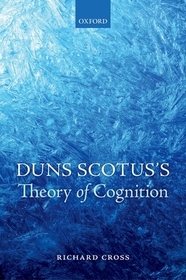
Duns Scotus's Theory of Cognition
-
10% KEDVEZMÉNY?
- A kedvezmény csak az 'Értesítés a kedvenc témákról' hírlevelünk címzettjeinek rendeléseire érvényes.
- Kiadói listaár GBP 79.00
-
35 668 Ft (33 970 Ft + 5% áfa)
Az ár azért becsült, mert a rendelés pillanatában nem lehet pontosan tudni, hogy a beérkezéskor milyen lesz a forint árfolyama az adott termék eredeti devizájához képest. Ha a forint romlana, kissé többet, ha javulna, kissé kevesebbet kell majd fizetnie.
- Kedvezmény(ek) 10% (cc. 3 567 Ft off)
- Kedvezményes ár 32 102 Ft (30 573 Ft + 5% áfa)
Iratkozzon fel most és részesüljön kedvezőbb árainkból!
Feliratkozom
35 668 Ft

Beszerezhetőség
Megrendelésre a kiadó utánnyomja a könyvet. Rendelhető, de a szokásosnál kicsit lassabban érkezik meg.
Why don't you give exact delivery time?
A beszerzés időigényét az eddigi tapasztalatokra alapozva adjuk meg. Azért becsült, mert a terméket külföldről hozzuk be, így a kiadó kiszolgálásának pillanatnyi gyorsaságától is függ. A megadottnál gyorsabb és lassabb szállítás is elképzelhető, de mindent megteszünk, hogy Ön a lehető leghamarabb jusson hozzá a termékhez.
A termék adatai:
- Kiadó OUP Oxford
- Megjelenés dátuma 2014. szeptember 11.
- ISBN 9780199684885
- Kötéstípus Keménykötés
- Terjedelem240 oldal
- Méret 240x169x20 mm
- Súly 518 g
- Nyelv angol 0
Kategóriák
Rövid leírás:
Richard Cross provides the first full study of Duns Scotus's theory of cognition, examining his account of the processes involved in cognition, from sensation, through intuition and abstraction, to conceptual thought. Cross places Scotus's thought clearly within the context of 13th-century study on the mind, and of his intellectual forebears.
TöbbHosszú leírás:
Richard Cross provides the first complete and detailed account of Duns Scotus's theory of cognition, tracing the processes involved in cognition from sensation, through intuition and abstraction, to conceptual thought. He provides an analysis of the ontological status of the various mental items (acts and dispositions) involved in cognition, and a new account of Scotus on nature of conceptual content. Cross goes on to offer a novel, reductionist, interpretation of Scotus's view of the ontological status of representational content, as well as new accounts of Scotus's opinions on intuitive cognition, intelligible species, and the varieties of consciousness. Scotus was a perceptive but highly critical reader of his intellectual forebears, and this volume places his thought clearly within the context of thirteenth-century reflections on cognitive psychology, influenced as they were by Aristotle, Augustine, and Avicenna. As far as possible, Duns Scotus's Theory of Cognition traces developments in Scotus's thought during the ten or so highly productive years that formed the bulk of his intellectual life.
[Cross] is in my mind one of the few who have the ability to make Scotus understandable, clear and philosophically interesting. It is always a delight to pick up one of his books on Scotus. I constantly learn something new. He has now published a new book on Scotus's theory of cognition. It is another very interesting treatment of an important aspect of Scotus's philosophy ... It is the clearest and most interesting treatment of Scotus's theory of cognition out there.
Tartalomjegyzék:
Introduction
Sensation
Intuitive cognition
Abstractive cognition (1): abstraction and concept formation
Abstractive cognition (2): intelligible species
The ontological status of cognitive acts
The production of cognitive acts
The soul and its powers
Semantic internalism and the grounds of intentionality
Mental language and the nature of conceptual content
The ontological status of mental content
Concluding remarks

