

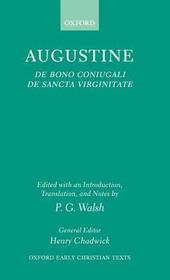
De Bono Coniugali and De Sancta Virginitate
Sorozatcím: Oxford Early Christian Texts;
-
10% KEDVEZMÉNY?
- A kedvezmény csak az 'Értesítés a kedvenc témákról' hírlevelünk címzettjeinek rendeléseire érvényes.
- Kiadói listaár GBP 202.50
-
91 428 Ft (87 075 Ft + 5% áfa)
Az ár azért becsült, mert a rendelés pillanatában nem lehet pontosan tudni, hogy a beérkezéskor milyen lesz a forint árfolyama az adott termék eredeti devizájához képest. Ha a forint romlana, kissé többet, ha javulna, kissé kevesebbet kell majd fizetnie.
- Kedvezmény(ek) 10% (kb. 9 142 Ft)
- Kedvezményes ár 82 286 Ft (78 368 Ft + 5% áfa)
Iratkozzon fel most és részesüljön kedvezőbb árainkból!
Feliratkozom
91 428 Ft

Beszerezhetőség
Megrendelésre a kiadó utánnyomja a könyvet. Rendelhető, de a szokásosnál kicsit lassabban érkezik meg.
Why don't you give exact delivery time?
A beszerzés időigényét az eddigi tapasztalatokra alapozva adjuk meg. Azért becsült, mert a terméket külföldről hozzuk be, így a kiadó kiszolgálásának pillanatnyi gyorsaságától is függ. A megadottnál gyorsabb és lassabb szállítás is elképzelhető, de mindent megteszünk, hogy Ön a lehető leghamarabb jusson hozzá a termékhez.
A termék adatai:
- Kiadó OUP Oxford
- Megjelenés dátuma 2001. március 8.
- ISBN 9780198269953
- Kötéstípus Keménykötés
- Terjedelem200 oldal
- Méret 224x145x15 mm
- Súly 350 g
- Nyelv angol 0
Kategóriák
Rövid leírás:
De bono coniugali and De sancta virginitate were written in the same year (AD 401). In them Augustine rebuffs the Manichees, who argued that marriage was evil, and the followers of Jovinian, who argued that the married state was as meritorious as that of virginity. The first work analyses why marriage is good, and the second why virginity is a higher good. Both are closely related to present-day controversies amongst theologians and social historians. This edition includes the Latin text, a new translation, an introduction, and explanatory notes.
TöbbHosszú leírás:
De bono coniugali and De sancta virginitate were written in the same year (AD 401). In them Augustine rebuffs the Manichees, who argued that marriage was evil, and the fellowers of Jovinian, who argued that the married state was as meritorious as that of virginity. The first work analyses why marriage is good, and the second why virginity is a higher good. Both are closely related to present-day controversies amongst theologians and social historians.
These two treatises have been neglected until recently, but lately there has been an outpouring of books and articles on the role of women in the societies of Rome and early Christianity. Moreover, Augustine has received and is continuing to receive enhanced attention in the English-speaking world. No new edition of these works has been published since 1900, and there is no contemporary English translation in print. This new translation and edition of the text will be of value both to readers who wish to consult the original Latin, and to those interested in the social history of early Christianity, and in the intellectual development of Augustine in his early years as bishop of Hippo.
The notes are very useful, providing references to a range of classical and Christian authors, as well as to modern literature.

