

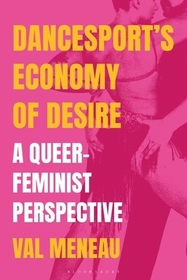
DanceSport’s Economy of Desire
A Queer-Feminist Perspective
-
20% KEDVEZMÉNY?
- A kedvezmény csak az 'Értesítés a kedvenc témákról' hírlevelünk címzettjeinek rendeléseire érvényes.
- Kiadói listaár GBP 85.00
-
38 377 Ft (36 550 Ft + 5% áfa)
Az ár azért becsült, mert a rendelés pillanatában nem lehet pontosan tudni, hogy a beérkezéskor milyen lesz a forint árfolyama az adott termék eredeti devizájához képest. Ha a forint romlana, kissé többet, ha javulna, kissé kevesebbet kell majd fizetnie.
- Kedvezmény(ek) 20% (cc. 7 675 Ft off)
- Kedvezményes ár 30 702 Ft (29 240 Ft + 5% áfa)
- A kedvezmény érvényes eddig: 2026. június 30.
Iratkozzon fel most és részesüljön kedvezőbb árainkból!
Feliratkozom
31 470 Ft

Beszerezhetőség
Megrendelésre a kiadó utánnyomja a könyvet. Rendelhető, de a szokásosnál kicsit lassabban érkezik meg.
Why don't you give exact delivery time?
A beszerzés időigényét az eddigi tapasztalatokra alapozva adjuk meg. Azért becsült, mert a terméket külföldről hozzuk be, így a kiadó kiszolgálásának pillanatnyi gyorsaságától is függ. A megadottnál gyorsabb és lassabb szállítás is elképzelhető, de mindent megteszünk, hogy Ön a lehető leghamarabb jusson hozzá a termékhez.
A termék adatai:
- Kiadó Bloomsbury Publishing (UK)
- Megjelenés dátuma 2026. április 30.
- Kötetek száma Hardback
- ISBN 9781350531680
- Kötéstípus Keménykötés
- Terjedelem216 oldal
- Méret 238x154x18 mm
- Súly 480 g
- Nyelv angol 700
Kategóriák
Rövid leírás:
Examines how the DanceSport dispositive shapes its actors' opportunities, desires, and choices to reify the heteronormative gender binary.
TöbbHosszú leírás:
DanceSport's Economy of Desire examines how the DanceSport dispositive shapes its actors' opportunities, desires, and choices to reproduce the heteronormative gender binary, focusing on the DanceSport dispositive, a network of power that spans over and influences objects (such as clothes or competition halls), discourses (such as federations' competition regulations, syllabus books, judging criteria), and practices (dancing or choreographing).
Meneau argues that the DanceSport dispositive constrains what Latin dance can look like, despite resistance and counter-movements, by excluding or invisibilising queerness and objectifying and sexualising female dancers. This shows in all elements that affect or constitute dancers' performances on the (competition) dance floor; that includes registration, clothing, coupling, partnering, moving, judging.
This book helps readers understand how the heteronormative gender binary works, how it plays out in all the elements that influence or make up dance, and how it manages to remain hegemonic. It demonstrates how the DanceSport dispositive affects and influences all its actors, all the time - how we think, decide, move, perceive others, or incorporate knowledge that shapes our bodies according to norms and productive power. Finally, by looking for the heteronormative gender binary in the dance and in the regulations, DanceSport's Economy of Desire unravels the underlying mechanisms that secure the oppressive systems and allows society at large to better understand them.
Tartalomjegyzék:
List of Illustrations
List of Tables
Acknowledgements
List of Abbreviations
Introduction
Autoethnography: My Gender Journey in Dancesport
1. The Aesthetics of the Heteronormative Gender Binary
2. Latin Dancesport's Hyper-Sexual Subculture
3. Gender[less/ed] Moving Bodies
4. Gender [less/ed] Interactions
5. Gender[less/ed] Judging
6. The Economy of Desire
Now What?
Notes
Short Bibliography
Index

