

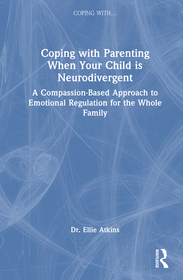
Coping with Parenting When Your Child is Neurodivergent
Emotional Regulation for the Whole Family
Sorozatcím: Coping With…;
-
20% KEDVEZMÉNY?
- A kedvezmény csak az 'Értesítés a kedvenc témákról' hírlevelünk címzettjeinek rendeléseire érvényes.
- Kiadói listaár GBP 140.00
-
63 210 Ft (60 200 Ft + 5% áfa)
Az ár azért becsült, mert a rendelés pillanatában nem lehet pontosan tudni, hogy a beérkezéskor milyen lesz a forint árfolyama az adott termék eredeti devizájához képest. Ha a forint romlana, kissé többet, ha javulna, kissé kevesebbet kell majd fizetnie.
- Kedvezmény(ek) 20% (cc. 12 642 Ft off)
- Kedvezményes ár 50 568 Ft (48 160 Ft + 5% áfa)
- A kedvezmény érvényes eddig: 2026. június 30.
Iratkozzon fel most és részesüljön kedvezőbb árainkból!
Feliratkozom
56 889 Ft

Beszerezhetőség
Még nem jelent meg, de rendelhető. A megjelenéstől számított néhány héten belül megérkezik.
Why don't you give exact delivery time?
A beszerzés időigényét az eddigi tapasztalatokra alapozva adjuk meg. Azért becsült, mert a terméket külföldről hozzuk be, így a kiadó kiszolgálásának pillanatnyi gyorsaságától is függ. A megadottnál gyorsabb és lassabb szállítás is elképzelhető, de mindent megteszünk, hogy Ön a lehető leghamarabb jusson hozzá a termékhez.
A termék adatai:
- Kiadás sorszáma 1
- Kiadó Routledge
- Megjelenés dátuma 2026. július 1.
- ISBN 9781041009016
- Kötéstípus Keménykötés
- Terjedelem296 oldal
- Méret 234x156 mm
- Nyelv angol
- Illusztrációk 22 Illustrations, black & white; 22 Line drawings, black & white 700
Kategóriák
Rövid leírás:
Combining the author’s experience as a clinical psychologist and lived experience of parenting neurodivergent children, Coping with Parenting Neurodivergent Children draws from a range of therapeutic techniques and psychological theory to propose a compassion-based approach.
Több
Hosszú leírás:
Combining the author’s experience as a clinical psychologist and lived experience of parenting neurodivergent children, Coping with Parenting When Your Child is Neurodivergent draws from a range of therapeutic techniques and psychological theory to propose a compassion-based approach, guiding parents through recognising and managing their own feelings in order to better to support their child.
With a focus on emotional regulation for both the parent and the child throughout, this essential book acknowledges the challenges and opportunities of parenting neurodivergent children while also providing practical strategies for effective parenting. Topics explored include, but are not limited to:
• Understanding neurodiversity and dysregulation
• Exploring your feelings about parenting
• Navigating the assessment and diagnostic process
• Making sense of a diagnosis and helping you child understand themselves
• Navigating the school system and supporting your child with school and education
• Compassion for yourself and others
• The teenage years and mental health.
An essential read for any parent to a neurodivergent child, this text will support parents in thinking about their own experiences and emotions, while also considering how this interacts with their ability to parent effectively. This may also be of interest to mental health, healthcare and education practitioners who want to better understand the experiences of neurodivergent children and their parents.
'This is a really helpful book for parents because it is written by the parent of an autistic young person, but one who also has the professional knowledge that comes from being a clinical psychologist and former teacher. It is very honest about the difficulties of parenting neurodivergent children (as well as the joys), with plenty of examples from the author’s own family life. The book focuses on what is happening in the parent’s mind as much as the child’s, and explains how parents can help themselves to cope better with difficult situations and thereby help their child. It is very reassuring too, reminding us that our reactions to stressful situations are perfectly normal, and that we should be compassionate to ourselves rather than being self-critical, as there is no such thing as a perfect parent. I wish this book had been around when my son was small.'
Sara Truman, OBE. Parent of an autistic son.
'From the very first letters, I was hooked. They reveal such warmth and humanity that I felt instantly connected—as if the author truly sees us, the readers. The chapter summaries are a thoughtful touch, especially helpful for those of us navigating ADHD, menopause, or simply busy lives. But what makes this book truly special is its heart. As a parent of a neurodivergent young person, I found myself learning, laughing, and nodding along. It's relatable, insightful, and compassionate. A must-read for anyone seeking connection and understanding.'
Kris Cornell, Alternative Provision Manager, Appeer – connecting autistic girls and women
'I loved Ellie's book on "Coping with Parenting Neurodivergent Children". As a Clinical Psychologist and parent of a neurodivergent young adult myself, I really resonated with some of the joys and struggles Ellie described in parenting these unique young people. I loved the honesty and authenticity of Ellie's account of her own personal experiences. The often-awkward juxtaposition of our roles as professional experts versus our experience as real-life humans facing real time struggles is a key strength of this whole series of books. The "Coping with ..." series continues to grow and Ellie's book is an excellent, and much needed addition to the series. Children in general do not come with a user manual, and our neurodivergent children would not even fit that manual if such a thing existed. Drawing heavily on compassion focused therapy, Ellie provides evidence based, tried and tested strategies for handling the ups and downs along your unique parenting journey with your own unique neurodivergent children.'
Dr Yvonne Waft, Clinical Psychologist, EMDR Consultant & Facilitator, Author of Coping with Trauma (2023: Sequoia).
Több
Tartalomjegyzék:
Contents
Forewords
Acknowledgements
The first priority
A letter to my children
A letter to the reader
Section 1: Parenting and feelings
Chapter 1: Introductions
Chapter 2: Understanding neurodiversity
Chapter 3: Feelings
Chapter 4: Why do we parent the way that we do?
Chapter 5: Thinking beyond ourselves: External influences on our parenting
Chapter 6: Regulation and Dysregulation
Chapter 7: Dysregulated parenting
Chapter 8: The Three Circles
Section 2: Our foundation stones
Chapter 9: Compassion is key
Chapter 10: Taking a developmental perspective
Chapter 11: Connection first
Chapter 12 – Putting it all together.
Chapter 13: Stop-think-do
Chapter 14: Practically responding with compassion
Section 3: Parenting with compassion in real life
Chapter 15: Early years
Chapter 16: School (and other provision) and neurodiversity
Chapter 17: When your child does not want to go to school
Chapter18: The teenage years
Chapter 19: Assessment and making sense of diagnosis
Chapter 20: Parenting around transition and change
Chapter 21: Understanding and responding to aggression
Chapter 22: Parenting for good mental health
Section 4: You as a parent
Chapter 23: Additional parenting considerations
Chapter 24: Parenting self-care
Appendix A: Levels of dysregulation worksheet
Strategies to self-regulate:
Appendix B: Mental Health and wellbeing – getting the help you need
Appendix C: Self compassion and mindfulness excercises
Appendix D: Social stories
Index

