

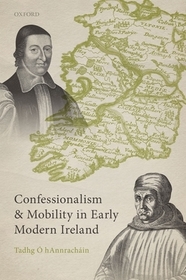
Confessionalism and Mobility in Early Modern Ireland
-
10% KEDVEZMÉNY?
- A kedvezmény csak az 'Értesítés a kedvenc témákról' hírlevelünk címzettjeinek rendeléseire érvényes.
- Kiadói listaár GBP 122.50
-
55 308 Ft (52 675 Ft + 5% áfa)
Az ár azért becsült, mert a rendelés pillanatában nem lehet pontosan tudni, hogy a beérkezéskor milyen lesz a forint árfolyama az adott termék eredeti devizájához képest. Ha a forint romlana, kissé többet, ha javulna, kissé kevesebbet kell majd fizetnie.
- Kedvezmény(ek) 10% (cc. 5 531 Ft off)
- Kedvezményes ár 49 778 Ft (47 408 Ft + 5% áfa)
Iratkozzon fel most és részesüljön kedvezőbb árainkból!
Feliratkozom
55 308 Ft

Beszerezhetőség
Becsült beszerzési idő: A Prosperónál jelenleg nincsen raktáron, de a kiadónál igen. Beszerzés kb. 3-5 hét..
A Prosperónál jelenleg nincsen raktáron.
Why don't you give exact delivery time?
A beszerzés időigényét az eddigi tapasztalatokra alapozva adjuk meg. Azért becsült, mert a terméket külföldről hozzuk be, így a kiadó kiszolgálásának pillanatnyi gyorsaságától is függ. A megadottnál gyorsabb és lassabb szállítás is elképzelhető, de mindent megteszünk, hogy Ön a lehető leghamarabb jusson hozzá a termékhez.
A termék adatai:
- Kiadás sorszáma 1
- Kiadó OUP Oxford
- Megjelenés dátuma 2021. június 18.
- ISBN 9780198870913
- Kötéstípus Keménykötés
- Terjedelem386 oldal
- Méret 240x160x27 mm
- Súly 716 g
- Nyelv angol 113
Kategóriák
Rövid leírás:
This book provides an entirely new perspective on religious change in Early Modern Ireland by tracing the constant and ubiquitous impact of mobility on the development and maintenance of the island's competing confessional groupings.
TöbbHosszú leírás:
The period between c.1580 and c.1685 was one of momentous importance in terms of the establishment of different confessional identities in Ireland, as well as a time of significant migration and displacement of population. Confessionalism and Mobility in Early Modern Ireland provides an entirely new perspective on religious change in early modern Ireland by tracing the constant and ubiquitous impact of mobility on the development and maintenance of the island's competing confessional groupings.
Confessionalism and Mobility in Early Modern Ireland examines the dialectic between migration and religious adherence, paying particular attention to the pronounced transnational dimension of clerical formation which played a vital role in shaping the competing Catholic, Church of Ireland, and non-conformist clergies. It demonstrates that the religious transformation of the island was mediated by individuals with very significant migratory experiences and the importance of religion in enabling individuals to negotiate the challenges and opportunities created by displacement and settlement in new environments. The volume investigates how more quotidian practices of mobility such as pilgrimage and inter-parochial communions helped to elaborate religious identities and analyses the extraordinary importance of migratory experience in shaping the lives and writings of the authors of key confessional identity texts.
Confessionalism and Mobility in Early Modern Ireland demonstrates that Irish society was enormously influenced by migratory experiences and argues that a case study of the island also has important implications for understanding religious change in other areas of Europe and the rest of the world.
the innovative and mold-breaking approach of this book and the fresh insights that Tadhg -- hAnnrach--in offers us on early--modern Irish--and European--religious developments through the prism of mobility.
Tartalomjegyzék:
Part I: Mobility and the Evolution of Confessional Communities in Ireland
Introduction
Professionalization Abroad: The shaping of the Catholic Clergy in Early Modern Ireland
Continuities through Change
Confessional Mobility of Secular Catholics
The Established Church
The Mobility of Protestant Dissent
Part II: Mobility Practices, ideas and influences
Figurative Images of Mobility
Practices of Religious Mobility
Migrant Consciousness and Catholic Confessional Identity Texts
The Impact of Mobility on the Imagination of Protestant Identity
Conclusion

