

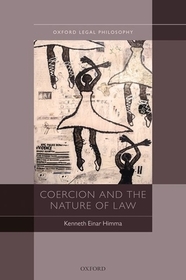
Coercion and the Nature of Law
Sorozatcím: Oxford Legal Philosophy;
-
10% KEDVEZMÉNY?
- A kedvezmény csak az 'Értesítés a kedvenc témákról' hírlevelünk címzettjeinek rendeléseire érvényes.
- Kiadói listaár GBP 87.00
-
41 564 Ft (39 585 Ft + 5% áfa)
Az ár azért becsült, mert a rendelés pillanatában nem lehet pontosan tudni, hogy a beérkezéskor milyen lesz a forint árfolyama az adott termék eredeti devizájához képest. Ha a forint romlana, kissé többet, ha javulna, kissé kevesebbet kell majd fizetnie.
- Kedvezmény(ek) 10% (cc. 4 156 Ft off)
- Kedvezményes ár 37 408 Ft (35 627 Ft + 5% áfa)
Iratkozzon fel most és részesüljön kedvezőbb árainkból!
Feliratkozom
41 564 Ft

Beszerezhetőség
Becsült beszerzési idő: Várható beérkezés: 2026. január vége.
A Prosperónál jelenleg nincsen raktáron.
Why don't you give exact delivery time?
A beszerzés időigényét az eddigi tapasztalatokra alapozva adjuk meg. Azért becsült, mert a terméket külföldről hozzuk be, így a kiadó kiszolgálásának pillanatnyi gyorsaságától is függ. A megadottnál gyorsabb és lassabb szállítás is elképzelhető, de mindent megteszünk, hogy Ön a lehető leghamarabb jusson hozzá a termékhez.
A termék adatai:
- Kiadó OUP Oxford
- Megjelenés dátuma 2020. május 7.
- ISBN 9780198854937
- Kötéstípus Keménykötés
- Terjedelem288 oldal
- Méret 239x161x22 mm
- Súly 594 g
- Nyelv angol 80
Kategóriák
Rövid leírás:
This book makes a systematic defence of the Coercion Thesis in law, arguing that coercion or enforcement mechanisms are not only a necessary feature of legal systems, but a conceptually necessary feature of legal systems.
TöbbHosszú leírás:
The Coercion Thesis has been a subject of longstanding debate, but legal positivist scholarship over the last several decades has concluded that coercion is not necessary for law. Coercion and the Nature of Law is concerned with reviving the Coercion Thesis, presenting a strong case for the inherently coercive nature of legal regulation, and arguing that anything properly characterized as a legal system must back legal norms prohibiting breaches of the peace with the threat of a coercive sanction.
Himma presents the argument that people are self-interested beings who must compete in a world of scarcity for everything they need to survive and thrive. The need to compete for resources naturally leads to conflict that can breach the peace, and threatens the ability to live together in a community and reap the social benefits of cooperation. Law only functions as a system if it can maintain the peace enough for community to continue, and thus systems of law cannot succeed in doing anything that we want systems of law to do unless they back laws prohibiting violent assaults on persons or property with the threat of punishment; without sanctions, we would descend into something resembling a condition of war-of-all-against-all. We adopt coercive systems of regulation precisely to avoid having to live under such conditions.
The book is divided into three parts: (1) a prima facie logical-empirical case for the Coercion Thesis, (2) a study of the "society of angels" and international law counterexamples, and why they do not refute the thesis, and (3) an analysis of how law guides behaviour and the implications of the Coercion Thesis on reasons for action.
Going against the current conventional wisdom in legal philosophy, Himma makes a systematic defence of the Coercion Thesis arguing that coercion or enforcement mechanisms are not only a necessary feature of legal systems, but a conceptually necessary feature of legal systems.
A welcome contribution to law and coercion debates

