

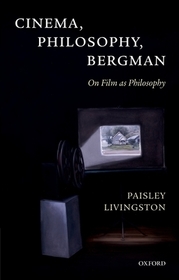
Cinema, Philosophy, Bergman
On Film as Philosophy
-
10% KEDVEZMÉNY?
- A kedvezmény csak az 'Értesítés a kedvenc témákról' hírlevelünk címzettjeinek rendeléseire érvényes.
- Kiadói listaár GBP 40.99
-
18 506 Ft (17 625 Ft + 5% áfa)
Az ár azért becsült, mert a rendelés pillanatában nem lehet pontosan tudni, hogy a beérkezéskor milyen lesz a forint árfolyama az adott termék eredeti devizájához képest. Ha a forint romlana, kissé többet, ha javulna, kissé kevesebbet kell majd fizetnie.
- Kedvezmény(ek) 10% (cc. 1 851 Ft off)
- Kedvezményes ár 16 656 Ft (15 863 Ft + 5% áfa)
Iratkozzon fel most és részesüljön kedvezőbb árainkból!
Feliratkozom
18 506 Ft

Beszerezhetőség
Megrendelésre a kiadó utánnyomja a könyvet. Rendelhető, de a szokásosnál kicsit lassabban érkezik meg.
Why don't you give exact delivery time?
A beszerzés időigényét az eddigi tapasztalatokra alapozva adjuk meg. Azért becsült, mert a terméket külföldről hozzuk be, így a kiadó kiszolgálásának pillanatnyi gyorsaságától is függ. A megadottnál gyorsabb és lassabb szállítás is elképzelhető, de mindent megteszünk, hogy Ön a lehető leghamarabb jusson hozzá a termékhez.
A termék adatai:
- Kiadó OUP Oxford
- Megjelenés dátuma 2012. május 3.
- ISBN 9780199655144
- Kötéstípus Puhakötés
- Terjedelem240 oldal
- Méret 216x139x11 mm
- Súly 338 g
- Nyelv angol
- Illusztrációk 72 stills from Bergman's films 0
Kategóriák
Rövid leírás:
Can cinema be a medium for philosophy? If so, how is the philosophizing done? Paisley Livingston explores the philosophical value of cinema. As a case-study for his intentionalist theory of authorship and interpretation he focuses on Ingmar Bergman's cinematic explorations of motivated irrationality, inauthenticity, and self-knowledge.
TöbbHosszú leírás:
The increasingly popular idea that cinematic fictions can 'do' philosophy raises some difficult questions. Who is actually doing the philosophizing? Is it the philosophical commentator who reads general arguments or theories into the stories conveyed by a film? Could it be the film-maker, or a group of collaborating film-makers, who raise and try to answer philosophical questions with a film? Is there something about the experience of films that is especially suited to the stimulation of worthwhile philosophical reflections? In the first part of this book, Paisley Livingston surveys positions and arguments surrounding the cinema's philosophical value. He raises criticisms of bold theses in this area and defends a moderate view of film's possible contributions to philosophy. In the second part of the book he defends an intentionalist approach that focuses on the film-makers' philosophical background assumptions, sources, and aims. Livingston outlines intentionalist interpretative principles as well as an account of authorship in cinema. The third part of the book exemplifies this intentionalist approach with reference to the work of Ingmar Bergman. Livingston explores the connection between Bergman's work and the Swedish director's primary philosophical source-a treatise in philosophical psychology authored by the Finnish philosopher, Eino Kaila. Bergman proclaimed that reading this book was a tremendous philosophical experience for him and that he 'built on this ground'. With reference to materials in the newly created Ingmar Bergman archive, Livingston shows how Bergman took up Kaila's topics in his cinematic explorations of motivated irrationality, inauthenticity, and the problem of self-knowledge.
The book is concise and very clearly argued
Tartalomjegyzék:
Introduction
Illustrations
Part One: Surveying cinema as philosophy
Theses on cinema as philosophy
Arguing over cinema as philosophy
Part Two: An intentionalist approach to film as philosophy
Types of authorship in the cinema
Partial intentionalism
Part Three: On Ingmar Bergman and philosophy
Bergman, Kaila, and the faces of irrationality
Value, authenticity, and fantasy in Bergman
Conclusion

