

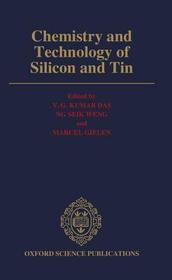
Chemistry and Technology of Silicon and Tin
Proceedings of the first Asian Network for Analytical and Inorganic Chemistry International Chemical Conference on Silicon and Tin
-
10% KEDVEZMÉNY?
- A kedvezmény csak az 'Értesítés a kedvenc témákról' hírlevelünk címzettjeinek rendeléseire érvényes.
- Kiadói listaár GBP 117.50
-
56 135 Ft (53 462 Ft + 5% áfa)
Az ár azért becsült, mert a rendelés pillanatában nem lehet pontosan tudni, hogy a beérkezéskor milyen lesz a forint árfolyama az adott termék eredeti devizájához képest. Ha a forint romlana, kissé többet, ha javulna, kissé kevesebbet kell majd fizetnie.
- Kedvezmény(ek) 10% (cc. 5 614 Ft off)
- Kedvezményes ár 50 522 Ft (48 116 Ft + 5% áfa)
Iratkozzon fel most és részesüljön kedvezőbb árainkból!
Feliratkozom
56 135 Ft

Beszerezhetőség
A kiadónál véglegesen elfogyott, nem rendelhető. Érdemes újra keresni a címmel, hátha van újabb kiadás.
Why don't you give exact delivery time?
A beszerzés időigényét az eddigi tapasztalatokra alapozva adjuk meg. Azért becsült, mert a terméket külföldről hozzuk be, így a kiadó kiszolgálásának pillanatnyi gyorsaságától is függ. A megadottnál gyorsabb és lassabb szállítás is elképzelhető, de mindent megteszünk, hogy Ön a lehető leghamarabb jusson hozzá a termékhez.
A termék adatai:
- Kiadó OUP Oxford
- Megjelenés dátuma 1992. március 12.
- ISBN 9780198555803
- Kötéstípus Keménykötés
- Terjedelem632 oldal
- Méret 236x162x40 mm
- Súly 1098 g
- Nyelv angol
- Illusztrációk halftones, numerous line drawings, tables 0
Kategóriák
Rövid leírás:
The latest developments in fundamental and applied research into the chemistry of silicon and tin are described in this comprehensive reference work. Contributions from an international field of authors on a wide range of topics provide authoritative accounts of recent advances, highlighting the technological importance of applications to the fields of ceramics, electronics, glass, plastics, paints, agriculture, and medicine.
TöbbHosszú leírás:
The latest developments in fundamental and applied research into the chemistry of silicon and tin are described in this comprehensive reference work, which contains both new research findings and authoritative accounts of recent advances. Contributions from an international field of highly-respected scientists address a wide range of topics, including chemical synthesis, reactivity, and structure; catalysis and solid state chemistry; polymers and materials science
applications; biological effects; and analytical detection. This multidisciplinary volume highlights the chemical and technological significance of recent work on silicon and tin, and points the way to future challenges and opportunities in the field, including new and adaptable technologies centred on
these key elements.
'it can be highly recommended as a wide-ranging survey of modern aspects of silicon and tin chemistry ... It would be a valuable addition to the libraries of universities, polytechnics and research institutions.'
Colin F. Bell, Chemistry and Industry, Number 17, 7 September 1992
Tartalomjegyzék:
PART 1: PLENARY AND KEYNOTE LECTURES: Applications of silicon and tin in borane chemistry; Application of organotin groups as markers in the analysis of coal liquefaction products and petroleum fractions; Recent developments in synthetic strategies with allylsilanes: from tetracoordinate to pentacoordinate allylsilanes; Recent chemistry of the silicon-silicon double bond; Chemistry in relation to toxicity and to risks of exposure to organotin compounds; Alkoxy and
acyloxy derivatives of silicon and tin and their uses as precursors in ceramics; Silicon-based non-oxide ceramics; Silicate materials in new technology; Organotin and organosilicon compounds in cross-coupling, aromatic nucleophilic substitution, and addition reactions; Organotin intermediates for
organic synthesis; New applications of metal hydrides in the synthesis of organosilanes and -germanes; Unusual subvalent compounds of silicon, tin, and lead; Selective synthesis of biologically active amino alcohols via allylic tin compounds; Function and characterization of CVD zeolites with controlled pore-opening sizes; Some features of tin solid state chemistry; Organotin halides as catalytic precursors in dehydration processes. I. Acetalizations and transcetalizations of alicyclic diols
and polyols; How silicon and tin meet in polymer and organic synthesis; Development of indigenous technology for the manufacture of modern silicon materials; PART 2: SELECTED PAPERS FROM ORAL AND POSTER PRESENTATIONS; Purification of CSH-S-transferase form Plutella xylostella larvae and its inhibition
by organotin compounds; Effects of two triorganotin(IV) compounds on rubberwood biodeterioration; Ionophoretic activity and biological effects of organotin compounds; Tin-based antitumour drugs: past, present, and future; Antitumour activity of organotin compounds and inhibition of membrane signal transduction; Tolerance of Ceratocystis ulmi to triaryltin compounds; Organotin xanthylacetates: 119_m Sn Mössbauer and in vitro fungitoxicity study; Silica induced cell
damage and the protective effect of aluminium complexes; Biological silicas, a study in organization; Determination of sub-ppm quantities of tin and distribution of tin in biological organisms; High quality silicon nitride powder derived from Malaysian rice husks; Tin(IV) oxide-based materials. Surface chemistry, catalysis, and
gas sensing; A silicon semiconductor strain device for acoustic power measurement; Microwave plasma chemical vapour deposition: a model for the production of thin carbon films, with possible extension to silicon; Organofunctional polysiloxanes as selective extractants and metal ion support materials; Aromatic functionalized polyorganosiloxanes: synthesis, characterization, and application to gas separations; Studies on the yields of silylation reactions of mineral silicates; Oxide and nitrided
oxide grown on silicon at low temperature; Copolymerization of dimethyldivinylsilane; Stereoregulating effects of alkoxysilanes in propylene polymerization; Hydrolysis of polydimethylsiloxane monolayers on water surfaces; Theoretical models for 'unusual' coordination at silicon; Electrochemistry of
triphenyltin acetate at a mercury-filmed glassy carbon electrode; Electrochemical recovery of tin from electroplating waste solutions; Reaction pathways in the thermolysis of organotin and organosilicon compounds; Synthesis of coenzyme Q_[n and quinoid antibiotics by using allyltrialkyltins: control of regio- and stereochemistry in fluxional pentadienyltins and their application to chiral anthracylizone synthesis; Organic and inorganic tin complexes of some aromatic Schiff bases; Synthesis and
characterization of a series of diorganotin derivatives of *A-amino acids; Studies on tri(phenyldimethylsilylmethyl) tin derivatives; Synthesis and X-ray structural characterization of novel doubly asymmetric 8-dimethylaminonaphthyl-(-)-menthyl organotin compounds; Cleavage of some
*B-arylethyltriethylstannanes by aqueous methanolic perchloric acid; Studies on some triphenyltin(IV) complexes containing potentially bidentate, biologically-active anionic groups; Reactions of sterically hindered organotin compounds; Crystal structure of tri-n-butyltin(IV) N-methyl-N-phenyldithiocarbamyl-acetate, (n-C[4H[9)[3SnOC(O)CH[2SC(S)N(CH[3) (C[6H[5). PART 3: ABSTRACTS.

