

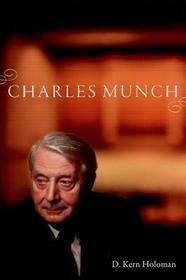
Charles Munch
-
10% KEDVEZMÉNY?
- A kedvezmény csak az 'Értesítés a kedvenc témákról' hírlevelünk címzettjeinek rendeléseire érvényes.
- Kiadói listaár GBP 33.49
-
15 999 Ft (15 237 Ft + 5% áfa)
Az ár azért becsült, mert a rendelés pillanatában nem lehet pontosan tudni, hogy a beérkezéskor milyen lesz a forint árfolyama az adott termék eredeti devizájához képest. Ha a forint romlana, kissé többet, ha javulna, kissé kevesebbet kell majd fizetnie.
- Kedvezmény(ek) 10% (cc. 1 600 Ft off)
- Kedvezményes ár 14 399 Ft (13 713 Ft + 5% áfa)
Iratkozzon fel most és részesüljön kedvezőbb árainkból!
Feliratkozom
15 999 Ft

Beszerezhetőség
Megrendelésre a kiadó utánnyomja a könyvet. Rendelhető, de a szokásosnál kicsit lassabban érkezik meg.
Why don't you give exact delivery time?
A beszerzés időigényét az eddigi tapasztalatokra alapozva adjuk meg. Azért becsült, mert a terméket külföldről hozzuk be, így a kiadó kiszolgálásának pillanatnyi gyorsaságától is függ. A megadottnál gyorsabb és lassabb szállítás is elképzelhető, de mindent megteszünk, hogy Ön a lehető leghamarabb jusson hozzá a termékhez.
A termék adatai:
- Kiadó OUP USA
- Megjelenés dátuma 2015. szeptember 10.
- ISBN 9780190250546
- Kötéstípus Puhakötés
- Terjedelem352 oldal
- Méret 231x155x22 mm
- Súly 476 g
- Nyelv angol
- Illusztrációk 40 illustrations 0
Kategóriák
Rövid leírás:
In Charles Munch, D. Kern Holoman provides the first full biography of this giant of twentieth-century music, tracing his dramatic survival in occupied Paris, his triumphant arrival at the Boston Symphony Orchestra, and his later years, when he was a leading cultural figure in the United States, a man known and admired by Presidents Truman, Eisenhower, and Kennedy.
TöbbHosszú leírás:
A mesmerizing figure in concert, Charles Munch was celebrated for his electrifying public performances. He was a pioneer in many arenas of classical music--establishing Berlioz in the canon, perfecting the orchestral work of Debussy and Ravel, and leading the world to Roussel, Honegger, and Dutilleux. A pivotal figure, his accomplishments put him on a par with Arturo Toscanini and Leonard Bernstein.
In Charles Munch, D. Kern Holoman provides the first full biography of this giant of twentieth-century music, tracing his dramatic survival in occupied Paris, his triumphant arrival at the Boston Symphony Orchestra, and his later years, when he was a leading cultural figure in the United States, a man known and admired by Presidents Truman, Eisenhower, and Kennedy. He turned to conducting only in middle age, after two decades as a violinist and concertmaster, a background which gave him special insight into the relationship between conductor and orchestra. At the podium, his bond with his musicians unleashed something in them and in himself. "A certain magic took wing that amounts to the very essence of music in concert," the author writes, as if "public performance loosed the facets of character and artistry and poetry otherwise muffled by his timidity and simple disinclination to say much." In concert, Munch was arresting, even seductive, sweeping his baton in an enormous arch from above his head down to his knee. Yet as Holoman shows, he remained a lonely, even sad figure, a widower with no children, a man who fled admirers and avoided reporters.
With groundbreaking research and sensitive, lyrical writing, Charles Munch penetrates the enigma to capture this elusive musical titan.
A fascinating read. Holoman's passion for and knowledge of his subject is quite compelling. In contemporary discussions of the great conductors of that era, Munch tends to be relatively overlooked. Holoman makes a persuasive historical case for Munch's importance, both to musical life in France and to the evolution of the Boston Symphony. Along the way, he also provides a detailed look at what life was like for conductors (and orchestras) in the middle part of the twentieth century.
Tartalomjegyzék:
Introduction
1 Strasbourg, Paris, Leipzig : September 1891 - October 1932
2 Paris : November 1932 - May 1938
3 The Société des Concerts : June 1938 - May 1945
4 Leaving France : June 1945 - September 1949
5 Winning Boston : October 1949 - June 1951
6 Boston after Koussevitzky : July 1951 - July 1956
7 The Iron Curtain and Beyond : August 1956 - August 1958
8 Shifting Perspectives in Boston : September 1958 - April 1962
9 Paris, Again : May 1962 - August 1966
10 The Orchestre de Paris : September 1966 - November 1968
11 An Eternal Smile
Notes
Bibliography
Index

