

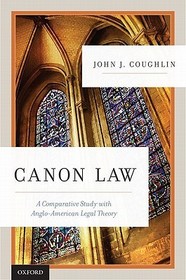
Canon Law
A Comparative Study with Anglo-American Legal Theory
-
10% KEDVEZMÉNY?
- A kedvezmény csak az 'Értesítés a kedvenc témákról' hírlevelünk címzettjeinek rendeléseire érvényes.
- Kiadói listaár GBP 110.00
-
49 665 Ft (47 300 Ft + 5% áfa)
Az ár azért becsült, mert a rendelés pillanatában nem lehet pontosan tudni, hogy a beérkezéskor milyen lesz a forint árfolyama az adott termék eredeti devizájához képest. Ha a forint romlana, kissé többet, ha javulna, kissé kevesebbet kell majd fizetnie.
- Kedvezmény(ek) 10% (cc. 4 967 Ft off)
- Kedvezményes ár 44 699 Ft (42 570 Ft + 5% áfa)
Iratkozzon fel most és részesüljön kedvezőbb árainkból!
Feliratkozom
49 665 Ft

Beszerezhetőség
Megrendelésre a kiadó utánnyomja a könyvet. Rendelhető, de a szokásosnál kicsit lassabban érkezik meg.
Why don't you give exact delivery time?
A beszerzés időigényét az eddigi tapasztalatokra alapozva adjuk meg. Azért becsült, mert a terméket külföldről hozzuk be, így a kiadó kiszolgálásának pillanatnyi gyorsaságától is függ. A megadottnál gyorsabb és lassabb szállítás is elképzelhető, de mindent megteszünk, hogy Ön a lehető leghamarabb jusson hozzá a termékhez.
A termék adatai:
- Kiadó OUP USA
- Megjelenés dátuma 2010. december 23.
- ISBN 9780195372977
- Kötéstípus Keménykötés
- Terjedelem248 oldal
- Méret 236x157x22 mm
- Súly 499 g
- Nyelv angol 0
Kategóriák
Hosszú leírás:
Canon Law: A Comparative Study with Anglo-American Legal Theory, by the Reverend John J. Coughlin, explores the canon law of the Roman Catholic Church from a comparative perspective. The Introduction to the book presents historical examples of antinomian and legalistic approaches to canon law (antinomianism diminishes or denies the importance of canon law, while legalism overestimates the function of canon law in the life of the Catholic Church). The Introduction discusses these approaches as threats to the rule of law in the Church, and describes the concept of the rule of law in the thought of various Anglo-American legal theorists. Chapter One offers an overview of canon law as the "home system" in this comparative study. The remaining chapters consider antinomian and legalistic approaches to the rule of law in light of three specific issues: the sexual abuse crisis, ownership of church property, and the denial of Holy Communion to Catholic public officials. Chapters Two and Three discuss the failure of the rule of law as a result of antinomian and legalistic approaches to the sexual abuse crisis. Chapters Four and Five compare the concept of property in canon law with that of liberal political theory; they discuss the ownership of parish property in light of diocesan bankruptcies, the relationship between church property and the law of the secular state, and the secularization of Catholic institutions and their property. Chapters Six and Seven raise the indeterminacy claim with regards to canon law and the arguments for and against the denial of Holy Communion to Catholic public officials. Although the three issues arise in the context of the United States, they raise broader theoretical issues about antinomianism, legalism, and the rule of law. Throughout the comparative study, American legal theory functions to clarify these broader issues in canon law. The concluding chapter offers a synthesis of this comparative study.
This is a pioneering book, accomplished in itself and potentially a stimulus for future jurisprudential trends in a comparative context.

