

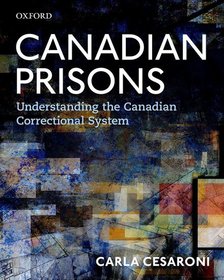
Canadian Prisons
Understanding the Canadian Correctional System
-
10% KEDVEZMÉNY?
- A kedvezmény csak az 'Értesítés a kedvenc témákról' hírlevelünk címzettjeinek rendeléseire érvényes.
- Kiadói listaár GBP 57.00
-
25 735 Ft (24 510 Ft + 5% áfa)
Az ár azért becsült, mert a rendelés pillanatában nem lehet pontosan tudni, hogy a beérkezéskor milyen lesz a forint árfolyama az adott termék eredeti devizájához képest. Ha a forint romlana, kissé többet, ha javulna, kissé kevesebbet kell majd fizetnie.
- Kedvezmény(ek) 10% (cc. 2 574 Ft off)
- Kedvezményes ár 23 162 Ft (22 059 Ft + 5% áfa)
Iratkozzon fel most és részesüljön kedvezőbb árainkból!
Feliratkozom
25 735 Ft

Beszerezhetőség
Bizonytalan a beszerezhetőség. Érdemes még egyszer keresni szerzővel és címmel. Ha nem talál másik, kapható kiadást, forduljon ügyfélszolgálatunkhoz!
Why don't you give exact delivery time?
A beszerzés időigényét az eddigi tapasztalatokra alapozva adjuk meg. Azért becsült, mert a terméket külföldről hozzuk be, így a kiadó kiszolgálásának pillanatnyi gyorsaságától is függ. A megadottnál gyorsabb és lassabb szállítás is elképzelhető, de mindent megteszünk, hogy Ön a lehető leghamarabb jusson hozzá a termékhez.
A termék adatai:
- Kiadó OUP Canada
- Megjelenés dátuma 2020. október 8.
- ISBN 9780199034048
- Kötéstípus Puhakötés
- Terjedelem440 oldal
- Súly 10 g
- Nyelv angol
- Illusztrációk 38 photos, 27 figures, full colour 0
Kategóriák
Rövid leírás:
The most current, engaging, and comprehensive introduction to corrections with contributions by Canada's leading academics and practitioners.
TöbbHosszú leírás:
Written by experts from across Canada, Canadian Prisons examines the history, theories, policies, and practices that underlie the contemporary Canadian correctional system. Incorporating a broad range of themes and topics, this introduction also features unique discussions of current issues such as religion and technology in prisons as well as prison tourism.
This comprehensive text is a useful tool for students and educators alike; it offers necessary detail and illustrates key points with relevant and current examples. This appealing book will intrigue students and help foster an interest in higher learning in this discipline."
- Cindy Whitten, Ph.D., Memorial University of Newfoundland
Tartalomjegyzék:
Dedication
Acknowledgments
Contributors
Introduction
Part I: Overview
1. The History of Prisons in Canada Jim Phillips
Chapter Overview
Learning Objectives
Introduction
Early Prisons to c. 1800
The Transformation of Penal Practices c. 1800 to Confederation
Confederation: The Federal-Provincial Division of Powers and the Origins of the National Penitentiary System
Federal Penitentiaries 1867 to c. 1935
Signal Moments: The Archambault (1938), Fanteaux (1956), and Ouimet (1969) Reports
Conclusion
Review Questions
Critical Thinking Questions
Multimedia Suggestions
References
2. Understanding Corrections in Canada: A Framework Allison O'Donnell
Chapter Overview
Learning Objectives
What is "Corrections"?
Correctional Ideology
The Purpose of the Canadian Correctional System
Structure of the Correctional System in Canada
Legislative Framework of Canadian Corrections
Oversight of the Correctional System
Summary
Review Questions
Critical Thinking Questions
Multimedia Suggestions
References
3. Canadian Criminal Justice Policy and Imprisonment: Understanding What is Uniquely Canadian Anthony N. Doob & Cheryl Marie Webster
Introduction: Imprisonment as an Integral Part of the Canadian Criminal Justice System
Restraint in the Use of Imprisonment of Adults as a Longstanding Principle in Canadian Criminal Justice Policy
Contrasting Canada with Other Comparable Nations: The Uniqueness of Our Overall Stability in the Use of Imprisonment
Understanding Canadian Imprisonment Stability: The (dramatic) Contrast with the United States as our Closest Comparator
Stress Testing Canada's Belief in Restraint in the Use of Imprisonment of Adults: The Challenges Raised During the Harper Era
Looking to the Future: A New Government but Little Actual Criminal Justice Reform
Review Questions
Critical Thinking Questions
Multimedia Suggestions
Notes
References
Part 2: Doing Time
4. Doing Time John Rives & Carla Cesaroni
Chapter Overview
Learning Objectives
Life Inside and Total Institutions
Understanding Coping with Prison Life: A Theoretical Perspective
Additional views on Prison Life
An Insider's View of Doing Time
Review Questions
Critical Thinking Questions
Multimedia Suggestions
Notes
References
5. Correctional Work: Negotiating Vulnerabilities while Providing Control and "Care" Rosemary Ricciardelli & James Gacek
Chapter Overview
Learning Objectives
Introduction
The Correctional Officer
Gendered Spaces: Working within a Rather Binary Gendered Environment
Stressors, Vulnerabilities, Wellbeing, and Occupational Challenges
Summary
Review Questions
Critical Thinking Questions
Multimedia Suggestions
References
6. Reentry, Reintegration, and the Notion of "Rehabilitation" Katharina Maier & Rosemary Ricciardelli
Chapter Overview
Learning Objectives
Introduction
A Note about Methods
Defining Prisoner Reentry
Understanding Barriers to Reentry
Parole, Post-Prison Supervision, and Reentry Support
Summary
Review Questions
Critical Thinking Questions
Multimedia Recommendations
References
7. Supporting Mental Health and Wellbeing in Canadian Corrections: An Expectation Too High? Adrienne M. F. Peters & Raymond R. Corrado
Chapter Overview
Learning Objectives
Introduction
Canada's History of Imprisoning the Mentally Ill
Mental Health in Canadian Corrections: Where Does Responsibility Lie?
Canada's Efforts to Address Mental Health in Corrections
Emergence and Growth of Mental Health Issues in Corrections
Main Concerns Associated with the Mental Health of Persons Involved in the Correctional System
Addressing Mental Health in Corrections
Continued Challenges
Conclusion
Review Questions
Critical Thinking Questions
Multimedia Recommendations
Notes
References
Part 3: Special Populations
8. Women, Crime, and Criminalization in Canada: Understanding the Canadian Correctional Landscape for Incarcerated Women Jennifer M. Kilty & Rebecca Jaremko Bromwich
Chapter Overview
Learning Objectives
Demographic Portrait
Women's Pathways into Crime
The Birth of the Kingston's Prison for Women (1835-1934)
The 1994 "Incident" at P4W and the Arbour Inquiry
The End of an Era and the Dawn of a New Age in Women's Corrections: The Closure of the P4W and Construction of Regional Facilities
Women's Corrections in the New Millenium
Gendered Pains of Imprisonment: Psychiatrization, Segregation Pregnancy, and Motherhood
Conclusion: Innovation, Reforms, and the Abolitionist Visions for the Future
Review Questions
Critical Thinking Questions
Multimedia Recommendations
Notes
References
9. Colonialism and Cultural Disruption: Intergenerational Pathways to Incarceration for Indigenous People Christopher Mushquash, Jessie Lund, Elaine Toombs, & Chris Grol
Chapter Overview
Learning Objectives
Introduction
Understanding Pathways to Indigenous Incarceration
The Adverse Childhood Experience Model of Indigenous Incarceration
Factors that Affect Incarceration Rates
Conclusions
Review Questions
Critical Thinking Questions
Multimedia Recommendations
References
10. Adolescents and Young Adults in Custody Carla Cesaroni & Michele Peterson-Badali
Why Study Youth in Custody?
History of Youth Criminal Justice Legislation in Canada
Institutional Life: What Is Custody Like?
What's It Like for Youth to Do Time?
The Background of Incarcerated Youth: What Do They "Walk In" to Custody With?
Understanding Adjustment of Youth in Custody: An Integrated Approach
Girls in Custody
A New Population for Consideration: Young Adults
Conclusion
Review Questions
Critical Thinking Questions
Multimedia Suggestions
References
11. Aging Prisoners in the Canadian Federal Correctional System Adelina Iftene
Chapter Overview
Learning Objectives
Introduction
Facing Old Age in a Federal Prison: Demographics and Needs
Responses to Needs
Release
Review Questions
Critical Thinking Questions
Multimedia Suggestions
References
12. Sex Offenders: A Special Correctional Population Eric Beauregard & Kylie Reale
Chapter Overview
Learning Objectives
Introduction
Sex Offenders as a Special Inmate Population?
Risk Assessment
Specific Legislations
Treatment of Sex Offenders
Summary
Review Questions
Critical Thinking Questions
Multimedia Suggestions
References
Part 4: Current/Emerging Issues
13. The "Prison [Tourism] Fix": Carceral Habitus and Retasking in Kingston, Ontario Jarrod Shook, Juistin Piché, & Kevin Walby
Chapter Overview
Learning Objectives
Introduction
Theorizing the Role of Penal Infrastructure Development
"They Shouldn't Level it or Blast it to Hell"
Preventing KP and/or Planning Its Future Commodification?
From a "Contaminated" Penitentiary to Expanding Access "This Natural Treasure of Ours"
Dis-Accumulating Surplus (Carceral) Capital at KP
The (Carceral) Visioning Exercise
Will the Walls Come Down?
Forging a Non-Carceral Path
Review Questions
Critical Thinking Questions
Multimedia Suggestions
Notes
References
14. The Use of Solitary Confinement and Prisoner Rights Kelly Struthers Montford, Jihyun Kwon, & Kelly Hannah-Moffat
Chapter Overview
Learning Objectives
Historical Background
International and Domestic Provisions
Solitary Confinement and Torture Thresholds
Legal Provisions for Federal Prisons in Canada
Canada's Use of Segregation: Racialization, Self-Harm, and Mental Illness
Long-Term Segregation, Violation of Rights, and Litigation
Regulatory Capture and the Status Quo
Summary
Review Questions
Critical Thinking Questions
Multimedia Suggestions
Notes
References
15. The Use of Technology within Correctional Institutions and Community Corrections Karla Dhungana Sainju
Chapter Overview
Learning Objectives
Introduction
Correctional Facilities: Current Technologies
Correctional Facilities: Upcoming Technologies
Community Corrections: Current Technologies
Community Corrections: Upcoming Technologies
Summary
Review Questions
Critical Thinking Questions
Multimedia Suggestions
References
16. Religious Services in Canadian Prisons Davut Akca, Mehmet F. Bastug, & Nawal Ammar
Chapter Overview
Learning Objectives
Historical Context
Why Do We Care about Religious Services in Prisons?
Religious Landscape and Religious Services in Canadian Prisons
Muslims in Canadian Prisons
Conclusions and Directions of Future Research
Review Questions
Critical Thinking Questions
Multimedia Recommendations
Notes
References
Glossary
Index

