

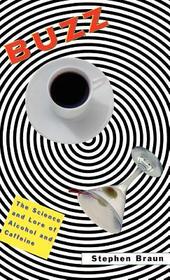
Buzz
The Science and Lore of Alcohol and Caffeine
-
10% KEDVEZMÉNY?
- A kedvezmény csak az 'Értesítés a kedvenc témákról' hírlevelünk címzettjeinek rendeléseire érvényes.
- Kiadói listaár GBP 33.99
-
15 346 Ft (14 615 Ft + 5% áfa)
Az ár azért becsült, mert a rendelés pillanatában nem lehet pontosan tudni, hogy a beérkezéskor milyen lesz a forint árfolyama az adott termék eredeti devizájához képest. Ha a forint romlana, kissé többet, ha javulna, kissé kevesebbet kell majd fizetnie.
- Kedvezmény(ek) 10% (cc. 1 535 Ft off)
- Kedvezményes ár 13 811 Ft (13 154 Ft + 5% áfa)
Iratkozzon fel most és részesüljön kedvezőbb árainkból!
Feliratkozom
15 346 Ft

Beszerezhetőség
Megrendelésre a kiadó utánnyomja a könyvet. Rendelhető, de a szokásosnál kicsit lassabban érkezik meg.
Why don't you give exact delivery time?
A beszerzés időigényét az eddigi tapasztalatokra alapozva adjuk meg. Azért becsült, mert a terméket külföldről hozzuk be, így a kiadó kiszolgálásának pillanatnyi gyorsaságától is függ. A megadottnál gyorsabb és lassabb szállítás is elképzelhető, de mindent megteszünk, hogy Ön a lehető leghamarabb jusson hozzá a termékhez.
A termék adatai:
- Kiadó OUP USA
- Megjelenés dátuma 1996. október 31.
- ISBN 9780195092899
- Kötéstípus Keménykötés
- Terjedelem224 oldal
- Méret 217x147x22 mm
- Súly 426 g
- Nyelv angol
- Illusztrációk line illustrations 0
Kategóriák
Rövid leírás:
With the exception of water, all of the world's major drinks - tea, coffee, cola sodas, beer, wine and distilled liquors - contain either alcohol or caffeine. Billions consume these substances daily - but until recently nobody has known how they work. How does alcohol intoxicate? How does caffeine speed up thought and increase alertness? Are woman intoxicated more easily than men? Why do some become alcoholics? Does caffeine really "burn fat?". "Buzz" answers these and other questions great and small about the world's favourite drugs. Drawing on the latest research findings, "Buzz" vividly explains what happens in the brain and body when alcohol or caffeine are consumed. This often surprising story is laced throughout with anecdotes and lore as ancient as Aristotle's musings on wine and as recent as David Letterman's views on the utility of caffeine. Anyone who has felt the buzz from a cup of java or felt giddy from an alcoholic drink will fine "Buzz" and engrossing exploration of two substances at once utterly familiar and deeply mysterious.
TöbbHosszú leírás:
Alcohol and caffeine are deeply woven into the fabric of life for most of the world's population, as close and as comfortable as a cup of coffee or a can of beer. Yet for most people they remain as mysterious and unpredictable as the spirits they were once thought to be. Now, in Buzz, Stephen Braun takes us on a myth-shattering tour of these two popular substances, one that blends fascinating science with colorful lore, and that includes cameo appearances by Shakespeare and Balzac, Buddhist monks and Arabian goat herders, even Mikhail Gorbachev and David Letterman (who once quipped, `If it weren't for the coffee, I'd have no identifiable personality whatsoever').
Much of what Braun reveals directly contradicts conventional wisdom about alcohol and caffeine. Braun shows, for instance, that alcohol is not simply a depressant as popularly believed, but is instead `a pharmacy in a bottle' - mimicking the action of drugs such as cocaine, amphetamine, valium, and opium. At low doses, it increases electrical activity in the same brain systems affected by stimulants, influences the same circuits targeted by valium, and causes the release of morphine-like compounds known as endorphins - all at the same time. This explains why alcohol can produce a range of reactions, from boisterous euphoria to dark, brooding hopelessness. Braun also shatters the myth that alcohol kills brain cells, reveals why wood alcohol or methanol causes blindness, and explains the biological reason behind the one-drink-per-hour sobriety rule (that's how long it takes the liver, working full tilt, to disable the 200 quintillion ethanol molecules found in a typical drink). The author then turns to caffeine and shows it to be no less remarkable. We discover that more than 100 plant species produce caffeine molecules in their seeds, leaves, or bark, a truly amazing distribution throughout nature (nicotine, in comparison, is found only in tobacco; opium only in the poppy). It's not surprising then that caffeine is far and away the most widely used mind altering substance on the planet, found in tea, coffee, cocoa, chocolate, soft drinks, and more than 2,000 non-prescription drugs. (Tea is the most popular drink on earth, with coffee a close second.) Braun also explores the role of caffeine in creativity: Johann Sebastian Bach, for one, loved coffee so much he wrote a Coffee Cantata (as Braun notes, no music captures the caffeinated experience better than one of Bach's frenetic fugues); Balzac would work for 12 hours non-stop, drinking coffee all the while; and Kant, Rousseau, and Voltaire all loved coffee. And throughout the book, Braun takes us on many engaging factual sidetrips - we learn, for instance, that Theodore Roosevelt coined the phrase `Good to the last drop' used by Maxwell House ever since; that distances between Tibetan villages are sometimes reckoned by the number of cups of tea needed to sustain a person (three cups being roughly 8 kilometres); and that John Pemberton's original recipe for Coca-Cola included not only kola extract, but also cocaine.
Whether you are a sophisticated consumer of cabernet sauvignon and Kenya AA or just someone who needs a cup of coffee in the morning and a cold one after work, you will find Buzz to be an eye-opening, informative, and often amusing look at two substances at once utterly familiar and deeply mysterious.
Buzz may not stop anyone from indulging in either vice... but it's nice to know what you're doing to yourself, at least until that extra glass with the pudding makes you forget.

