

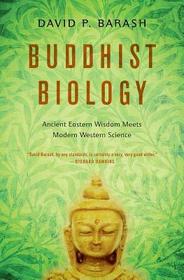
Buddhist Biology
Ancient Eastern Wisdom Meets Modern Western Science
-
10% KEDVEZMÉNY?
- A kedvezmény csak az 'Értesítés a kedvenc témákról' hírlevelünk címzettjeinek rendeléseire érvényes.
- Kiadói listaár GBP 12.99
-
5 864 Ft (5 585 Ft + 5% áfa)
Az ár azért becsült, mert a rendelés pillanatában nem lehet pontosan tudni, hogy a beérkezéskor milyen lesz a forint árfolyama az adott termék eredeti devizájához képest. Ha a forint romlana, kissé többet, ha javulna, kissé kevesebbet kell majd fizetnie.
- Kedvezmény(ek) 10% (kb. 586 Ft)
- Kedvezményes ár 5 278 Ft (5 027 Ft + 5% áfa)
Iratkozzon fel most és részesüljön kedvezőbb árainkból!
Feliratkozom
5 864 Ft

Beszerezhetőség
Bizonytalan a beszerezhetőség. Érdemes még egyszer keresni szerzővel és címmel. Ha nem talál másik, kapható kiadást, forduljon ügyfélszolgálatunkhoz!
Why don't you give exact delivery time?
A beszerzés időigényét az eddigi tapasztalatokra alapozva adjuk meg. Azért becsült, mert a terméket külföldről hozzuk be, így a kiadó kiszolgálásának pillanatnyi gyorsaságától is függ. A megadottnál gyorsabb és lassabb szállítás is elképzelhető, de mindent megteszünk, hogy Ön a lehető leghamarabb jusson hozzá a termékhez.
A termék adatai:
- Kiadó OUP USA
- Megjelenés dátuma 2017. szeptember 1.
- ISBN 9780190844332
- Kötéstípus Puhakötés
- Terjedelem216 oldal
- Méret 235x156 mm
- Nyelv angol 0
Kategóriák
Rövid leírás:
Compares teachings of Buddhism with principles of modern biology, revealing many significant points of compatibility.
TöbbHosszú leírás:
Many high-profile public intellectuals — including "New Atheists" like Richard Dawkins, Daniel Dennett, and the late Christopher Hitchens — have argued that religion and science are deeply antagonistic, representing two world views that are utterly incompatible. David Barash, a renowned biologist with forty years of experience, largely agrees with them, but with one very big exception: Buddhism.
In this fascinating book, David Barash highlights the intriguing common ground between scientific and religious thought, illuminating the many parallels between biology and Buddhism, allowing readers to see both in a new way. Indeed, he shows that there are numerous places where Buddhist and biological perspectives coincide and reinforce each other. For instance, the cornerstone ecological concept — the interconnectedness and interdependence of all natural things — is remarkably similar to
the fundamental insight of Buddhism. Indeed, a major Buddhist text, the Avatamsaka Sutra, which consists of ten insights into the "interpenetration" between beings and their environment, could well have been written by a trained ecologist, just as current insights in evolutionary biology, genetics and
development might have been authored by the Buddha himself. Barash underscores other notable similarities, including a shared distrust of simple cause-and-effect analysis, an appreciation of the "rightness" of nature, along with an acknowledgment of the suffering that results when natural processes are tampered with. Buddhist Biology shows how the concept of "non-self," so confusing to many Westerners, is fully consistent with modern biology, as is the Buddhist perspective of "impermanence."
Barash both demystifies and celebrates the biology of Buddhism and vice versa, showing in a concluding tour-de-force how modern Buddhism —shorn of its hocus-pocus and abracadabra — not only justifies but actually mandates both socially and environmentally "engaged" thought and practice.
Buddhist Biology is a work of unique intellectual synthesis that sheds astonishing light on biology as well as on Buddhism, highlighting the remarkable ways these two perspectives come together, like powerful searchlights that offer complementary and stunning perspectives on the world and our place in it.
Tartalomjegyzék:
Table of Contents
Chapter 1: A Science Sutra
Chapter 2: Non-Self (Anatman)
Chapter 3: Impermanence (Anitya)
Chapter 4: Connectedness (Pratitya-Samutpada)
Chapter 5: Engagement, Part 1 (Dukkha)
Chapter 6: Engagement, Part 2 (Karma)
Chapter 7: Meaning (Existential Biobuddhism?)
Appendix

