

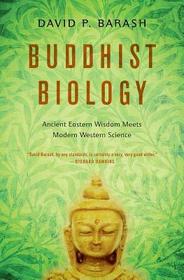
Buddhist Biology
Ancient Eastern Wisdom Meets Modern Western Science
- Publisher's listprice GBP 12.99
-
5 864 Ft (5 585 Ft + 5% VAT)
The price is estimated because at the time of ordering we do not know what conversion rates will apply to HUF / product currency when the book arrives. In case HUF is weaker, the price increases slightly, in case HUF is stronger, the price goes lower slightly.
- Discount 10% (cc. 586 Ft off)
- Discounted price 5 278 Ft (5 027 Ft + 5% VAT)
Subcribe now and take benefit of a favourable price.
Subscribe
5 864 Ft

Availability
Uncertain availability. Please turn to our customer service.
Why don't you give exact delivery time?
Delivery time is estimated on our previous experiences. We give estimations only, because we order from outside Hungary, and the delivery time mainly depends on how quickly the publisher supplies the book. Faster or slower deliveries both happen, but we do our best to supply as quickly as possible.
Product details:
- Publisher OUP USA
- Date of Publication 1 September 2017
- ISBN 9780190844332
- Binding Paperback
- No. of pages216 pages
- Size 235x156 mm
- Language English 0
Categories
Short description:
Compares teachings of Buddhism with principles of modern biology, revealing many significant points of compatibility.
MoreLong description:
Many high-profile public intellectuals — including "New Atheists" like Richard Dawkins, Daniel Dennett, and the late Christopher Hitchens — have argued that religion and science are deeply antagonistic, representing two world views that are utterly incompatible. David Barash, a renowned biologist with forty years of experience, largely agrees with them, but with one very big exception: Buddhism.
In this fascinating book, David Barash highlights the intriguing common ground between scientific and religious thought, illuminating the many parallels between biology and Buddhism, allowing readers to see both in a new way. Indeed, he shows that there are numerous places where Buddhist and biological perspectives coincide and reinforce each other. For instance, the cornerstone ecological concept — the interconnectedness and interdependence of all natural things — is remarkably similar to
the fundamental insight of Buddhism. Indeed, a major Buddhist text, the Avatamsaka Sutra, which consists of ten insights into the "interpenetration" between beings and their environment, could well have been written by a trained ecologist, just as current insights in evolutionary biology, genetics and
development might have been authored by the Buddha himself. Barash underscores other notable similarities, including a shared distrust of simple cause-and-effect analysis, an appreciation of the "rightness" of nature, along with an acknowledgment of the suffering that results when natural processes are tampered with. Buddhist Biology shows how the concept of "non-self," so confusing to many Westerners, is fully consistent with modern biology, as is the Buddhist perspective of "impermanence."
Barash both demystifies and celebrates the biology of Buddhism and vice versa, showing in a concluding tour-de-force how modern Buddhism —shorn of its hocus-pocus and abracadabra — not only justifies but actually mandates both socially and environmentally "engaged" thought and practice.
Buddhist Biology is a work of unique intellectual synthesis that sheds astonishing light on biology as well as on Buddhism, highlighting the remarkable ways these two perspectives come together, like powerful searchlights that offer complementary and stunning perspectives on the world and our place in it.
Table of Contents:
Table of Contents
Chapter 1: A Science Sutra
Chapter 2: Non-Self (Anatman)
Chapter 3: Impermanence (Anitya)
Chapter 4: Connectedness (Pratitya-Samutpada)
Chapter 5: Engagement, Part 1 (Dukkha)
Chapter 6: Engagement, Part 2 (Karma)
Chapter 7: Meaning (Existential Biobuddhism?)
Appendix

