
• Kapcsolat

  • Hírlevél

  • Rólunk

  • Szállítási lehetőségek

  • Prospero könyvpiaci podcast

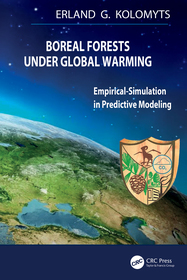
  • Boreal Forests Under Global Warming: Empirical Simulation Predictive Modeling

    Boreal Forests Under Global Warming by Kolomyts, Erland G.;

    Empirical Simulation Predictive Modeling

      • 20% KEDVEZMÉNY?

      • A kedvezmény csak az 'Értesítés a kedvenc témákról' hírlevelünk címzettjeinek rendeléseire érvényes.
      • Kiadói listaár GBP 130.00
      • Az ár azért becsült, mert a rendelés pillanatában nem lehet pontosan tudni, hogy a beérkezéskor milyen lesz a forint árfolyama az adott termék eredeti devizájához képest. Ha a forint romlana, kissé többet, ha javulna, kissé kevesebbet kell majd fizetnie.

        58 695 Ft (55 900 Ft + 5% áfa)
      • Kedvezmény(ek) 20% (cc. 11 739 Ft off)
      • Kedvezményes ár 46 956 Ft (44 720 Ft + 5% áfa)
      • A kedvezmény érvényes eddig: 2026. június 30.

    52 826 Ft

    db

    Beszerezhetőség

    Még nem jelent meg, de rendelhető. A megjelenéstől számított néhány héten belül megérkezik.

    Why don't you give exact delivery time?

    A beszerzés időigényét az eddigi tapasztalatokra alapozva adjuk meg. Azért becsült, mert a terméket külföldről hozzuk be, így a kiadó kiszolgálásának pillanatnyi gyorsaságától is függ. A megadottnál gyorsabb és lassabb szállítás is elképzelhető, de mindent megteszünk, hogy Ön a lehető leghamarabb jusson hozzá a termékhez.

    A termék adatai:

    • Kiadás sorszáma 1
    • Kiadó CRC Press
    • Megjelenés dátuma 2026. július 29.

    • ISBN 9781041225959
    • Kötéstípus Keménykötés
    • Terjedelem378 oldal
    • Méret 234x156 mm
    • Nyelv angol
    • Illusztrációk 68 Illustrations, black & white; 19 Halftones, black & white; 49 Line drawings, black & white; 37 Tables, black & white
    • 700

    Kategóriák

    Rövid leírás:

    This groundbreaking book presents an innovative predictive concept in geographical ecology that reveals local  and regional mechanisms of global environmental changes.  This work provides environmental scientists with formalized tools for analysis and prediction that can be applied to real-world ecological challenges. 

    Több

    Hosszú leírás:

    This groundbreaking book presents an innovative predictive concept in geographical ecology that reveals local  and regional mechanisms of global environmental changes.  This work provides environmental scientists with formalized tools for analysis and prediction that can be applied to real-world ecological challenges. Ecological modeling through the application of discrete mathematics for processing extensive empirical data from field and laboratory landscape studies.


    Empirical simulation of forecasts is implemented as a reproduction of predicted scenarios of biogeocoenotic systems according to the laws of their basic spatial organization, with  the fundamental properties of ergodicity of the natural environment. The methodology presented transforms geographical ecology into a more precise and quantifiable discipline capable of addressing complex environmental dynamics.


    This monograph is primarily intended for specialists in  ecological modeling and forecasting, and ecological planning in forestry. Additionally, as it draws from the Russian school of landscape science—an approach not widely familiar to many Western European and American researchers—the book offers valuable theoretical and methodological insights for both landscape scientists and ecologists across various specializations. Researchers seeking innovative approaches to understanding environmental change will find this work particularly valuable for its unique perspective and practical applications.

    Több

    Tartalomjegyzék:

    FOREWORD
    INTRODUCTION
    Chapter 1. EMPIRICAL-SIMULATION PREDICTEV MODELING
    IN THE GEOGRAPHICAL ECOLOGY (Framework Concept)
    1.1. Introductory Provisions
    1.2. Strategy of scientific and methodological search
    1.3. Originality of the concept
    1.4. The novelty of given scientific search
    1.5. Numerical methods of landscape-ecological forecasts
    Chapter 2. LANDSCAPE-ECOLOGICAL STRATEGY FOR GROUND GEOECOLOGICAL MONITORING OF THE FORESTS
    2.1. Regional ecology and problem of global changes
    2.2. Current state of the concept of geo-ecological monitoring in
    a changing climate
    2.3. Bioclimatic zonality as an object of ecological-geographical
    research
    2.4. Zonal structure of East-European sub-continent
    2.5. Some inferences
    Chapter 3. BOREAL GEOGRAPHICAL ECOTONE IN THE NORTHERN EURASIA
    3.1. The main provisions for the theory of geographical ecotones
    3.2. Boreal ecotone of the East-European Plain as a landscape-
    ecological system
    3.3. The boreal ecotone as a natural “fast-flowing” model of global
    change
    3.4. Functioning of geo(eco-)systems as an object of the ecological
    monitoring
    3.5. Environmentally sustainability
    3.6. Strategy of science search
    3.5. Some inferences
    Chapter 4. METHODS OF LOCAL AND REGIONAL LANDSCAPE-ECOLOGICAL MODELING
    4.1. Introductory remarks
    4.2. General features of landscape ecological modeling
    4.3. Mono-system information-statistical models
    4.4. Typical schemes of binary ordination
    4.5. Poly-system fuzzy-set-theoretical models
    4.6. Integral parameters of mono- and poly-system organization of
    natural complexes
    4.7. Distinguishing of forest biogeocoenosis eco-types
    4.8. Representation of calculating predictive climatic models
    Chapter 5. REGIONAL AND LOCAL GEOSYSTEMS AS THE OBJECTS OF PREDICTIVE RESEARCH
    5.1. Introductory notes
    5.3. Ground empirical material for modeling
    5.3.1. Landscape structure of the nature zones
    5.3.2. Regional bioclimatic system
    5.3.3. Experimental test sites
    5.3.4. System of local and regional landscape coupling
    5.3.5. Large-scale landscape-ecological surveys
    5.4. Parameters of the biological cycle as indicators of ecosystem
    sustainability
    5.5. The importance of studying local geo(eco)systems for
    landscape-ecological forecasts
    Chapter 6. HYDRO-CLIMATIC SYSTEM OF THE VOLGA RIVER
    BASIN AND ITS ENCIRCLEMENT
    6.1. Chain reactions in the regional landscape-geophysical relations
    6.2. Methods for calculating landscape-geophysical characteristics
    6.3. Space relations of temperature and precipitation
    6.4. Regional scenarios of primary bio-productivity change in the
    system of background climatic fluctuations
    Chapter 7. LANDSCAPE-GEOPHYSICAL FOUNDATIONS OF
    ECOLOGICAL PROGNOSES
    7.1. Functional ordination of forest ecosystems according to arid
    climatic trend
    7.1.1. Introductory remarks
    7.1.2. Ergodic system of nature complexes
    7.1.3. Hydro-thermal ordination of biological cycle parameters
    7.1.4. Empirical simulation of climate-genic changes in the
    biological cycle
    7.2. Regional and local humidity factors and their significance for
    ecological prognoses
    7.2.1. Issues of the problem and basic materials
    7.2.2. The space diversity of annual atmospheric humidity factor
    7.2.3. Edaphic humidity factor and the methods of its calculation
    7.2.4. Local coefficient of common humidification
    7.3. Humidity factors and levels functioning of geo(eco-)system
    7.4. Hydro-edaphic conditions of the critical states of forest eco-
    systems
    7.5. The predictive estimates od edaphic humidity changes and their
    ecological effect
    7.5. Some inferences
    Chapter 8. PECULIARITY OF LANDSCAPE-ECOLOGICAL FORECASTIGS
    8 1. The ways of development of regional prediction concept
    8.2. Landscape-ecological system as an object of predictive modeling
    8.3. Ideological foundations and strategy of predictive research
    Chapter 9. EMPIRICAL-SIMULATION PREDICTIVE MODELING OF FOREST ECOSYSTEMS
    9.1. The value of empirical simulation in landscape-ecological forecasts
    9.2. Statistical analysis of functional biogeocoenotic relationships
    9.3. Ordination as a basis for empirical-statistical modeling
    9.4. Local empirical simulation of the regional climatic trend
    9.5. Polyzonality of local ecosystems as a way of reresponse to climate
    change
    9.6. The principle of optimality in the functioning of ecosystems
    9.7. The driving forces of climate-genic successions
    Chapter 10. REGIONAL LANDSCAPE-ECOLOGICAL PROGNOSES
    10.1. Analytic methods of landscape-ecological prognoses
    10.1.1. Evaluate of probabilities of changes in the functional states
    of ecosystems
    10.1.2. Algorithm of predictive calculations
    10.1.3. Calculations of the rates of ecosystem transformations
    10.2. Prognoses of functional changes of plant formations
    10.2.1. Main features of climatic prognosis in the region
    10.2.2. Forecasting changes in the functional states of plant formations
    10.2.3. Dynamics of biological cycle parameters in zonal-regional
    ecosystems
    10.3. Modern regional analogues of predicted landscape-ecological
    situations under global warming
    10.4. Main inference
    Chapter 11. CARTOGRAPHIC MODELS OF REGIONAL
    LANDSCAPE-ECOLOGICAL FORECASTING
    11.1. Ideological foundations of predictive research
    11.2. Predictive mapping of focal landscape transformations
    11.3. Analytical and cartographic assessment of inductive landscape
    transformation
    11.4. Brief analysis of forecast scenarios
    11.4. Main inference
    Сhapter 12. LOCAL LANSCAPE-ECOLOGICAL PROGNOSES
    12.1. The ideology of local environmental forecasting
    12.2. Prerequisites of research
    12.3. Empirical materials
    12.4. Polyzonality of local ecosystem as a way of their reaction on the
    global climatic signals
    12.5. The main characteristics of climate prediction
    12.6. Prediction procedure
    12.7. Prognostic scenarios of transformation of forest ecosystems
    12.7.1. Changes of the soil moisture content
    12.7.2. Climate-genic dynamic of the forest biogeocoenoses
    12.8. Main inferences
    Chapter 13. PHYTOCOENOTIC AND SOIL SIGNS OF CURRENT GLOBAL WARMING
    13.1. Main features of the climatic trend
    13.2. General changes in soil-plant cover
    13.3. Phytocoenotic changes at the Main landscape Border of the
    Russian Plain
    13.4. Phytoecological effect of enhanced non-stationarity of the
    сlimate
    13.5. Main inferences
    Chapter 14. MECHANISMS OF STABILITY OF FOREST ECOSYSTEMS
    14.1. Problem status
    14.2. Analytical modeling of the stability of forest biogeocoenoses
    14.2.1. Labile phytocoenotic resistance
    14.2.2. Inertial soil-biotic stability
    14.3. Stability of forest biogeocoenoses in cartographic terms
    14.4. Models of stability for forest formations
    14.5. Main inferences
    Chapter 15. THE ROLE OF BOREAL FORESTS IN REGULATION THE CARBON CYCLE AND MITIGATING MODERN GLOBAL WARMING
    15.1. Adaptation and mitigation is the final stage of geoecological
    monitoring
    15.2. The concept of ecological resources of forests in the regulation of the
    carbon cycle
    . 15.3. Carbon balance of forest ecosystems for different climate trends
    15.3. 1. The general trends and objectives of research
    15.3.2 Methods of prognostic analysis
    15.3.3. The carbon balance of forest ecosystems predicted for
    different climatic trends
    15.3.4. Mapping predictive scenarios of the carbon balance
    15.4. Ecological resources of restored primary forests of the Volga River
    basin
    15.5. Verification of predictive calculations of the carbon balance
    15.6. Toward the solution of the dual problem of adsorption and adaptation
    (in accordance with the Paris Agreement)
    15.8. Main inferences
    CONCLUSION
    SUPPLEMENTS. LIST OF THE SIGNS FOR MODELING
    REFERENCES
    ABOUT AUTHOR
    SUDJECT INDEX

    Több
    0