

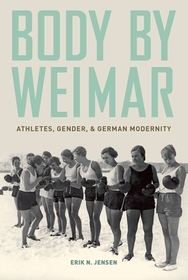
Body by Weimar
Athletes, Gender, and German Modernity
-
10% KEDVEZMÉNY?
- A kedvezmény csak az 'Értesítés a kedvenc témákról' hírlevelünk címzettjeinek rendeléseire érvényes.
- Kiadói listaár GBP 35.49
-
16 023 Ft (15 260 Ft + 5% áfa)
Az ár azért becsült, mert a rendelés pillanatában nem lehet pontosan tudni, hogy a beérkezéskor milyen lesz a forint árfolyama az adott termék eredeti devizájához képest. Ha a forint romlana, kissé többet, ha javulna, kissé kevesebbet kell majd fizetnie.
- Kedvezmény(ek) 10% (cc. 1 602 Ft off)
- Kedvezményes ár 14 421 Ft (13 734 Ft + 5% áfa)
Iratkozzon fel most és részesüljön kedvezőbb árainkból!
Feliratkozom
16 023 Ft

Beszerezhetőség
Megrendelésre a kiadó utánnyomja a könyvet. Rendelhető, de a szokásosnál kicsit lassabban érkezik meg.
Why don't you give exact delivery time?
A beszerzés időigényét az eddigi tapasztalatokra alapozva adjuk meg. Azért becsült, mert a terméket külföldről hozzuk be, így a kiadó kiszolgálásának pillanatnyi gyorsaságától is függ. A megadottnál gyorsabb és lassabb szállítás is elképzelhető, de mindent megteszünk, hogy Ön a lehető leghamarabb jusson hozzá a termékhez.
A termék adatai:
- Kiadó OUP USA
- Megjelenés dátuma 2013. június 20.
- ISBN 9780199311248
- Kötéstípus Puhakötés
- Terjedelem198 oldal
- Méret 231x155x15 mm
- Súly 295 g
- Nyelv angol
- Illusztrációk 5 b/w line, 14 b/w halftones 0
Kategóriák
Rövid leírás:
Body by Weimar argues that male and female athletes fundamentally recast gender roles during Germany's turbulent post-World War I years and established the basis for a modern body and modern sensibility that remain with us to this day.
TöbbHosszú leírás:
In Body by Weimar, Erik N. Jensen shows how German athletes reshaped gender roles in the turbulent decade after World War I and established the basis for a modern body and modern sensibility that remain with us to this day. The same cutting-edge techniques that engineers were using to increase the efficiency of factories and businesses in the 1920s aided athletes in boosting the productivity of their own flesh and bones. Sportswomen and men embodied modernity-quite literally-in its most streamlined, competitive, time-oriented form, and their own successes on the playing fields seemed to prove the value of economic rationalization to a skeptical public that often felt threatened by the process. Enthroned by the media as culture's trendsetters, champions in sports such as tennis, boxing, and track and field also provided models of sexual empowerment, social mobility, and self-determination. They showed their fans how to be modern, and, in the process, sparked heated debates over the aesthetics of the body, the limits of physical exertion, the obligations of citizens to the state, and the relationship between the sexes. If the images and debates in this book strike readers as familiar, it might well be because the ideal body of today-sleek, efficient, and equally available to men and women-received one of its earliest articulations in the fertile tumult of Germany's roaring twenties. After more than eighty years, we still want the Weimar body.
Jensen's analysis provides a highly interesting picture of Weimar-era sports life.
Tartalomjegyzék:
Introduction: Building a Better German
1. Disorder on the Court: Soft Men, Hard Women, and Steamy Tennis
2. Belle of the Brawl: The Boxer between Sensationalism and Sport
3. German Engineering: Duty, Performance, and the Track and Field Athlete
Conclusion: Body beyond Weimar: Germany's Athletic Legacy
Notes
Index

