

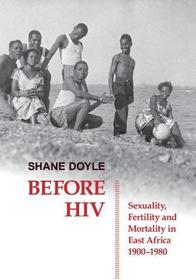
Before HIV
Sexuality, Fertility and Mortality in East Africa, 1900-1980
Sorozatcím: British Academy Monographs;
-
10% KEDVEZMÉNY?
- A kedvezmény csak az 'Értesítés a kedvenc témákról' hírlevelünk címzettjeinek rendeléseire érvényes.
- Kiadói listaár GBP 95.00
-
42 892 Ft (40 850 Ft + 5% áfa)
Az ár azért becsült, mert a rendelés pillanatában nem lehet pontosan tudni, hogy a beérkezéskor milyen lesz a forint árfolyama az adott termék eredeti devizájához képest. Ha a forint romlana, kissé többet, ha javulna, kissé kevesebbet kell majd fizetnie.
- Kedvezmény(ek) 10% (cc. 4 289 Ft off)
- Kedvezményes ár 38 603 Ft (36 765 Ft + 5% áfa)
Iratkozzon fel most és részesüljön kedvezőbb árainkból!
Feliratkozom
42 892 Ft

Beszerezhetőség
Becsült beszerzési idő: A Prosperónál jelenleg nincsen raktáron, de a kiadónál igen. Beszerzés kb. 3-5 hét..
A Prosperónál jelenleg nincsen raktáron.
Why don't you give exact delivery time?
A beszerzés időigényét az eddigi tapasztalatokra alapozva adjuk meg. Azért becsült, mert a terméket külföldről hozzuk be, így a kiadó kiszolgálásának pillanatnyi gyorsaságától is függ. A megadottnál gyorsabb és lassabb szállítás is elképzelhető, de mindent megteszünk, hogy Ön a lehető leghamarabb jusson hozzá a termékhez.
A termék adatai:
- Kiadó OUP Oxford
- Megjelenés dátuma 2013. február 7.
- ISBN 9780197265338
- Kötéstípus Keménykötés
- Terjedelem450 oldal
- Méret 240x168x31 mm
- Súly 868 g
- Nyelv angol 0
Kategóriák
Rövid leírás:
Two of the most important questions in modern African history are the causes of its population explosion, and the origins of the HIV pandemic. Before HIV shows that the more permissive sexual culture which permitted HIV to spread so quickly can be traced back to the mid-20th century, when new patterns of socialization and sexual networking emerged.
TöbbHosszú leírás:
This book addresses two of the most important questions in modern African history: the causes of rapid population growth, and the origins of the HIV pandemic. It examines three societies on the Uganda-Tanzania border whose distinctive histories shed new light on both of these phenomena. This was the region where HIV in Africa first became a mass rural epidemic, and also where HIV infection rates first began to decline significantly.
Before HIV argues that only by analysing the long history of changes in sexual behaviour and attitudes can the shape of Africa's regional epidemics be fully understood. It traces the emergence of the sexual culture which permitted HIV to spread so quickly during the late 1970s and 1980s back to the middle decades of the twentieth century, a period when new patterns of socialization and sexual networking became established. The case studies examined in this book also provide new insights into the relationship between economic and social development and trends in fertility and mortality during the twentieth century. These three societies experienced the onset of rapid population growth at different moments and for different reasons, but in each case study area the key mechanisms appear to have been a decline in child mortality, a shortening of birth intervals, and a marked decline in primary and secondary sterility.
Doyle shows that it is only by analysing the history of changes in sexual behaviour and attitudes that the shape of Africa's regional HIV/AIDS epidemics can be fully understood. Doyle's book is an impressive attempt to tell a detailed story of changing sexual culture
Tartalomjegyzék:
Introduction
Sexuality and fertility in the pre-colonial period
Disease and mortality, 1860-1925
Early colonial sexuality and fertility
Marriage and sexuality in Buganda, 1925-69
Prostitution in Buhaya, 1925-1969
Ankole: marriage and the ethnicity of sex, 1925-69
Fertility in Ankole, Buganda and Buhaya, 1925-6
Disease and death, 1925-196
Sexuality, mortality, disease and fertility in the 1970S
Conclusion And Epilogue: AIDS and demographic change in historical context

