
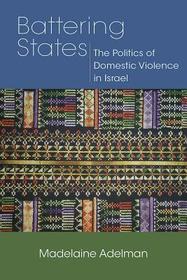
Battering States – The Politics of Domestic Violence in Israel
The Politics of Domestic Violence in Israel
-
10% KEDVEZMÉNY?
- A kedvezmény csak az 'Értesítés a kedvenc témákról' hírlevelünk címzettjeinek rendeléseire érvényes.
- Kiadói listaár GBP 80.00
-
38 220 Ft (36 400 Ft + 5% áfa)
Az ár azért becsült, mert a rendelés pillanatában nem lehet pontosan tudni, hogy a beérkezéskor milyen lesz a forint árfolyama az adott termék eredeti devizájához képest. Ha a forint romlana, kissé többet, ha javulna, kissé kevesebbet kell majd fizetnie.
- Kedvezmény(ek) 10% (cc. 3 822 Ft off)
- Kedvezményes ár 34 398 Ft (32 760 Ft + 5% áfa)
Iratkozzon fel most és részesüljön kedvezőbb árainkból!
Feliratkozom
38 220 Ft
Beszerezhetőség
Még nem jelent meg, de rendelhető. A megjelenéstől számított néhány héten belül megérkezik.
Why don't you give exact delivery time?
A beszerzés időigényét az eddigi tapasztalatokra alapozva adjuk meg. Azért becsült, mert a terméket külföldről hozzuk be, így a kiadó kiszolgálásának pillanatnyi gyorsaságától is függ. A megadottnál gyorsabb és lassabb szállítás is elképzelhető, de mindent megteszünk, hogy Ön a lehető leghamarabb jusson hozzá a termékhez.
A termék adatai:
- Kiadó University of Chicago Press
- Megjelenés dátuma 2026. március 25.
- Kötetek száma Hardback
- ISBN 9780826521309
- Kötéstípus Keménykötés
- Terjedelem304 oldal
- Méret 228x152 mm
- Súly 612 g
- Nyelv angol 700
Kategóriák
Rövid leírás:
Explores the most personal part of people's lives as they intersect with a uniquely complex state system. The book examines how statecraft shapes domestic violence: how a state defines itself and determines what counts as a family; how a state establishes sovereignty and defends its borders; and how a state organises its legal system and forges its economy.
TöbbHosszú leírás:
Battering States explores the most personal part of people's lives as they intersect with a uniquely complex state system. The book examines how statecraft shapes domestic violence: how a state defines itself and determines what counts as a family; how a state establishes sovereignty and defends its borders; and how a state organizes its legal system and forges its economy. The ethnography includes stories from people, places, and perspectives not commonly incorporated in domestic violence studies, and, in doing so, reveals the transformation of intimate partner violence from a predictable form of marital trouble to a publicly recognized social problem.
The politics of domestic violence create novel entry points to understanding how, although women may be vulnerable to gender-based violence, they do not necessarily share the same kind of belonging to the state. This means that markers of identity and power, such as gender, nationality, ethnicity, religion and religiosity, and socio-economic and geographic location, matter when it comes to safety and pathways to justice.
The study centers on Israel, where a number of factors bring connections between the cultural politics of the state and domestic violence into stark relief: the presence of a contentious multinational and multiethnic population; competing and overlapping sets of religious and civil laws; a growing gap between the wealthy and the poor; and the dominant presence of a security state in people's everyday lives. The exact combination of these factors is unique to Israel, but they are typical of states with a diverse population in a time of globalization. In this way, the example of Israel offers insights wherever the political and personal impinge on one another.