

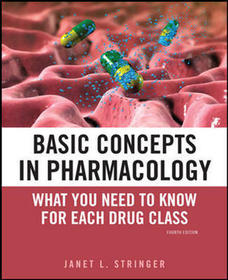
Basic Concepts in Pharmacology: What You Need to Know for Each Drug Class, Fourth Edition
Sorozatcím: APPLETON & LANGE MED IE OVRUNS;
-
10% KEDVEZMÉNY?
- A kedvezmény csak az 'Értesítés a kedvenc témákról' hírlevelünk címzettjeinek rendeléseire érvényes.
- Kiadói listaár GBP 14.99
-
7 161 Ft (6 820 Ft + 5% áfa)
Az ár azért becsült, mert a rendelés pillanatában nem lehet pontosan tudni, hogy a beérkezéskor milyen lesz a forint árfolyama az adott termék eredeti devizájához képest. Ha a forint romlana, kissé többet, ha javulna, kissé kevesebbet kell majd fizetnie.
- Kedvezmény(ek) 10% (cc. 716 Ft off)
- Kedvezményes ár 6 445 Ft (6 138 Ft + 5% áfa)
Iratkozzon fel most és részesüljön kedvezőbb árainkból!
Feliratkozom
7 161 Ft

Beszerezhetőség
Bizonytalan a beszerezhetőség. Érdemes még egyszer keresni szerzővel és címmel. Ha nem talál másik, kapható kiadást, forduljon ügyfélszolgálatunkhoz!
Why don't you give exact delivery time?
A beszerzés időigényét az eddigi tapasztalatokra alapozva adjuk meg. Azért becsült, mert a terméket külföldről hozzuk be, így a kiadó kiszolgálásának pillanatnyi gyorsaságától is függ. A megadottnál gyorsabb és lassabb szállítás is elképzelhető, de mindent megteszünk, hogy Ön a lehető leghamarabb jusson hozzá a termékhez.
A termék adatai:
- Kiadás sorszáma 4
- Kiadó McGraw-Hill Education
- Megjelenés dátuma 2011. május 16.
- ISBN 9780071767286
- Kötéstípus Puhakötés
- Terjedelem256 oldal
- Méret 236x188x11 mm
- Súly 426 g
- Nyelv angol 0
Kategóriák
Rövid leírás:
A proven method for learning the most difficult-to-understand concepts in pharmacology
TöbbHosszú leírás:
A time-saving, stress-reducing approach to learning the essential concepts of pharmacology
Great for USMLE review!
"This could be a very useful tool for students who struggle with understanding the most basic concepts in pharmacology for course and licensure examinations. 3 Stars."--Doody's Review Service
Basic Concepts in Pharmacology provides you with a complete framework for studying -? and understanding -- the fundamental principles of drug actions. With this unique learning system, you?ll be able to identify must-know material, recognize your strengths and weaknesses, minimize memorization, streamline your study, and build your confidence. Basic Concepts in Pharmacology presents drugs by class, details exactly what you need to know about each class, and reinforces key concepts and definitions.
With this innovative text you?ll be able to:
- Recognize the concepts you truly must know before moving on to other material
- Understand the fundamental principles of drug actions
- Organize and condense the drug information you must remember
- Review key information, which is presented in boxes, illustrations, and tables
- Identify the most important drugs in each drug class
Seven sections specifically designed to simplify the learning process and help you gain an understanding of the most important concepts:
- General Principles
- Drugs That Affect the Autonomic Nervous System
- Drugs That Affect the Cardiovascular System
- Drugs That Act on the Central Nervous System
- Chemotherapeutic Agents
- Drugs That Affect the Endocrine System
- Miscellaneous Drugs (Includes Toxicology and Poisoning)
A time-saving, stress-reducing approach to learning the essential concepts of pharmacology
Great for USMLE review!
"This could be a very useful tool for students who struggle with understanding the most basic concepts in pharmacology for course and licensure examinations. 3 Stars."--Doody's Review Service
Basic Concepts in Pharmacology provides you with a complete framework for studying -? and understanding -- the fundamental principles of drug actions. With this unique learning system, you?ll be able to identify must-know material, recognize your strengths and weaknesses, minimize memorization, streamline your study, and build your confidence. Basic Concepts in Pharmacology presents drugs by class, details exactly what you need to know about each class, and reinforces key concepts and definitions.
With this innovative text you?ll be able to:
- Recognize the concepts you truly must know before moving on to other material
- Understand the fundamental principles of drug actions
- Organize and condense the drug information you must remember
- Review key information, which is presented in boxes, illustrations, and tables
- Identify the most important drugs in each drug class
Seven sections specifically designed to simplify the learning process and help you gain an understanding of the most important concepts:
- General Principles
- Drugs That Affect the Autonomic Nervous System
- Drugs That Affect the Cardiovascular System
- Drugs That Act on the Central Nervous System
- Chemotherapeutic Agents
- Drugs That Affect the Endocrine System
- Miscellaneous Drugs (Includes Toxicology and Poisoning)
Tartalomjegyzék:
Chapter 1. Where to Start; Part 1: General Principles; Chapter 2. Receptor Theory; Chapter 3. Absorption, Distribution and Clearance; Chapter 4. Pharmacokinetics; Chapter 5. Drug Metabolism and Renal Elimination; Part II: Autonomics; Chapter 6. Review of the Autonomic Nervous System; Chapter 7. Cholinergic Agonists; Chapter 8. Cholinergic Antagonists; Chapter 9. Adrenergic Agonists; Chapter 10. Adrenergic Antagonists; Part III: Drugs That Affect the Cardiovascular System; Chapter 11. Drugs that Improve Cardiac Contractility; Chapter 12. Antihypertensive Drugs; Chapter 13. Drugs that Treat Heart Failure; Chapter 14. Antiarrrhytmic Drugs; Chapter 15. Drugs that Affect Blood; Chapter 16. Lipid-Lowering Drugs; Part IV: Drugs Acting on the Central Nervous System; Chapter 17. Anxiolytic and Hynotic Drugs; Chapter 18. Antidepressants and Lithium; Chapter 19. Antipsychoyics or Neuroleptics; Chapter 20. Drugs Used in Parkinson's Disease; Chapter 21. Antiepileptic Drugs; Chapter 22 Narcotics; Chapter 23. General Anesthetics; Chapter 24. Local Anesthetics; Chapter 25. Introduction to Chemotherapy; Chapter 26. Inhibitors of Cell Wall Synthesis; Chapter 27. Proteins Synthesis Inhibitors; Chapter 28. Folate Anatgonists; Chapter 29. Quinolones and Urinary Tract Antiseptics; Chapter 30. Drugs Used in Tuberculosis and Leprosy; Chapter 31. Antifungal Drugs; Chapter 32. Anthelmintic Drugs; Chapter 33. Antiviral Drugs; Chapter 34. Antiprotozoal Drugs; Chapter 35. Anticancer Drugs; Part VI: Drugs that Affect the Endocrine System; Chapter 36. Andrenocortical Hormones; Chapter 37. Sex Steroids; Chapter 38. Thyroid and Antithyroid DrugsChapter 39. Insulin, Glucagon and Oral Hypoglycemic Drugs; Part VII: Miscellaneous Drugs; Chapter 40. Histamine and Antihistamines; Chapter 41. Respiratory Drugs; Chapter 42. Drugs that Affect the GI Tract; Chapter 43. Nonnarcotic Analgesics and Anti-Inflammatory Drugs; Chapter 44. Immunosuppressives; Chapter 45. Drugs Used in Osteoporosis; Chapter 46. Toxicology and poisoning
Több
