

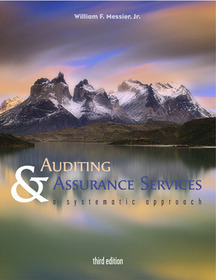
Auditing & Assurance Services: A Systematic Approach
-
10% KEDVEZMÉNY?
- A kedvezmény csak az 'Értesítés a kedvenc témákról' hírlevelünk címzettjeinek rendeléseire érvényes.
- Kiadói listaár GBP 92.99
-
41 984 Ft (39 985 Ft + 5% áfa)
Az ár azért becsült, mert a rendelés pillanatában nem lehet pontosan tudni, hogy a beérkezéskor milyen lesz a forint árfolyama az adott termék eredeti devizájához képest. Ha a forint romlana, kissé többet, ha javulna, kissé kevesebbet kell majd fizetnie.
- Kedvezmény(ek) 10% (cc. 4 198 Ft off)
- Kedvezményes ár 37 786 Ft (35 987 Ft + 5% áfa)
Iratkozzon fel most és részesüljön kedvezőbb árainkból!
Feliratkozom
41 984 Ft

Beszerezhetőség
Megjelenése törölve vagy kivonva a forgalomból. Sajnos nem rendelhető.
Why don't you give exact delivery time?
A beszerzés időigényét az eddigi tapasztalatokra alapozva adjuk meg. Azért becsült, mert a terméket külföldről hozzuk be, így a kiadó kiszolgálásának pillanatnyi gyorsaságától is függ. A megadottnál gyorsabb és lassabb szállítás is elképzelhető, de mindent megteszünk, hogy Ön a lehető leghamarabb jusson hozzá a termékhez.
A termék adatai:
- Kiadás sorszáma 3
- Kiadó McGraw-Hill Education
- Megjelenés dátuma 2002. június 16.
- ISBN 9780072478778
- Kötéstípus Keménykötés
- Terjedelem oldal
- Méret 261x210x38 mm
- Súly 1724 g
- Nyelv angol 0
Kategóriák
Hosszú leírás:
The third edition of Messier employs the new audit approaches currently being used by auditing professionals, and soon to be adopted by the Auditing Standards Board. This approach places emphasis on understanding the entity (i.e., the organization or business being audited) and its environment (i.e. industry), and then assessing the business risks faced by the entity and how management controls those risks. This new audit process focuses on business processes instead of accounting cycles. This unique and innovative approach has been developed in response to changing market dynamics. The systematic approach, referred to in the subtitle of the text, reflects the early introduction of three basic concepts that underlie the audit process: materiality, audit risk, and evidence; this allows Messier to build upon this model in subsequent chapters. These are central to everything an auditor does and a unique feature of Messier. As such, this approach facilitates student development of auditor judgment, a vital skill in today?s auditing environment.
The third edition of Messier employs the new audit approaches currently being used by auditing professionals, and soon to be adopted by the Auditing Standards Board. This approach places emphasis on understanding the entity (i.e., the organization or business being audited) and its environment (i.e. industry), and then assessing the business risks faced by the entity and how management controls those risks. This new audit process focuses on business processes instead of accounting cycles. This unique and innovative approach has been developed in response to changing market dynamics. The systematic approach, referred to in the subtitle of the text, reflects the early introduction of three basic concepts that underlie the audit process: materiality, audit risk, and evidence; this allows Messier to build upon this model in subsequent chapters. These are central to everything an auditor does and a unique feature of Messier. As such, this approach facilitates student development of auditor judgment, a vital skill in today?s auditing environment.

