

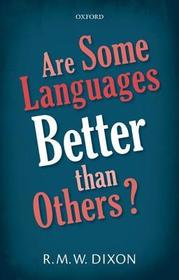
Are Some Languages Better than Others?
-
10% KEDVEZMÉNY?
- A kedvezmény csak az 'Értesítés a kedvenc témákról' hírlevelünk címzettjeinek rendeléseire érvényes.
- Kiadói listaár GBP 43.99
-
19 861 Ft (18 915 Ft + 5% áfa)
Az ár azért becsült, mert a rendelés pillanatában nem lehet pontosan tudni, hogy a beérkezéskor milyen lesz a forint árfolyama az adott termék eredeti devizájához képest. Ha a forint romlana, kissé többet, ha javulna, kissé kevesebbet kell majd fizetnie.
- Kedvezmény(ek) 10% (cc. 1 986 Ft off)
- Kedvezményes ár 17 875 Ft (17 024 Ft + 5% áfa)
Iratkozzon fel most és részesüljön kedvezőbb árainkból!
Feliratkozom
19 861 Ft

Beszerezhetőség
Megrendelésre a kiadó utánnyomja a könyvet. Rendelhető, de a szokásosnál kicsit lassabban érkezik meg.
Why don't you give exact delivery time?
A beszerzés időigényét az eddigi tapasztalatokra alapozva adjuk meg. Azért becsült, mert a terméket külföldről hozzuk be, így a kiadó kiszolgálásának pillanatnyi gyorsaságától is függ. A megadottnál gyorsabb és lassabb szállítás is elképzelhető, de mindent megteszünk, hogy Ön a lehető leghamarabb jusson hozzá a termékhez.
A termék adatai:
- Kiadó OUP Oxford
- Megjelenés dátuma 2016. március 24.
- ISBN 9780198766810
- Kötéstípus Keménykötés
- Terjedelem288 oldal
- Méret 222x144x21 mm
- Súly 458 g
- Nyelv angol 30
Kategóriák
Rövid leírás:
This book sets out to answer a question that many linguists have been hesitant to ask: are some languages better than others? Written in the author's usual accessible and engaging style, the book outlines the essential and optional features of language, before concluding that the ideal language does not and probably never will exist.
TöbbHosszú leírás:
This book sets out to answer a question that many linguists have been hesitant to ask: are some languages better than others? Can we say, for instance, that because German has three genders and French only two, German is a better language in this respect? Jarawara, spoken in the Amazonian jungle, has two ways of showing possession: one for a part (e.g. 'Father's foot') and the other for something which is owned and can be given away or sold (e.g. 'Father's knife'); is it thus a better language than English, which marks all possession in the same way?
R. M. W. Dixon begins by outlining what he feels are the essential components of any language, such as the ability to pose questions, command actions, and provide statements. He then discusses desirable features including gender agreement, tenses, and articles, before concluding with his view of what the ideal language would look like - and an explanation of why it does not and probably never will exist. Written in the author's usual accessible and engaging style, and full of personal anecdotes and unusual linguistic phenomena, the book will be of interest to all general language enthusiasts as well as to a linguistics student audience, and particularly to anyone with an interest in linguistic typology.
A veritable compendium of linguistics, a collection of concise but detailed information about the essential components of human languages. It is written in an accessible, enjoyable, and refreshingly clear style. It also brings many other important questions into focus, for example, the varying extents to which speakers of diverse tongues make use of the vast potential resources of human language.
Tartalomjegyzék:
Preface
Setting the scene
How languages work
What is necessary
What is desirable
What is not (really) needed
How about complexity?
How many words should there be?
The limits of a language
Better for what purpose?
An ideal language
Facing up to the question
Notes and sources
Abbreviations
Acknowledgements
References
Index

