

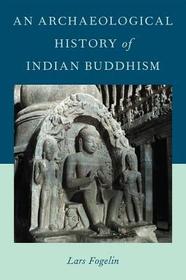
An Archaeological History of Indian Buddhism
Sorozatcím: Oxford Handbooks;
-
10% KEDVEZMÉNY?
- A kedvezmény csak az 'Értesítés a kedvenc témákról' hírlevelünk címzettjeinek rendeléseire érvényes.
- Kiadói listaár GBP 135.00
-
60 952 Ft (58 050 Ft + 5% áfa)
Az ár azért becsült, mert a rendelés pillanatában nem lehet pontosan tudni, hogy a beérkezéskor milyen lesz a forint árfolyama az adott termék eredeti devizájához képest. Ha a forint romlana, kissé többet, ha javulna, kissé kevesebbet kell majd fizetnie.
- Kedvezmény(ek) 10% (cc. 6 095 Ft off)
- Kedvezményes ár 54 857 Ft (52 245 Ft + 5% áfa)
Iratkozzon fel most és részesüljön kedvezőbb árainkból!
Feliratkozom
60 952 Ft

Beszerezhetőség
Megrendelésre a kiadó utánnyomja a könyvet. Rendelhető, de a szokásosnál kicsit lassabban érkezik meg.
Why don't you give exact delivery time?
A beszerzés időigényét az eddigi tapasztalatokra alapozva adjuk meg. Azért becsült, mert a terméket külföldről hozzuk be, így a kiadó kiszolgálásának pillanatnyi gyorsaságától is függ. A megadottnál gyorsabb és lassabb szállítás is elképzelhető, de mindent megteszünk, hogy Ön a lehető leghamarabb jusson hozzá a termékhez.
A termék adatai:
- Kiadó OUP USA
- Megjelenés dátuma 2015. június 25.
- ISBN 9780199948215
- Kötéstípus Keménykötés
- Terjedelem264 oldal
- Méret 160x239x22 mm
- Súly 578 g
- Nyelv angol
- Illusztrációk 30 line and 30 halftones 0
Kategóriák
Rövid leírás:
Weaving together studies of archaeological remains, architecture, iconography, inscriptions, and Buddhist texts, the book offers a comprehensive survey of Indian Buddhism from the 6th century BCE to its eventual decline, examining in particular the difficulty of practicing individual asceticism while maintaining a coherent community of Buddhists.
TöbbHosszú leírás:
An Archaeological History of Indian Buddhism is a comprehensive survey of Indian Buddhism from its origins in the 6th century BCE, through its ascendance in the 1st millennium CE, and its eventual decline in mainland South Asia by the mid-2nd millennium CE. Weaving together studies of archaeological remains, architecture, iconography, inscriptions, and Buddhist historical sources, this book uncovers the quotidian concerns and practices of Buddhist monks and nuns (the sangha), and their lay adherents--concerns and practices often obscured in studies of Buddhism premised largely, if not exclusively, on Buddhist texts. At the heart of Indian Buddhism lies a persistent social contradiction between the desire for individual asceticism versus the need to maintain a coherent community of Buddhists. Before the early 1st millennium CE, the sangha relied heavily on the patronage of kings, guilds, and ordinary Buddhists to support themselves. During this period, the sangha emphasized the communal elements of Buddhism as they sought to establish themselves as the leaders of a coherent religious order. By the mid-1st millennium CE, Buddhist monasteries had become powerful political and economic institutions with extensive landholdings and wealth. This new economic self-sufficiency allowed the sangha to limit their day-to-day interaction with the laity and begin to more fully satisfy their ascetic desires for the first time. This withdrawal from regular interaction with the laity led to the collapse of Buddhism in India in the early-to-mid 2nd millennium CE. In contrast to the ever-changing religious practices of the Buddhist sangha, the Buddhist laity were more conservative--maintaining their religious practices for almost two millennia, even as they nominally shifted their allegiances to rival religious orders. This book also serves as an exemplar for the archaeological study of long-term religious change through the perspectives of practice theory, materiality, and semiotics.
provide[s] a fascinating complement to prior understandings of the development, ascendance, and eventual decline of this major world religion in India. Lars Fogelin's clear and informative book will appeal to scholars and enthusiasts alike, and it is a prime exemplar for archaeological studies of long-term religious change.
Tartalomjegyzék:
Acknowledgements
Chapter 1 - Introduction
Chapter 2 - The Material of Religion
Chapter 3 - From the Buddha to Ashoka: c. 600 - 200 BCE
Chapter 4 - The Sangha and the Laity: c. 200 BCE - 200 CE
Chapter 5 - The Beginnings of Mahayana Buddhism, Buddha Images, and Monastic Isolation: c. 100 - 600 CE
Chapter 6 - Lay Buddhism and Religious Syncretism in the First Millennium CE
Chapter 7 - The Consolidation and Collapse of Monastic Buddhism: c. 600 - 1400 CE
Conclusion
Bibliography

