

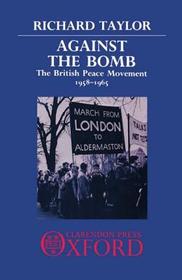
Against the Bomb
The British Peace Movement 1958-1965
-
10% KEDVEZMÉNY?
- A kedvezmény csak az 'Értesítés a kedvenc témákról' hírlevelünk címzettjeinek rendeléseire érvényes.
- Kiadói listaár GBP 205.00
-
92 557 Ft (88 150 Ft + 5% áfa)
Az ár azért becsült, mert a rendelés pillanatában nem lehet pontosan tudni, hogy a beérkezéskor milyen lesz a forint árfolyama az adott termék eredeti devizájához képest. Ha a forint romlana, kissé többet, ha javulna, kissé kevesebbet kell majd fizetnie.
- Kedvezmény(ek) 10% (cc. 9 256 Ft off)
- Kedvezményes ár 83 302 Ft (79 335 Ft + 5% áfa)
Iratkozzon fel most és részesüljön kedvezőbb árainkból!
Feliratkozom
92 557 Ft

Beszerezhetőség
Megrendelésre a kiadó utánnyomja a könyvet. Rendelhető, de a szokásosnál kicsit lassabban érkezik meg.
Why don't you give exact delivery time?
A beszerzés időigényét az eddigi tapasztalatokra alapozva adjuk meg. Azért becsült, mert a terméket külföldről hozzuk be, így a kiadó kiszolgálásának pillanatnyi gyorsaságától is függ. A megadottnál gyorsabb és lassabb szállítás is elképzelhető, de mindent megteszünk, hogy Ön a lehető leghamarabb jusson hozzá a termékhez.
A termék adatai:
- Kiadó Clarendon Press
- Megjelenés dátuma 1988. június 30.
- ISBN 9780198275374
- Kötéstípus Keménykötés
- Terjedelem376 oldal
- Méret 224x144x27 mm
- Súly 640 g
- Nyelv angol 0
Kategóriák
Rövid leírás:
The nuclear disarmament movement of the late '50s and early '60s was one of the largest and most significant extra-parliamentary movements in British history. It was extraordinarily diverse and saw anarchists, Communists, and Trotskyists rubbing shoulders with Christians and liberals. What bound these people together was their shared horror of nuclear war, and their anxiety about the seemingly inexorable arms race - feelings many of us share.
TöbbHosszú leírás:
The nuclear disarmament movement of the late '50s and early '60s was one of the largest and arguably one of the most significant, extra-parliamentary movements ever seen in modern Britain. A whole new style and conception of politics was born through this first anti-nuclear movement, and the subsequent radicalism of the '60s and '70s has its roots here.
The movement was extraordinarily diverse and rich in its constituencies of support and complex in its ideological make-up. Thus anarchists, communists, and Trotskyists rubbed shoulders with Christians, liberals, members of the Labour party, and 'ordinary apolitical people', most of whom found in the movement a means by which they could articulate their growing fear and anxiety about the seemingly inexorable arms race, and the horror of nuclear war.
Dr Taylor analyses the perceptions of these groups in detail and explains how and why they differed. This is the first comprehensive study of the movement to make use of a wide range of contemporary material, and the first to present in detail the previously unrecorded views and analyses of more than twenty of the leading figures of the movement some twenty-five years on. Although he provides a wealth of historical detail, Dr Taylor's approach is primarily political and analytical, and his examination of this first mass movement of its kind will be relevant to all those concerned about nuclear proliferation, as well as to courses in politics, sociology, modern history and peace studies.
'Taylor's political judgements are never obtrusive... and, far from narrowing the appeal of his book, they help to give it bite and perspective. He has produced an impressively through piece of work...both as a work of politics and history it towers above all previous writing on the subject, and will become the standard work on early CND.'Times Higher Education Supplement

