

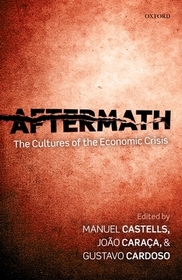
Aftermath
The Cultures of the Economic Crisis
-
10% KEDVEZMÉNY?
- A kedvezmény csak az 'Értesítés a kedvenc témákról' hírlevelünk címzettjeinek rendeléseire érvényes.
- Kiadói listaár GBP 31.99
-
15 283 Ft (14 555 Ft + 5% áfa)
Az ár azért becsült, mert a rendelés pillanatában nem lehet pontosan tudni, hogy a beérkezéskor milyen lesz a forint árfolyama az adott termék eredeti devizájához képest. Ha a forint romlana, kissé többet, ha javulna, kissé kevesebbet kell majd fizetnie.
- Kedvezmény(ek) 10% (cc. 1 528 Ft off)
- Kedvezményes ár 13 754 Ft (13 100 Ft + 5% áfa)
Iratkozzon fel most és részesüljön kedvezőbb árainkból!
Feliratkozom
15 283 Ft

Beszerezhetőség
Becsült beszerzési idő: A Prosperónál jelenleg nincsen raktáron, de a kiadónál igen. Beszerzés kb. 3-5 hét..
A Prosperónál jelenleg nincsen raktáron.
Why don't you give exact delivery time?
A beszerzés időigényét az eddigi tapasztalatokra alapozva adjuk meg. Azért becsült, mert a terméket külföldről hozzuk be, így a kiadó kiszolgálásának pillanatnyi gyorsaságától is függ. A megadottnál gyorsabb és lassabb szállítás is elképzelhető, de mindent megteszünk, hogy Ön a lehető leghamarabb jusson hozzá a termékhez.
A termék adatai:
- Kiadó OUP Oxford
- Megjelenés dátuma 2014. március 27.
- ISBN 9780199677382
- Kötéstípus Puhakötés
- Terjedelem330 oldal
- Méret 234x156x19 mm
- Súly 494 g
- Nyelv angol 0
Kategóriák
Rövid leírás:
The consequences of the financial crisis may be uncertain, but are sure to reach deep into the body politic, civil society, welfare systems, and reform. This collection of essays by leading international sociologists and social scientists explores the likely outcomes and consequences
TöbbHosszú leírás:
The crisis of global capitalism that has unfolded since 2008 is more than an economic crisis. It is structural and multidimensional. The sequence of events that have taken place in its aftermath show that we are entering a world that is very different from the social and economic conditions that characterized the rise of global, informational capitalism in the preceding three decades. The policies and strategies that were intended to manage the crisis--with mixed results depending on the country--may usher in a distinctly different economic and institutional system, as the New Deal, the construction of the European Welfare State, and the Bretton Woods global financial architecture all gave rise to a new form of capitalism in the aftermath of the 1930s Depression, and World War II.
This volume examines the cultures and institutions at the root of the crisis, as well as the conflicts and debates that may lead to a new social landscape, including the rise of alternative economic cultures in the social movements that have sprung up around the world. This collection of essays presents the results of a shared project of reflection by a group of international sociologists and social scientists, led by Manuel Castells. They conclude that to address life beyond the crisis, we need nothing less than a complete transformation of the mind-set that led to bankruptcy and despair, and to economies and societies based on an unsustainable model of speculative finance and political irresponsibility.
The discussion of the crisis of global capitalism offered in this book marks a breakthrough. The work ranges far more widely than the usual crop of purely economic analyses and rightly so.
Tartalomjegyzék:
The Cultures of the Economic Crisis: An Introduction
PRELUDE
The Rolling Apocalypse of Contemporary History
The Separation of Cultures and the Decline of Modernity
WHICH CRISIS? WHOSE CRISIS?
The Metamorphosis of a Crisis
Financial Crisis or Societal Mutation?
DEALING WITH THE CRISIS
Branding the Crisis
In Nationalism We Trust?
Crisis, Identity and the Welfare State
BEYOND THE CRISIS
Surfing the Crisis: Cultures of Belonging and Networked Social Change
Beyond the Crisis: The Emergence of Alternative Economic Practises
THE NON-GLOBAL GLOBAL CRISIS
No Crisis in China? The Rise of China's Social Crisis
A Non-Global Crisis? Challenging the Crisis in Latin America
AFTERMATH?

