

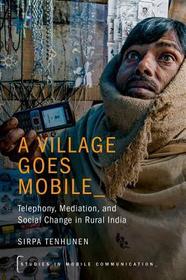
A Village Goes Mobile
Telephony, Mediation, and Social Change in Rural India
Sorozatcím: Studies in Mobile Communication;
-
10% KEDVEZMÉNY?
- A kedvezmény csak az 'Értesítés a kedvenc témákról' hírlevelünk címzettjeinek rendeléseire érvényes.
- Kiadói listaár GBP 122.50
-
55 308 Ft (52 675 Ft + 5% áfa)
Az ár azért becsült, mert a rendelés pillanatában nem lehet pontosan tudni, hogy a beérkezéskor milyen lesz a forint árfolyama az adott termék eredeti devizájához képest. Ha a forint romlana, kissé többet, ha javulna, kissé kevesebbet kell majd fizetnie.
- Kedvezmény(ek) 10% (cc. 5 531 Ft off)
- Kedvezményes ár 49 778 Ft (47 408 Ft + 5% áfa)
Iratkozzon fel most és részesüljön kedvezőbb árainkból!
Feliratkozom
55 308 Ft

Beszerezhetőség
Megrendelésre a kiadó utánnyomja a könyvet. Rendelhető, de a szokásosnál kicsit lassabban érkezik meg.
Why don't you give exact delivery time?
A beszerzés időigényét az eddigi tapasztalatokra alapozva adjuk meg. Azért becsült, mert a terméket külföldről hozzuk be, így a kiadó kiszolgálásának pillanatnyi gyorsaságától is függ. A megadottnál gyorsabb és lassabb szállítás is elképzelhető, de mindent megteszünk, hogy Ön a lehető leghamarabb jusson hozzá a termékhez.
A termék adatai:
- Kiadó OUP USA
- Megjelenés dátuma 2018. június 28.
- ISBN 9780190630270
- Kötéstípus Keménykötés
- Terjedelem212 oldal
- Méret 160x236x15 mm
- Súly 448 g
- Nyelv angol 0
Kategóriák
Rövid leírás:
Drawing on ethnographic field work, A Village Goes Mobile examines how mobile telephony contributes to social change in rural India. The book investigates how the use of mobile phones has influenced economic, political, and social relationships, including gender relationships, and how these new social constellations relate to culture and development.
TöbbHosszú leírás:
In A Village Goes Mobile, Sirpa Tenhunen examines how the mobile telephone has contributed to social change in rural India. Tenhunen's long-term ethnographic fieldwork in West Bengal began before the village had a phone system in place and continued through the introduction and proliferation of the smartphone. She here analyzes how mobile telephones emerged as multidimensional objects which, in addition to enabling telephone conversations, facilitated status aspirations, internet access, and entertainment practices. She explores how this multifaceted use of mobile phones has affected agency and power dynamics in economic, political, and social relationships, and how these new social constellations relate to culture and development.
In eight chapters, Tenhunen asks such questions as: Who benefits from mobile telephony and how? Can people use mobile phones to change their lives, or does phone use merely amplify existing social patterns and power relationships? Can mobile telephony induce development? Going beyond the case of West Bengal, Tenhunen develops a framework to understand how new media mediates social processes within interrelated social spheres and local hierarchies by relating, media-saturated forms of interaction to pre-existing contexts.
Tenhunen's book speaks to the far-reaching and unpredictable consequences of the mobile technology revolution. It would be of interest to a wide range of readers. It is based upon fieldwork over multiple years, and is well-grounded in the literature. It is also a pleasure to read.
Tartalomjegyzék:
Chapter 1 Introduction
Chapter 2 Theorizing phone use contexts and mediation
Chapter 3 Why mobile phones became ubiquitous: remediation and socialities
Chapter 4 Mobile telephony, economy and social logistics
Chapter 5 Mediating gender: mobile phones and women's agency
Chapter 6 Mediating conflict: mobile telephony and politics
Chapter 7 Smartphones, caste, and intersectionalities
Chapter 8 Conclusions

