

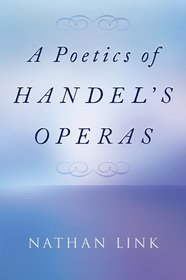
A Poetics of Handel's Operas
-
10% KEDVEZMÉNY?
- A kedvezmény csak az 'Értesítés a kedvenc témákról' hírlevelünk címzettjeinek rendeléseire érvényes.
- Kiadói listaár GBP 94.00
-
42 441 Ft (40 420 Ft + 5% áfa)
Az ár azért becsült, mert a rendelés pillanatában nem lehet pontosan tudni, hogy a beérkezéskor milyen lesz a forint árfolyama az adott termék eredeti devizájához képest. Ha a forint romlana, kissé többet, ha javulna, kissé kevesebbet kell majd fizetnie.
- Kedvezmény(ek) 10% (cc. 4 244 Ft off)
- Kedvezményes ár 38 197 Ft (36 378 Ft + 5% áfa)
Iratkozzon fel most és részesüljön kedvezőbb árainkból!
Feliratkozom
42 441 Ft

Beszerezhetőség
Megrendelésre a kiadó utánnyomja a könyvet. Rendelhető, de a szokásosnál kicsit lassabban érkezik meg.
Why don't you give exact delivery time?
A beszerzés időigényét az eddigi tapasztalatokra alapozva adjuk meg. Azért becsült, mert a terméket külföldről hozzuk be, így a kiadó kiszolgálásának pillanatnyi gyorsaságától is függ. A megadottnál gyorsabb és lassabb szállítás is elképzelhető, de mindent megteszünk, hogy Ön a lehető leghamarabb jusson hozzá a termékhez.
A termék adatai:
- Kiadó OUP USA
- Megjelenés dátuma 2023. május 3.
- ISBN 9780197651346
- Kötéstípus Keménykötés
- Terjedelem388 oldal
- Méret 237x163x30 mm
- Súly 694 g
- Nyelv angol
- Illusztrációk 52 musical examples, 36 b/w figures 400
Kategóriák
Rövid leírás:
A Poetics of Handel's Operas explores the concurrence between the narratives of Handelian operas and how these stories are represented through actions, words, and music. Nathan Link offers a new approach for interpreting and constructing the stories of Handel's operas while highlighting the representational fabric by which they are conveyed to the viewer.
TöbbHosszú leírás:
What should we consider when thinking about the relationship between an onstage performance and the story the performance tells? A Poetics of Handel's Operas explores this question by analyzing the narratives of Handel's operas in relation to the rich representational fabric of performance used to convey them. Nathan Link notes that in most storytelling genres, the audience can naturally discern between a story and the way that story is represented: with film, for example, the viewer would recognize that a character hears neither her own voiceover nor the ambient music that accompanies it, whereas in discussions of opera, some audiences may be distracted by the seemingly artificial nature of such conventions as characters singing their dialogue. Link proposes that when engaging with opera, distinguishing between the performance we see and hear on the stage and the story represented offers a meaningful approach to engaging with and interpreting the work.
Handel's operas are today the most-performed works in the Baroque opera seria tradition. This genre, with its intricate dramaturgy and esoteric conventions, stands to gain much from an investigation into the relationships between the onstage performance and the story to which that performance directs us. In his analysis, Link offers theoretical studies on opera and narratological theories of literature, drama, and film, providing rich engagement with Handel's work and what it conveys about the relationship between text, story, and performance.
The chapter headings of Link's intriguingly titled Poetics of Handel's Operas hint at the nature of this extraordinary volume: Song, Time, Orchestra, Character, and Storytelling. Taking full advantage of all we have learned about Handel's operas over the past half-century, from the likes of Winton Dean et al, Link goes beyond facts and figures to focus, not on the what, but on the how, and not from the point of view of the composer alone but from his relationship with his audience-on the expressive contract established between them. By engaging a variety of critical strategies drawn from literary, film, and dramatic theory, Link brilliantly illuminates Handel's storytelling in ways that can be applied to operas of any period, including our own.
Tartalomjegyzék:
List of Figures
List of Musical Examples
Editorial Principles
About the Website
Acknowledgements
Dedication
Introduction
Chapter 1. Song
Chapter 2. Time
Chapter 3. Orchestra
Chapter 4. Character
Chapter 5. Storytellers
Glossary
Works Cited
Index

