

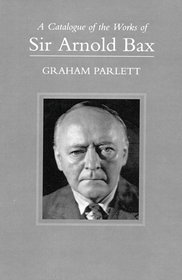
A Catalogue of the Works of Sir Arnold Bax
-
10% KEDVEZMÉNY?
- A kedvezmény csak az 'Értesítés a kedvenc témákról' hírlevelünk címzettjeinek rendeléseire érvényes.
- Kiadói listaár GBP 190.00
-
90 772 Ft (86 450 Ft + 5% áfa)
Az ár azért becsült, mert a rendelés pillanatában nem lehet pontosan tudni, hogy a beérkezéskor milyen lesz a forint árfolyama az adott termék eredeti devizájához képest. Ha a forint romlana, kissé többet, ha javulna, kissé kevesebbet kell majd fizetnie.
- Kedvezmény(ek) 10% (cc. 9 077 Ft off)
- Kedvezményes ár 81 695 Ft (77 805 Ft + 5% áfa)
Iratkozzon fel most és részesüljön kedvezőbb árainkból!
Feliratkozom
90 772 Ft

Beszerezhetőség
Bizonytalan a beszerezhetőség. Érdemes még egyszer keresni szerzővel és címmel. Ha nem talál másik, kapható kiadást, forduljon ügyfélszolgálatunkhoz!
Why don't you give exact delivery time?
A beszerzés időigényét az eddigi tapasztalatokra alapozva adjuk meg. Azért becsült, mert a terméket külföldről hozzuk be, így a kiadó kiszolgálásának pillanatnyi gyorsaságától is függ. A megadottnál gyorsabb és lassabb szállítás is elképzelhető, de mindent megteszünk, hogy Ön a lehető leghamarabb jusson hozzá a termékhez.
A termék adatai:
- Kiadó Clarendon Press
- Megjelenés dátuma 1999. március 11.
- ISBN 9780198165866
- Kötéstípus Keménykötés
- Terjedelem428 oldal
- Méret 242x164x29 mm
- Súly 796 g
- Nyelv angol
- Illusztrációk 4 pp black and white plates 0
Kategóriák
Rövid leírás:
The English composer Arnold Bax (1883-1953) is best known for his colourful tone-poems and symphonies. In his youth, as `Dermot O'Byrne', he wrote Irish stories, poems, and plays; in later life he became Master of the Queen's Music. This uniquely comprehensive catalogue documents the entire output of the man whom Sibelius called `my son in music'.
TöbbHosszú leírás:
Arnold Bax was born in 1883 into a prosperous middle-class family. He started writing music at the age of twelve, and by the end of his life he had produced seven symphonies, numerous tone-poems, overtures, ballet and film scores, concertos, chamber music, piano pieces, choral works, and more than 130 songs; he also wrote short stories, plays and poetry under an Irish pseudonym.
As a young man Bax was thought of as a difficult `modern' composer, but he is now seen as a conservative, late romantic figure. `I am not sure that middle-aged and unquestionably virtuous virgins ought to play my music', he once wrote, and this provides a clue to his highly individual style in which passionate melodic intensity is combined with ravishing harmonies and a flamboyant sense of colour. His reputation was at its peak in the 1920s and early '30s, when he was regarded, along with
Elgar, Delius, Holst, and Vaughan Williams, as a major force in British music. By the 1940s, however, his creative powers had declined and he had lost touch with recent developments in his art. When he died, in 1953, he was completely out of fashion, and it is only during the last few decades that his
invigorating scores have been acclaimed by a new generation of performers and listeners.
This is the most comprehensive catalogue of the music of Arnold Bax yet compiled. The main section is arranged in chronological order of composition with full documentation provided for every known manuscript and published edition. Questions of nomenclature and dating are addressed, and details of first performances, original programme notes, and background information are all included. Research has also been carried out into evidence for `lost' works, unfulfilled projects and commissions,
and the sources of the texts which Bax set to music. There is an extensive bibliography, a full discography, and a complete listing of the composer's literary works and occasional writings.
The result of many years of research, this catalogue is a major source of information about the composer whom Sibelius called `one of the greatest men of our time' and `my son in music'.
It is a fine piece of research in its own right, as well as being an invaluable guide to other researchers. THe detail provided is extraordinary, and the investigation has been carried out with great care and in enormous depth. Though the book is nominally a catalogue, Parlett gives a fine and admirably balanced view of Bax in his introduction... it is fascinating to dip into the volume at random. Hidden among the entries are many gems of quiet, whimsical humour -
some emanating from Bax, some from Parlett, and always understated by the author. The production of the book is very fine. This is a piece of work for which we should all be grateful and which should become a benchmark for any future researchers seeking to compile a catalogue of a composers
works.
Tartalomjegyzék:
List of Plates
Introduction
Chronology
Preliminary Notes:- 1) Scope and Arrangement; 2) Primary Sources: Manuscripts; 3) Secondary Sources: Printed Material
Abbreviations:- 1) Manuscript Papers; 2) Manuscript Repositories; 3) Publishers; 4) Published Sources; 5) Instrumental and Vocal; 6) Bibliographical and General
Catalogue of Music (1896-1953)
Appendix 1. Classified Index of Music
Appendix 2. Concordance of Manuscripts
Appendix 3. Recordings
Appendix 4. Index of Poets
Appendix 5. Index of Dedicatees
Appendix 6. Unfulfilled Projects and Commissions
Appendix 7. Literary Works and Occasional Writings
Appendix 8. Photographs, Portraits, and Personalia
Bibliography
Index of Titles and First Lines
General Index

