

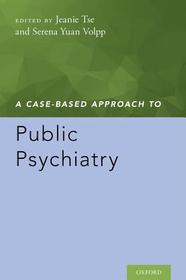
A Case-Based Approach to Public Psychiatry
-
20% KEDVEZMÉNY?
- A kedvezmény csak az 'Értesítés a kedvenc témákról' hírlevelünk címzettjeinek rendeléseire érvényes.
- Kiadói listaár GBP 58.00
-
26 187 Ft (24 940 Ft + 5% áfa)
Az ár azért becsült, mert a rendelés pillanatában nem lehet pontosan tudni, hogy a beérkezéskor milyen lesz a forint árfolyama az adott termék eredeti devizájához képest. Ha a forint romlana, kissé többet, ha javulna, kissé kevesebbet kell majd fizetnie.
- Kedvezmény(ek) 20% (cc. 5 237 Ft off)
- Kedvezményes ár 20 950 Ft (19 952 Ft + 5% áfa)
- A kedvezmény érvényes eddig: 2026. június 30.
Iratkozzon fel most és részesüljön kedvezőbb árainkból!
Feliratkozom
26 187 Ft

Beszerezhetőség
Becsült beszerzési idő: A Prosperónál jelenleg nincsen raktáron, de a kiadónál igen. Beszerzés kb. 3-5 hét..
A Prosperónál jelenleg nincsen raktáron.
Why don't you give exact delivery time?
A beszerzés időigényét az eddigi tapasztalatokra alapozva adjuk meg. Azért becsült, mert a terméket külföldről hozzuk be, így a kiadó kiszolgálásának pillanatnyi gyorsaságától is függ. A megadottnál gyorsabb és lassabb szállítás is elképzelhető, de mindent megteszünk, hogy Ön a lehető leghamarabb jusson hozzá a termékhez.
A termék adatai:
- Kiadó OUP USA
- Megjelenés dátuma 2017. december 7.
- ISBN 9780190610999
- Kötéstípus Puhakötés
- Terjedelem244 oldal
- Méret 231x155x15 mm
- Súly 340 g
- Nyelv angol 0
Kategóriák
Rövid leírás:
Expert public psychiatrists use cases to share best-practice strategies in this clinically-oriented introduction to community mental health. This book provides clinicians with knowledge needed to combat serious mental illness in the context of trauma, poverty, and discrimination. Case studies bring to life foundational concepts and evidence-based treatment for diverse populations, affirming the potential of every individual to achieve recovery.
TöbbHosszú leírás:
Expert public psychiatrists use case studies to share best-practice strategies in this clinically-oriented introduction to community mental health. Today, the majority of psychiatrists work with people who suffer not only from mental illness, but also from poverty, trauma, social isolation and discrimination. They cannot do this work alone, but instead are part of teams of behavioral health workers navigating larger healthcare and social service systems. In an increasingly complex healthcare environment, mental health clinicians need to master systems-based practice in order to provide optimal care to their patients. The rapid development of public psychiatry training programs is a response to the learning needs of psychiatrists in an evolving system.
The book begins with seven foundational principles of public psychiatry: recovery, trauma-informed care, integrated care, cultural humility, harm reduction, systems of care, and financing care, using cases to bring these concepts to life. Then, using a population health framework, cases are used to explore the typical needs of different age groups or vulnerable populations and to illustrate evidence-based/ best practices that have been employed to meet these needs.
Common to all of the chapters is a focus on the potential of each person, regardless of illness, to achieve personal goals, supported by a clinician who is also an advocate, activist and leader.
A Case-Based Approach to Public Psychiatry provides a valuable how to guide for psychiatrists working in this field. It covers a wide range of topics typically absent from medical school and psychiatry residency curricula, such as systems-based approaches to care, financing, and mental health recovery. The case study format makes these concepts accessible and relevant to a broad audience of trainees, clinicians, and leaders working in public psychiatry.
Tartalomjegyzék:
Foreword
Jules Ranz and Manuel Trujillo
Preface
Contributors
1. Recovery Orientation As the Clinical Matrix
Hunter L. McQuistion
2. Trauma-Informed Care
Paula Panzer and Stephanie Smit-Dillard
3. Integrated Health Care
Jason Cheng and Jeanie Tse
4. Cultural Humility
Carissa Caban-Aleman
5. Harm Reduction
Sonal Batra, Noah Villegas, and Erin Zerbo
6. Navigating Systems
Stephanie Le Melle
7. Financing Care
Anita Everett
8. Early Childhood Mental Health: Prevention and Intervention
J. Rebecca Weis
9. School-Based Mental Health
Mia Everett
10. Adolescence
Rachel Mandel and Ruth Gerson
11. Transition-Age Youth
Jeanie Tse, Larissa Lai, and Sharon Sorrentino
12. First-Episode Psychosis
Marc W. Manseau and Jay Crosby
13. Adults With Serious Mental Illness
Serena Yuan Volpp and Patrick Runnels
14. The Elderly
Dennis Popeo
15. Families
Yu-Heng Guo and Alison M. Heru
16. State Psychiatric Hospitals
Mary Barber, Flavio Casoy, and Rachel Zinns
17. Forensic Psychiatry
Sheku Magona and Tara Straka
18. Correctional Settings
Elizabeth Ford
19. Homelessness
Joanna Fried and Leora Morinis
20. Co-Occurring Substance Use Disorders
Michael Soule and Hilary S. Connery
21. Individuals with Developmental Disabilities
Nina Tioleco, Katharine Stratigos, Anna Silberman, and Agnes Whitaker
22. HIV and Public Psychiatry
Shane S. Spicer
23. Refugees and Immigrants
Poh Choo How, Pachida Lo, Marjorie Westervelt, and Hendry Ton
24. Rural Communities
Ryan P. Pierson and Paulette Marie Gillig
25. Lesbian, Gay, Bisexual, Transgender, and Queer (LGBTQ)
Laura Erickson-Schroth and Antonia Barba
26. US Military Veterans
Gertie Quitangon

