

-
20% KEDVEZMÉNY?
- A kedvezmény csak az 'Értesítés a kedvenc témákról' hírlevelünk címzettjeinek rendeléseire érvényes.
- Kiadói listaár GBP 37.99
-
17 152 Ft (16 335 Ft + 5% áfa)
Az ár azért becsült, mert a rendelés pillanatában nem lehet pontosan tudni, hogy a beérkezéskor milyen lesz a forint árfolyama az adott termék eredeti devizájához képest. Ha a forint romlana, kissé többet, ha javulna, kissé kevesebbet kell majd fizetnie.
- Kedvezmény(ek) 20% (cc. 3 430 Ft off)
- Kedvezményes ár 13 721 Ft (13 068 Ft + 5% áfa)
- A kedvezmény érvényes eddig: 2026. június 30.
Iratkozzon fel most és részesüljön kedvezőbb árainkból!
Feliratkozom
15 437 Ft

Beszerezhetőség
Még nem jelent meg, de rendelhető. A megjelenéstől számított néhány héten belül megérkezik.
Why don't you give exact delivery time?
A beszerzés időigényét az eddigi tapasztalatokra alapozva adjuk meg. Azért becsült, mert a terméket külföldről hozzuk be, így a kiadó kiszolgálásának pillanatnyi gyorsaságától is függ. A megadottnál gyorsabb és lassabb szállítás is elképzelhető, de mindent megteszünk, hogy Ön a lehető leghamarabb jusson hozzá a termékhez.
A termék adatai:
- Kiadás sorszáma 1
- Kiadó Routledge India
- Megjelenés dátuma 2026. július 20.
- ISBN 9781032627571
- Kötéstípus Puhakötés
- Terjedelem182 oldal
- Méret 246x189 mm
- Nyelv angol
- Illusztrációk 57 Illustrations, black & white; 18 Illustrations, color; 57 Halftones, black & white; 18 Halftones, color 700
Kategóriák
Rövid leírás:
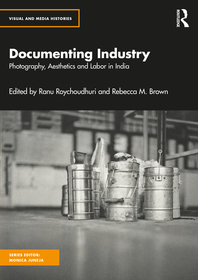
This volume engages with the image of the labouring body against monumental machines, dams, and infrastructure and the ways in which photography engages with strands of modernist aesthetics to support new modes of seeing the changing industrial landscape and the human body.
TöbbHosszú leírás:
Whether a smoky portrait of a coal mine or a sweeping shot of workers building an immense dam, photographs of established and emerging industries fundamentally shaped the visual culture and politics of South Asia in the decades after independence. This volume engages with the image of the laboring body against monumental machines, dams, and infrastructure and the ways in which photography engages with strands of modernist aesthetics to support new modes of seeing the changing industrial landscape and the human body.
The multidisciplinary essays in the book embrace the porosity of “documentary” and “journalistic” photography and draw out questions of aesthetics in relation to both modernizing calls to industry and modernist framings of the visual in India. The book looks back at photographs from the twentieth and twenty-first centuries and critically considers post-World War II industry—with its imagery of factories belching pollutants into the air and the reality of massive displacements of workers due to epidemics, floods, and drought. It analyzes these images in relation to contemporaneous understandings of aesthetics and in dialogue with recent understandings of the global climate crisis. The volume probes the co-constitution of industry and photography in postcolonial India by looking at selected sites of industrial and artistic practices and their interwoven histories.
Part of the Visual Media and Histories Series, this book will be of interest to students and researchers of the history of photography, visual media studies, Indian history, art history, cultural studies, and South Asian studies.
‘An original and expertly edited contribution to the literature on photography in postcolonial India. There is much to learn here about human and machinic labour, about new and old ways of seeing, and about the camera as both a revolutionary technology bringing new modes of perception and as a prosthetic extension of an enduring human body.’
—Christopher Pinney, author of Camera Indica and The Coming of Photography in India
‘This book brings the local and the global into the same frame of analysis, but offers its own unique take through the lens of industrial photography…despite the mechanized angular images that tend to dominate the industrial photo imaginary, the volume shows how the human figure, in its form as a labouring body or otherwise, has never been very distant. It is a welcome addition that foregrounds new ways to tell the story of photography.’
—Deepali Dewan, Dan Mishra Curator of South Asian Art & Culture at the Royal Ontario Museum, Toronto, Canada
‘Extraordinary in its breadth, this volume stages riveting conversations between art historians and historians, between industry and photography and between bodies and machines in postcolonial India. It breathes fresh life into the very field of visual culture and its interdisciplinarity.’
—Parul Dave Mukherji, Professor in the School of Arts and Aesthetics at Jawaharlal Nehru University, New Delhi, India
‘Driven by the provocative argument that the era of industrial development in newly independent India had photography as its constitutive core, this volume of essays turns its critical lens sharply on the politics and aesthetics of industrial photography. The eclectic themes of the essays collected here throw open photography's many lives in this field as modernist art, ethnographic record, social activism and anti-developmental critique.’
—Tapati Guha-Thakurta, Honorary Professor of History, Centre for Studies in Social Sciences, Calcutta, India
TöbbTartalomjegyzék:
List of Illustrations ix Notes on the Contributors xi Series Editor’s Preface xiii 1 Industry, Documentary, Aesthetics: Postcolonial Indian Photography in a Global Frame 1 RANU ROYCHOUDHURI AND REBECCA M. BROWN 2 Through the “Eye of Imagination”: Documentary Photography and the Aesthetics of (Under)development 11 ATREYEE GUPTA 3 Laboring Families: Photographs from Sites of Industry in India 23 SURYANANDINI NARAIN 4 Jyoti Bhatt and the Folk Art of Photography 40 SOPHIA POWERS Color Plates 59 5 “The New Temples of Resurgent India”: Visualizing Hydroelectric and Nuclear Power for a Modern Nation 75 STUART W. LESLIE 6 Sculpture and Photography: Envisioning Scale in the Archive of Mrinalini Mukherjee (1960–1980s) 98 EMILIA TERRACCIANO 7 Bodies and Machines: Photographing Labor on India’s Industrial Frontier 115 MIRCEA RAIANU 8 Dayanita Singh’s Machines 135 REBECCA M. BROWN Index 158
Több

