

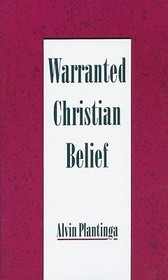
Warranted Christian Belief
- Publisher's listprice GBP 39.99
-
18 055 Ft (17 195 Ft + 5% VAT)
The price is estimated because at the time of ordering we do not know what conversion rates will apply to HUF / product currency when the book arrives. In case HUF is weaker, the price increases slightly, in case HUF is stronger, the price goes lower slightly.
- Discount 10% (cc. 1 806 Ft off)
- Discounted price 16 249 Ft (15 476 Ft + 5% VAT)
Subcribe now and take benefit of a favourable price.
Subscribe
18 055 Ft

Availability
printed on demand
Why don't you give exact delivery time?
Delivery time is estimated on our previous experiences. We give estimations only, because we order from outside Hungary, and the delivery time mainly depends on how quickly the publisher supplies the book. Faster or slower deliveries both happen, but we do our best to supply as quickly as possible.
Product details:
- Publisher OUP USA
- Date of Publication 17 February 2000
- ISBN 9780195131932
- Binding Paperback
- No. of pages528 pages
- Size 233x157x34 mm
- Weight 753 g
- Language English 0
Categories
Short description:
This is the third volume in Alvin Plantinga's trilogy on the notion of warrant, which he defines as that which distinguishes knowledge from true belief. In this volume, Plantinga examines warrant's role in theistic belief, tackling the questions of whether it is rational, reasonable, justifiable, and warranted to accept Christian belief and whether there is something epistemically unacceptable in doing so. He contends that Christian beliefs are warranted to the extent that they are formed by properly functioning cognitive faculties, thus, insofar as they are warranted, Christian beliefs are knowledge if they are true.
MoreLong description:
This is the third volume in Alvin Plantinga's trilogy on the notion of warrant, which he defines as that which distinguishes knowledge from true belief. In this volume, Plantinga examines warrant's role in theistic belief, tackling the questions of whether it is rational, reasonable, justifiable, and warranted to accept Christian belief and whether there is something epistemically unacceptable in doing so. He contends that Christian beliefs are warranted to the extent that they are formed by properly functioning cognitive faculties, thus, insofar as they are warranted, Christian beliefs are knowledge if they are true.
Warranted Christian Belief is a tour de force ... it will be a welcome summary of an important movement, and for anyone interested in debates about the rationality of religious belief, a reference book for many years to come.

