

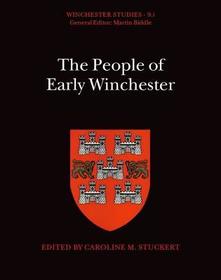
- Publisher's listprice GBP 195.00
-
88 042 Ft (83 850 Ft + 5% VAT)
The price is estimated because at the time of ordering we do not know what conversion rates will apply to HUF / product currency when the book arrives. In case HUF is weaker, the price increases slightly, in case HUF is stronger, the price goes lower slightly.
- Discount 10% (cc. 8 804 Ft off)
- Discounted price 79 238 Ft (75 465 Ft + 5% VAT)
Subcribe now and take benefit of a favourable price.
Subscribe
88 042 Ft

Availability
printed on demand
Why don't you give exact delivery time?
Delivery time is estimated on our previous experiences. We give estimations only, because we order from outside Hungary, and the delivery time mainly depends on how quickly the publisher supplies the book. Faster or slower deliveries both happen, but we do our best to supply as quickly as possible.
Product details:
- Publisher OUP Oxford
- Date of Publication 15 December 2016
- ISBN 9780198131700
- Binding Hardback
- No. of pages522 pages
- Size 281x216x35 mm
- Weight 2162 g
- Language English 0
Categories
Short description:
This is the only study to date that traces the biological history of the population in a single town, Winchester, for more than a millennium, as revealed through the skeletons excavated in major Romano-British, Anglo-Saxon, and medieval cemeteries. Changes in demography, health, and disease patterns are discussed and illustrated.
MoreLong description:
This volume traces the lives, health, and diseases of Winchester's inhabitants as seen in their skeletal remains from the mid-third century to the mid-sixteenth century, a period of over 1,300 years. Although the populations of other British urban areas, York and London in particular, have been studied over an extended period, this volume is unique in providing a continuous chronological window, rather than a series of isolated studies. It is particularly notable for the large sample of Anglo-Saxon burials dated to the 8th - 10th centuries, which provide a bridge between the earlier Romano-British material and the later medieval samples.
This study includes information on demography, physical characteristics, dental health, disease, and trauma collected from over 2,000 skeletons excavated from the Roman Cemetery at Lankhills and the Anglo-Saxon and medieval cemeteries of the Old and New Minster and Winchester Cathedral, as well as other Early Anglo-Saxon sites in neighbouring areas of Hampshire. The study establishes the underlying continuity of the population in spite of massive culture change between the Roman and Early Saxon periods, and delineates the increasing tendency to rounder skulls seen in the medieval period, a trend which is found in continental Europe at the same time. There were also significant differences through time in disease patterns and trauma. Leprosy, for example, is found only in post-Roman skeletons, while decapitations are seen only in Roman skeletons. Weapons injuries are confined to Anglo-Saxon and medieval individuals, although broken bones were common during the Roman period.
Just one of an incredibly comprehensive series examining the history of Winchester, this book uncovers the story of the city's occupants from AD 250 to 1540, as told by their skeletal remains.
Table of Contents:
List of illustrations
List of tables
List of abbreviations
List of references
Part 1 Introduction
Introduction
Concept
The origin, growth, and completion of this study
The outcome: a summary
Part 2 Romano-British Populations from Lankhills and other cemeteries in Winchester
Introduction
Demography
Physical characteristics
Dentition
Pathology
Lankhills decapitations revisited
Catalogue of the burials from the Lankhills 1967-72 excavations
Part 3 The transition from Romano-British to early Anglo-Saxon in Hampshire
Introduction
Archaeological background: the Early Anglo-Saxon sites
Demography
Physical characteristics
Dentition
Discussion
Part 4 Anglo-Saxon and medieval populations from the old and new minster and cathedral cemeteries
Introduction
Demography
Physical variation
Discontinuous variation and congenital anomalies
Dental health
General health
Injuries
Conclusions
Part 5 The population of Winchester: A millennium of continuity and change
Introduction
Population continuity and change
Health and lifestyle
Discussion
Appendix A: Other burial groups found 1961-71
Appendix B: Statistical methods of determining sex developed for the study of the Hampshire Romano-British and Early Anglo-Saxon skeletal samples
Appendix C: Grave concordance: Anglo-Saxon and Medieval burials from the Old Minster and Cathedral cemeteries
Appendix D: Glossary

