

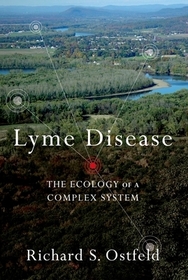
Lyme Disease
The Ecology of a Complex System
- Publisher's listprice GBP 34.49
-
16 477 Ft (15 692 Ft + 5% VAT)
The price is estimated because at the time of ordering we do not know what conversion rates will apply to HUF / product currency when the book arrives. In case HUF is weaker, the price increases slightly, in case HUF is stronger, the price goes lower slightly.
- Discount 10% (cc. 1 648 Ft off)
- Discounted price 14 829 Ft (14 123 Ft + 5% VAT)
Subcribe now and take benefit of a favourable price.
Subscribe
16 477 Ft

Availability
printed on demand
Why don't you give exact delivery time?
Delivery time is estimated on our previous experiences. We give estimations only, because we order from outside Hungary, and the delivery time mainly depends on how quickly the publisher supplies the book. Faster or slower deliveries both happen, but we do our best to supply as quickly as possible.
Product details:
- Publisher OUP USA
- Date of Publication 12 July 2012
- ISBN 9780199928477
- Binding Paperback
- No. of pages232 pages
- Size 231x155x15 mm
- Weight 340 g
- Language English 0
Categories
Short description:
The authoritative guide on the ecology and epidemiology of Lyme disease
MoreLong description:
Most human diseases come from nature, from pathogens that live and breed in non-human animals and are "accidentally" transmitted to us. Human illness is only the culmination of a complex series of interactions among species in their natural habitats. To avoid exposure to these pathogens, we must understand which species are involved, what regulates their abundance, and how they interact.
Lyme disease affects the lives of millions of people in the US, Europe, and Asia. It is the most frequently reported vector-borne disease in the United States; About 20,000 cases have been reported each year over the past five years, and tens of thousands more go unrecognized and unreported. Despite the epidemiological importance of understanding variable LD risk, such pursuit has been slow, indirect, and only partially successful, due in part to an overemphasis on identifying the small subset of 'key players' that contribute to Lyme disease risk, as well as a general misunderstanding of effective treatment options.
This controversial book is a comprehensive, synthetic review of research on the ecology of Lyme disease in North America. It describes how humans get sick, why some years and places are so risky and others not. It challenges dogma - for instance, that risk is closely tied to the abundance of deer - and replaces it with a new understanding that embraces the complexity of species and their interactions. It describes why the place where Lyme disease emerged - coastal New England - set researchers on mistaken pathways. It shows how tiny acorns have enormous impacts on our probability of getting sick, why biodiversity is good for our health, why living next to a small woodlot is dangerous, and why Lyme disease is an excellent model system for understanding many other human and animal diseases. Intended for an audience of professional and student ecologists, epidemiologists, and other health scientists, it is written in an informal style accessible also to non-scientists interested in human health and conservation.
Table of Contents:
Preface
Chapter 1 - Introduction
Chapter 2 - Discovery
Chapter 3 - It's the deer
Chapter 4 - It's the mice
Chapter 5 - It's the Weather
Chapter 6 - Questioning Dogma
Chapter 7 - Embracing Complexity: Food Webs
Chapter 8 - Embracing Complexity: Biodiversity
Chapter 9 - Embracing Complexity: Ecosystem Functioning
Chapter 10 - Embracing Complexity: Biocontrol of Ticks and Lyme Disease
Chapter 11 - In Pursuit of Emerging Infectious Diseases
Index

