

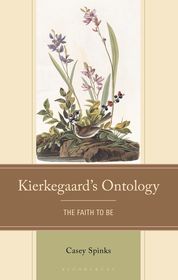
- Publisher's listprice GBP 85.00
-
38 377 Ft (36 550 Ft + 5% VAT)
The price is estimated because at the time of ordering we do not know what conversion rates will apply to HUF / product currency when the book arrives. In case HUF is weaker, the price increases slightly, in case HUF is stronger, the price goes lower slightly.
- Discount 20% (cc. 7 675 Ft off)
- Discounted price 30 702 Ft (29 240 Ft + 5% VAT)
- Discount is valid until: 30 June 2026
Subcribe now and take benefit of a favourable price.
Subscribe
38 377 Ft

Availability
printed on demand
Why don't you give exact delivery time?
Delivery time is estimated on our previous experiences. We give estimations only, because we order from outside Hungary, and the delivery time mainly depends on how quickly the publisher supplies the book. Faster or slower deliveries both happen, but we do our best to supply as quickly as possible.
Product details:
- Publisher Bloomsbury Publishing (UK)
- Date of Publication 30 April 2026
- ISBN 9781666981926
- Binding Hardback
- No. of pages240 pages
- Size 232x156x20 mm
- Weight 500 g
- Language English 700
Categories
Short description:
For Kierkegaard, to be is to be in relationship to God. Bringing this understanding to Kierkegaard's authorship helps uncover his fundamental ontology.
MoreLong description:
What is it to be? And what is it to be a Christian? Casey Spinks suggests these two questions belong together when readers attend to Kierkegaard's authorship, and such attention calls for the task of uncovering Kierkegaard's fundamental ontology.
This book argues that the heart of that ontology is to be found in the religious discourses of his Second Authorship. Using the devotional discourse The Lily of the Field and the Bird of the Air as his guide, Spinks argues that Kierkegaard offers a distinct Christian sense of being: faith. In particular, in his Second Authorship, he moves from irony to earnestness, and identifies silence, obedience, and joy as ontologically significant categories. This Christian ontology fundamentally opposes the rationalist ontology of G.W.F. Hegel-as well as any other philosophical ontology based on autonomous reason or human subjectivity. As a result, Kierkegaard proves to be a unique Christian figure in the history of Western metaphysics, one with forceful relevance to contemporary questions of first philosophy and first theology.
Table of Contents:
Preface
Acknowledgments
A Note on Abbreviations
Part One: Introduction
Being and the Essentially Christian
Part Two: Being an Ontological Writer
Chapter Two: (Not) Being a Knower
Chapter Three: Being Edified
Part Three: Being-In-Itself: Silence
Chapter Four: Being Silent
Chapter Five: Against Being Bound to Human Speech
Part Four: Being-For-Itself: Obedience
Chapter Six: Being Obedient
Chapter Seven: Against Being a Master
Part Five: Being-In-And-For-Itself: Joy
Chapter Eight: Being Joy
Chapter Nine: Against Being in Despair
Part Six: Conclusion
The End of the Path of Thinking
Bibliography
Index

