

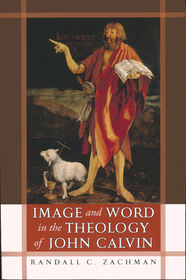
Image and Word in the Theology of John Calvin
- Publisher's listprice GBP 31.00
-
14 810 Ft (14 105 Ft + 5% VAT)
The price is estimated because at the time of ordering we do not know what conversion rates will apply to HUF / product currency when the book arrives. In case HUF is weaker, the price increases slightly, in case HUF is stronger, the price goes lower slightly.
- Discount 10% (cc. 1 481 Ft off)
- Discounted price 13 329 Ft (12 695 Ft + 5% VAT)
Subcribe now and take benefit of a favourable price.
Subscribe
14 810 Ft

Availability
Uncertain availability. Please turn to our customer service.
Why don't you give exact delivery time?
Delivery time is estimated on our previous experiences. We give estimations only, because we order from outside Hungary, and the delivery time mainly depends on how quickly the publisher supplies the book. Faster or slower deliveries both happen, but we do our best to supply as quickly as possible.
Product details:
- Publisher MR – University of Notre Dame Press
- Date of Publication 15 August 2009
- Number of Volumes Print PDF
- ISBN 9780268045012
- Binding Paperback
- No. of pages277 pages
- Size 234x157x33 mm
- Weight 960 g
- Language English 0
Categories
Long description:
"
In his groundbreaking new study of the Swiss reformer, Randall C. Zachman reveals and analyzes John Calvin's understanding of image and word both comprehensively and chronologically, with attention to the way that each theme develops in Calvin's theology.
Most scholars allege that John Calvin (1509–1564) insisted on the essential invisibility of God in order to deny that God could be represented in any kind of visible image. This claim formed one of his foundational arguments against the display of man-made images in worship. Given the transcendence of God, Calvin rejected the human attempt to create signs and symbols of God's presence on earth, especially the statues, images, and paintings present in Roman Catholic churches.
Zachman argues, in contrast, that although Calvin rejects the use of what he calls ""dead images"" in worship, he does so to focus our attention on the ""living images of God"" in which the invisible God becomes somewhat visible. Calvin insists that these images cannot rightly be contemplated without the Word of God to clarify their meaning; we are only led to the true knowledge of God when we hold together the living images of God that we see with the Word of God that we hear. This combination of seeing and hearing pervades Calvin's theology, from his understanding of the self-revelation of God the Creator to his development of the self-manifestation of God the Redeemer in Jesus Christ. According to Zachman, Calvin maintains the same linking of seeing and hearing in our relationships with other human beings: we must always hold together what we see in others' gestures and actions with what we hear in their words, so that the hidden thoughts of their hearts might be manifested to us.
Zachman's nuanced argument that Calvin holds image and word, manifestation and proclamation, in an inseparable relationship is relevant to all the major themes of Calvin's theology. It constitutes a highly significant and surprising contribution to our knowledge of the Reformation and an invitation to further study of theological aesthetics.
" More
