

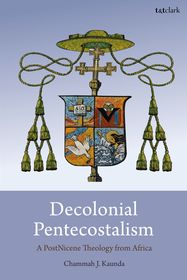
Decolonial Pentecostalism
A PostNicene Theology from Africa
- Publisher's listprice GBP 90.00
-
40 635 Ft (38 700 Ft + 5% VAT)
The price is estimated because at the time of ordering we do not know what conversion rates will apply to HUF / product currency when the book arrives. In case HUF is weaker, the price increases slightly, in case HUF is stronger, the price goes lower slightly.
- Discount 20% (cc. 8 127 Ft off)
- Discounted price 32 508 Ft (30 960 Ft + 5% VAT)
- Discount is valid until: 30 June 2026
Subcribe now and take benefit of a favourable price.
Subscribe
40 635 Ft

Availability
Not yet published.
Why don't you give exact delivery time?
Delivery time is estimated on our previous experiences. We give estimations only, because we order from outside Hungary, and the delivery time mainly depends on how quickly the publisher supplies the book. Faster or slower deliveries both happen, but we do our best to supply as quickly as possible.
Product details:
- Publisher Bloomsbury Publishing (UK)
- Date of Publication 11 June 2026
- ISBN 9780567722744
- Binding Hardback
- No. of pages336 pages
- Size 234x156 mm
- Language 700
Categories
Short description:
Presents an exploration of how Pentecostal theology can be revitalized by critically engaging with the Nicene Creed through the lens of African spirituality and decolonial thought.
MoreLong description:
The book presents a bold and transformative exploration of how Pentecostal theology can be revitalized by critically engaging with the Nicene Creed through the lens of African spirituality and decolonial thought.
In an era marked by profound cultural exchanges and theological diversification, Kaunda challenges traditional Nicene faith and calls for a new approach that reflects the pluralistic realities of the 21st century. Rooted in the rich metaphysical and philosophical traditions of the Bemba people of Zambia, the book critiques the classical dualistic interpretations of Christian theology, which have long emphasized divisions between the sacred and secular, material and spiritual, human and nonhuman.
Through a decolonial framework, this powerful work seeks to dismantle these entrenched dualisms and reintroduce an integrated approach to faith, one that embraces the interconnectedness of all things. African indigenous concepts are central to this reimagining of Nicene Christianity. It demonstrates how Pentecostalism, with its emphasis on the Spirit's dynamic presence, can speak powerfully to issues such as gender relations, ecological crises, power dynamics, and the lived realities of African communities. Grounding theological reflection in the lived experiences and cultural contexts of African Pentecostal believers, Kaunda reveals a more holistic, contextually resonant, and responsive form of Christian theology.
Table of Contents:
Acknowledgments
Introduction: Outlandish and Disturbing
1. Theologising from Africa
2. The Nicene Faith in the Shadow of the Empire
3. Wholistheism
Bibliography
Index

