

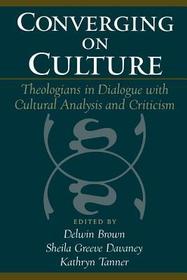
Converging on Culture
Theologians in Dialogue with Cultural Analysis and Criticism
Series: AAR Reflection and Theory in the Study of Religion;
- Publisher's listprice GBP 37.99
-
17 152 Ft (16 335 Ft + 5% VAT)
The price is estimated because at the time of ordering we do not know what conversion rates will apply to HUF / product currency when the book arrives. In case HUF is weaker, the price increases slightly, in case HUF is stronger, the price goes lower slightly.
- Discount 10% (cc. 1 715 Ft off)
- Discounted price 15 437 Ft (14 702 Ft + 5% VAT)
Subcribe now and take benefit of a favourable price.
Subscribe
17 152 Ft

Availability
printed on demand
Why don't you give exact delivery time?
Delivery time is estimated on our previous experiences. We give estimations only, because we order from outside Hungary, and the delivery time mainly depends on how quickly the publisher supplies the book. Faster or slower deliveries both happen, but we do our best to supply as quickly as possible.
Product details:
- Publisher OUP Oxford
- Date of Publication 18 October 2001
- ISBN 9780195144673
- Binding Paperback
- No. of pages224 pages
- Size 238x157x16 mm
- Weight 363 g
- Language English 70
Categories
Short description:
Theologians are increasingly looking to cultural criticism, rather than philosophy, as a dialogue partner for cross-disciplinary studies. This book explores the importance of this shift by bringing together scholars from a variety of theological perspectives to analyze different contemporary theories of cultural movements. The book is divided into two parts. The first examines the theoretical relationship between theology and cultural studies. The second consists of theological analyses of a series of controversial topics (including race, class, resistance movements, and identity politics) that cry out for theological reflection.
MoreLong description:
Theologians are increasingly looking to cultural criticism, rather than philosophy, as a dialogue partner for cross-disciplinary studies. This book explores the importance of this shift by bringing together scholars from a variety of theological perspectives to analyze different contemporary theories of cultural movements. The book is divided into two parts. The first examines the theoretical relationship between theology and cultural studies. The second consists of theological analyses of a series of controversial topics (including race, class, resistance movements, and identity politics) that cry out for theological reflection.
The book leaves one with hope, as Cady suggests, that the rise of cultural studies will serve as an antidote to theology's demise.

