

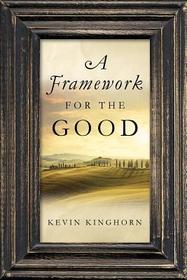
A Framework for the Good
- Publisher's listprice GBP 35.00
-
16 721 Ft (15 925 Ft + 5% VAT)
The price is estimated because at the time of ordering we do not know what conversion rates will apply to HUF / product currency when the book arrives. In case HUF is weaker, the price increases slightly, in case HUF is stronger, the price goes lower slightly.
- Discount 10% (cc. 1 672 Ft off)
- Discounted price 15 049 Ft (14 333 Ft + 5% VAT)
Subcribe now and take benefit of a favourable price.
Subscribe
16 721 Ft

Availability
printed on demand
Why don't you give exact delivery time?
Delivery time is estimated on our previous experiences. We give estimations only, because we order from outside Hungary, and the delivery time mainly depends on how quickly the publisher supplies the book. Faster or slower deliveries both happen, but we do our best to supply as quickly as possible.
Product details:
- Publisher MR – University of Notre Dame Press
- Date of Publication 15 April 2016
- Number of Volumes Print PDF
- ISBN 9780268033309
- Binding Paperback
- No. of pages358 pages
- Size 229x152x20 mm
- Weight 526 g
- Language English 0
Categories
Long description:
"
This book provides an ethical framework for understanding the good and how we can experience it in increasing measure. In Part 1, Kevin Kinghorn offers a formal analysis of the meaning of the term ""good,"" the nature of goodness, and why we are motivated to pursue it. Setting this analysis within a larger ethical framework, Kinghorn proposes a way of understanding where noninstrumental value lies, the source of normativity, and the relationship between the good and the right. Kinghorn defends a welfarist conception of the good along with the view that mental states alone directly affect a person's well-being. He endorses a Humean account of motivation—in which desires alone motivate us, not moral beliefs—to explain the source of the normative pressure we feel to do the good and the right. Turning to the place of objectivity within ethics, he concludes that the concept of ""objective wrongness"" is a misguided one, although a robust account of ""objective goodness"" is still possible. In Part 2, Kinghorn shifts to a substantive, Christian account of what the good life consists in as well as how we can achieve it. Hume's emphasis of desire over reason is not challenged but rather endorsed as a way of understanding both the human capacity for choice and the means by which God prompts us to pursue relationships of benevolence, in which our ultimate flourishing consists.
" More
