

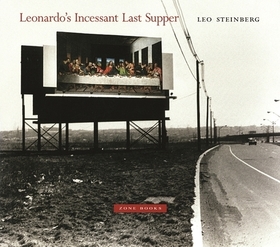
Leonardo’s Incessant Last Supper
-
20% KEDVEZMÉNY?
- A kedvezmény csak az 'Értesítés a kedvenc témákról' hírlevelünk címzettjeinek rendeléseire érvényes.
- Kiadói listaár EUR 58.00
-
22 654 Ft (21 576 Ft + 5% áfa)
Az ár azért becsült, mert a rendelés pillanatában nem lehet pontosan tudni, hogy a beérkezéskor milyen lesz a forint árfolyama az adott termék eredeti devizájához képest. Ha a forint romlana, kissé többet, ha javulna, kissé kevesebbet kell majd fizetnie.
- Kedvezmény(ek) 20% (cc. 4 531 Ft off)
- Kedvezményes ár 18 124 Ft (17 261 Ft + 5% áfa)
- A kedvezmény érvényes eddig: 2026. június 30.
Iratkozzon fel most és részesüljön kedvezőbb árainkból!
Feliratkozom
22 654 Ft

Beszerezhetőség
Becsült beszerzési idő: A Prosperónál jelenleg nincsen raktáron, de a kiadónál igen. Beszerzés kb. 3-5 hét..
A Prosperónál jelenleg nincsen raktáron.
Why don't you give exact delivery time?
A beszerzés időigényét az eddigi tapasztalatokra alapozva adjuk meg. Azért becsült, mert a terméket külföldről hozzuk be, így a kiadó kiszolgálásának pillanatnyi gyorsaságától is függ. A megadottnál gyorsabb és lassabb szállítás is elképzelhető, de mindent megteszünk, hogy Ön a lehető leghamarabb jusson hozzá a termékhez.
A termék adatai:
- Kiadó Zone Books
- Megjelenés dátuma 2001. október 26.
- Kötetek száma Print PDF
- ISBN 9781890951184
- Kötéstípus Keménykötés
- Terjedelem320 oldal
- Méret 228x266 mm
- Súly 1542 g
- Nyelv angol
- Illusztrációk 1 color + 202 b/w illus. 0
Kategóriák
Hosszú leírás:
A picture universally recognized, endlessly scrutinized and described, incessantly copied, adapted, lampooned: does Leonardo’s near-ruined Last Supper still offer anything new to be seen or to be said? This book is a resounding Yes to both questions. With direct perception — and with attention paid to the work of earlier scholars and to the criticism embodied in the production of copyists over the past five hundred years — Steinberg demonstrates that Leonardo’s mural has been consistently oversimplified.
This most thought-out picture in Western art, painted in the 1490s on the north wall of the refectory of Santa Maria delle Grazie, Milan, is a marvel of compressed meanings. Its subject is not one arrested moment, but successiveness and duration. It is not only Christ’s announcement of the forthcoming betrayal, but in equal measure the institution of the Eucharist. More than the spur of the moment animates the disciples, and more than perspective determines their housing.
Though Leonardo’s geometry obeys all the rules, it responds as well to Christ’s action at center, as if in emanation from the prime mover. The picture is simultaneously narrative and sacramental. As its protagonist is two-natured — as the twofold event of this night is both human submission and divine dispensation — so the entire picture is shown to have been conceived as double: a sublime pun.
Meanwhile, the unending disagreement as to what exactly is represented, what the depicted actions express, how and where this assembly is seated — all these still raging disputes are traced to a single mistaken assumption: that Leonardo intended throughout to be “unambiguous and clear,” and that any one meaning necessarily rules out every other.
As Steinberg reveals an abundance of significant interrelations previously overlooked, Leonardo’s masterpiece retains the freshness of its initial conception and the power to fascinate.

