
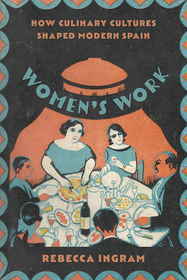
Women′s Work – How Culinary Cultures Shaped Modern Spain
How Culinary Cultures Shaped Modern Spain
-
10% KEDVEZMÉNY?
- A kedvezmény csak az 'Értesítés a kedvenc témákról' hírlevelünk címzettjeinek rendeléseire érvényes.
- Kiadói listaár GBP 80.00
-
38 220 Ft (36 400 Ft + 5% áfa)
Az ár azért becsült, mert a rendelés pillanatában nem lehet pontosan tudni, hogy a beérkezéskor milyen lesz a forint árfolyama az adott termék eredeti devizájához képest. Ha a forint romlana, kissé többet, ha javulna, kissé kevesebbet kell majd fizetnie.
- Kedvezmény(ek) 10% (cc. 3 822 Ft off)
- Kedvezményes ár 34 398 Ft (32 760 Ft + 5% áfa)
Iratkozzon fel most és részesüljön kedvezőbb árainkból!
Feliratkozom
38 220 Ft
Beszerezhetőség
Még nem jelent meg, de rendelhető. A megjelenéstől számított néhány héten belül megérkezik.
Why don't you give exact delivery time?
A beszerzés időigényét az eddigi tapasztalatokra alapozva adjuk meg. Azért becsült, mert a terméket külföldről hozzuk be, így a kiadó kiszolgálásának pillanatnyi gyorsaságától is függ. A megadottnál gyorsabb és lassabb szállítás is elképzelhető, de mindent megteszünk, hogy Ön a lehető leghamarabb jusson hozzá a termékhez.
A termék adatai:
- Kiadó University of Chicago Press
- Megjelenés dátuma 2026. március 25.
- ISBN 9780826504906
- Kötéstípus Keménykötés
- Terjedelem220 oldal
- Méret 228x152x20 mm
- Súly 940 g
- Nyelv angol 700
Kategóriák
Rövid leírás:
Even with global attention, we know little about how Spanish cooking became a litmus test for demonstrating Spain&&&8217;s modernity and, in relation, the roles ascribed to the modern Spanish women responsible for daily cooking. This book places these efforts in their historical context.
TöbbHosszú leírás:
We are living a moment in which famous chefs, Michelin stars, culinary techniques, and gastronomical accolades attract moneyed tourists to Spain from all over the world. This has prompted the Spanish government to declare its cuisine as part of Spanish patrimony.
Yet even with this widespread global attention, we know little about how Spanish cooking became a litmus test for demonstrating Spain&&&8217;s modernity and, in relation, the roles ascribed to the modern Spanish women responsible for daily cooking. Efforts to articulate a new, modern Spain infiltrated writing in multiple genres and media. Women&&&8217;s Work places these efforts in their historical context to yield a better understanding of the roles of food within an inherently uneven modernization process. Further, the book reveals the paradoxical messages women have navigated, even in texts about a daily practice that shaped their domestic and work lives. This argument is significant because of the degree to which domestic activities, including cooking, occupied women&&&8217;s daily lives, even while issues like their fitness as citizens and participation in the public sphere were hotly debated. At the same time, progressive intellectuals from diverse backgrounds began to invoke Spanish cooking and eating as one measure of Spanish modernity.
Women&&&8217;s Work shows how culinary writing engaged these debates and reached women at the site of much of their daily labor&&&8212;the kitchen&&&8212;and, in this way, shaped their thinking about their roles in modernizing Spain.