

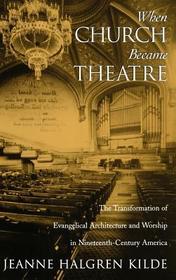
When Church Became Theatre
The Transformation of Evangelical Architecture and Worship in Nineteenth-Century America
-
10% KEDVEZMÉNY?
- A kedvezmény csak az 'Értesítés a kedvenc témákról' hírlevelünk címzettjeinek rendeléseire érvényes.
- Kiadói listaár GBP 88.00
-
39 732 Ft (37 840 Ft + 5% áfa)
Az ár azért becsült, mert a rendelés pillanatában nem lehet pontosan tudni, hogy a beérkezéskor milyen lesz a forint árfolyama az adott termék eredeti devizájához képest. Ha a forint romlana, kissé többet, ha javulna, kissé kevesebbet kell majd fizetnie.
- Kedvezmény(ek) 10% (kb. 3 973 Ft)
- Kedvezményes ár 35 759 Ft (34 056 Ft + 5% áfa)
Iratkozzon fel most és részesüljön kedvezőbb árainkból!
Feliratkozom
39 732 Ft

Beszerezhetőség
Megrendelésre a kiadó utánnyomja a könyvet. Rendelhető, de a szokásosnál kicsit lassabban érkezik meg.
Why don't you give exact delivery time?
A beszerzés időigényét az eddigi tapasztalatokra alapozva adjuk meg. Azért becsült, mert a terméket külföldről hozzuk be, így a kiadó kiszolgálásának pillanatnyi gyorsaságától is függ. A megadottnál gyorsabb és lassabb szállítás is elképzelhető, de mindent megteszünk, hogy Ön a lehető leghamarabb jusson hozzá a termékhez.
A termék adatai:
- Kiadó OUP USA
- Megjelenés dátuma 2002. július 25.
- ISBN 9780195143416
- Kötéstípus Keménykötés
- Terjedelem328 oldal
- Méret 242x165x24 mm
- Súly 608 g
- Nyelv angol
- Illusztrációk numerous halftones 0
Kategóriák
Rövid leírás:
In late 19th century America, profound socio-economic and technological changes contributed to the rejection of traditional church architecture and the development of a radically new worship building, the neo-medieval auditorium church. These Protestant churches contained extraordinary new auxiliary spaces, including kitchens, dining rooms, and lounges. Their real showpieces, however, were always the sanctuaries, radial-plan auditoria best described as 'theatres', with their elaborate pulpit stages, sloping floors, and curving pews. Many contained proscenium arches, marquee lighting, and theatre seats. Jeanne Halgren Kilde focuses on how the buildings helped to negotiate supernatural, social, and personal power. Their extraordinary interiors, she says, profoundly altered religious power relations. Borrowed directly from the architecture of the theatre, these worship spaces underscored performative and entertainment aspects of the worship service. By erecting these buildings, argues Kilde, middle class religious audiences demonstrated the move toward a consumer-oriented model of a religious participation that gave them unprecedented influence over the worship experience and church mission.
TöbbHosszú leírás:
For nearly eighteen centuries, two fundamental spatial plans dominated Christian architecture: the basilica and the central plan. In the 1880s, however, profound socio-economic and technological changes in the United States contributed to the rejection of these traditions and the development of a radically new worship building, the auditorium church. When Church Became Theatre focuses on this radical shift in evangelical Protestant architecture and links it to changes in worship style and religious mission.
The auditorium style, featuring a prominent stage from which rows of pews radiated up a sloping floor, was derived directly from the theatre, an unusual source for religious architecture but one with a similar goal-to gather large groups within range of a speaker's voice. Theatrical elements were prominent; many featured proscenium arches, marquee lighting, theatre seats, and even opera boxes.
Examining these churches and the discussions surrounding their development, Jeanne Halgren Kilde focuses on how these buildings helped congregations negotiate supernatural, social, and personal power. These worship spaces underscored performative and entertainment aspects of the service and in so doing transformed relationships between clergy and audiences. In auditorium churches, the congregants' personal and social power derived as much from consumerism as from piety, and clerical power lay in dramatic expertise rather than connections to social institutions. By erecting these buildings, argues Kilde, middle class religious audiences demonstrated the move toward a consumer-oriented model of religious participation that gave them unprecedented influence over the worship experience and church mission.
When Church Became Theatre is a milestone that not only provides a history of the evolution of the relationships between Church architecture and worship but also deepens our understanding of the class-based creation of family values within American evengelicism and elucidates the emerging institutionalization and uniformity of instruction within new Sunday Schools.
Tartalomjegyzék:
The Transformation of Protestant Architechture
Redefining Clerical and Audience Authority in the Architechture of Urban Revivals
Formalism and the Gothic Revival among Evangelical Protestants
Spiritual Armories on the New Suburban Landscape
Church becomes Theatre
Sacralizing the Evangelical Church as a Church Home
Building for the Children: Akron Plan Sunday Schools and Institutional Churches
Meanings in Nineteenth-Century Evangelical Architechture

