

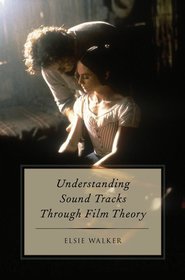
Understanding Sound Tracks Through Film Theory
-
10% KEDVEZMÉNY?
- A kedvezmény csak az 'Értesítés a kedvenc témákról' hírlevelünk címzettjeinek rendeléseire érvényes.
- Kiadói listaár GBP 135.00
-
60 952 Ft (58 050 Ft + 5% áfa)
Az ár azért becsült, mert a rendelés pillanatában nem lehet pontosan tudni, hogy a beérkezéskor milyen lesz a forint árfolyama az adott termék eredeti devizájához képest. Ha a forint romlana, kissé többet, ha javulna, kissé kevesebbet kell majd fizetnie.
- Kedvezmény(ek) 10% (cc. 6 095 Ft off)
- Kedvezményes ár 54 857 Ft (52 245 Ft + 5% áfa)
Iratkozzon fel most és részesüljön kedvezőbb árainkból!
Feliratkozom
60 952 Ft

Beszerezhetőség
Megrendelésre a kiadó utánnyomja a könyvet. Rendelhető, de a szokásosnál kicsit lassabban érkezik meg.
Why don't you give exact delivery time?
A beszerzés időigényét az eddigi tapasztalatokra alapozva adjuk meg. Azért becsült, mert a terméket külföldről hozzuk be, így a kiadó kiszolgálásának pillanatnyi gyorsaságától is függ. A megadottnál gyorsabb és lassabb szállítás is elképzelhető, de mindent megteszünk, hogy Ön a lehető leghamarabb jusson hozzá a termékhez.
A termék adatai:
- Kiadó OUP USA
- Megjelenés dátuma 2015. április 2.
- ISBN 9780199896301
- Kötéstípus Keménykötés
- Terjedelem450 oldal
- Méret 183x257x30 mm
- Súly 975 g
- Nyelv angol 0
Kategóriák
Rövid leírás:
Understanding Sound Tracks Through Film Theory analyzes all aural aspects of cinema using several approaches: feminism, genre studies, post-colonialism, psychoanalysis, and queer theory. In her analysis of each sound track, Walker brings together film studies, musicology, history, politics, and culture in an accessible yet rigorous way.
TöbbHosszú leírás:
Until recently, most scholars neglected the power of hearing cinema as well as seeing it. Understanding Sound Tracks Through Film Theory breaks new ground by redirecting the arguments of foundational texts within film theory to film sound tracks. The book includes sustained analyses of particular films according to a range of theoretical approaches: psychoanalysis, feminism, genre studies, post-colonialism, and queer theory. The films come from disparate temporal and industrial contexts: from Classical Hollywood Gothic melodrama (Rebecca (1940)), to contemporary, critically-acclaimed science fiction (Gravity (2013)). Along with sound tracks from canonical American films, such as The Searchers (1956) and To Have and Have Not (1944), Walker analyzes independent Australasian films: examples include Heavenly Creatures (1994), a New Zealand film that uses music to empower its queer female protagonists; and Ten Canoes (2006), the first Australian feature film with a script entirely in Aboriginal languages. Understanding Sound Tracks Through Film Theory thus not only calls new attention to the significance of sound tracks-it also focuses on the sonic power of characters representing those whose voices have all too often been drowned out.
Dominant studies of film music tend to be written for those who are already musically trained. Similarly, studies of film sound tend to be jargon-heavy. By contrast, Understanding Sound Tracks Through Film Theory is both rigorous and accessible to all scholars with a basic grasp of cinematic and musical structures. Moreover, the book brings together film studies, musicology, history, politics, and culture. Therefore, Understanding Sound Tracks Through Film Theory will resonate for scholars across the liberal arts, and for anyone interested in challenging the so-called "hegemony of the visual."
Elsie Walker's multifaceted approach in Understanding Sound Tracks Through Film Theory provides a rich, strategic bridging of musicology to the venerable and varied tenets of film theory. Rigorously researched, it is pioneering inquiry, crowned by a bevy of stimulating analyses.
Tartalomjegyzék:
General Introduction
Part One: Genre Studies
Part Two: Postcolonialism
Part Three: Feminism
Part Four: Psychoanalysis
Part Five: Queer Theory
Coda
Select Filmography
Further Perceiving
Select Glossary
Index

